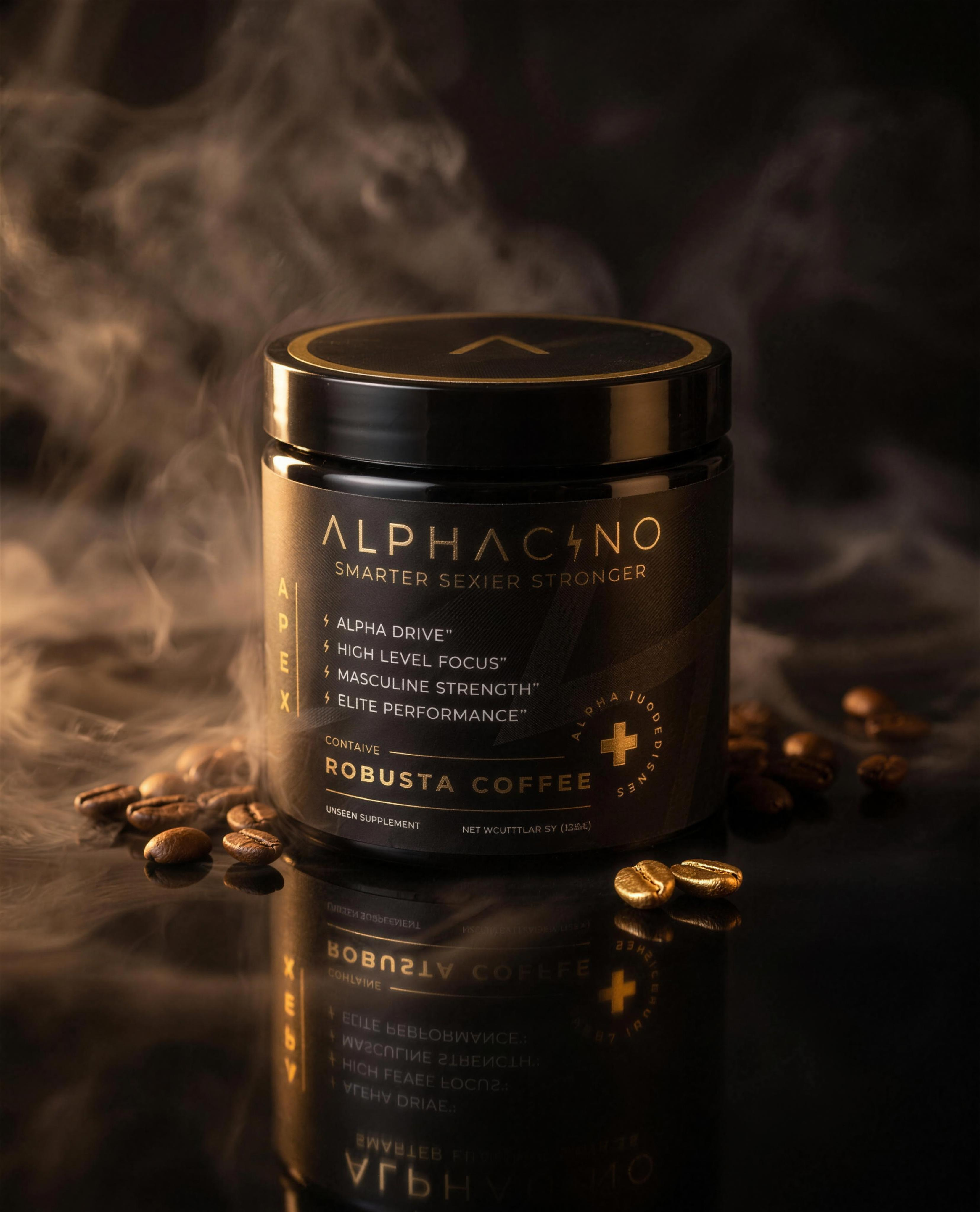
Short answer: RYZE and Everyday Dose are the same idea sold two ways: a half-caffeine instant latte with mushrooms in it, at about $1.50 a cup. RYZE is organic arabica with 48 mg of caffeine, six mushrooms in one unsplit blend, coconut milk and MCT oil1. Everyday Dose is a cold brew coffee extract with 45 mg of caffeine (90 mg in its Medium Roast), 1,500 mg of lion's mane and chaga as one figure, 4 g of bovine collagen and 150 mg of L-theanine2. Neither prints how much of any one mushroom is in the scoop. On the questions people actually ask: caffeine is a draw unless you pick Everyday Dose's Medium Roast; for weight loss neither is a weight-loss product and the honest edge goes to whichever cup replaces a sugared one; on ingredients Everyday Dose prints more and adds theanine, RYZE is organic and cheaper on the day. Both labels were read on 7 November 2026. And because we are a product website, the third column in every table below is Alphacino: a full 100 mg black robusta with 100 mg of theanine and printed doses of lion's mane, KSM-66 ashwagandha and black maca, for the man who wants a real coffee rather than a gentler latte3.
Comparing RYZE and Everyday Dose? Alphacino at a glance
| RYZE | Everyday Dose | Alphacino | |
|---|---|---|---|
| Caffeine | 48 mg | 45 mg Mild; 90 mg Medium | 100 mg, with 100 mg L-theanine |
| Mushrooms | Six, one blend, no amounts | Two, 1,500 mg combined, no split | Lion's mane 500 mg, printed |
| Other actives | Coconut milk, MCT oil | Collagen 4 g, L-theanine 150 mg | KSM-66 600 mg, black maca 224 mg, S7 50 mg |
| Price a cup | $1.50 list; 90 cents on one listing | $1.33 on sale; $1.50 list | $1.67; $1.50 in the 3-pack |
| Built for | A soft, creamy half-coffee | A frothed collagen latte | Men who want a full coffee with dosed actives |
30 cups a tub. 60-day money-back guarantee; RYZE's is 30 days and Everyday Dose's 45.
RYZE vs Everyday Dose at a glance
Everything in this table is read from the two brands' own pages on 7 November 2026, and where a figure comes from an earlier read of a label we say so. RYZE's six mushrooms and its 48 mg of caffeine come from its listings and the dietitian quotes on its own site1; its prices are from the store's product feed on the day4. Everyday Dose's figures are from the Coffee+ Mild Roast page and its FAQ on the day2.
| Line | RYZE Mushroom Coffee | Everyday Dose Coffee+ |
|---|---|---|
| Coffee | Organic instant arabica, medium roast; a dark roast is sold separately1 | "A hint of low-acidity cold brew coffee extract", organic and fair trade by the FAQ2 |
| Caffeine a serving | 48 mg in the medium roast; the dark roast was 80 to 90 mg on a September listing and prints no figure today1 | 45 mg Mild Roast; 90 mg Medium Roast; 40 mg in the matcha2 |
| Mushrooms | Six as one organic blend: lion's mane, reishi, cordyceps, shiitake, turkey tail, king trumpet; no amount for any of them1 | Two as one figure: 1,500 mg of fruiting-body lion's mane and chaga, "double extracted"; no split between the two2 |
| Everything else | Coconut milk, MCT oil; no sugar; grams of MCT not printed1 | 4 g grass-fed bovine collagen, 150 mg L-theanine (Suntheanine); "nothing else", no sweeteners2 |
| Theanine | None | 150 mg |
| The cup | One tablespoon in 6 to 8 oz of hot or cold water; creamy from the coconut and MCT1 | One scoop frothed in 3 to 7 oz; creamy from the collagen; "notes of chocolate"2 |
| Price for 30 servings | $45 list on the main listings; $44.99 for the dark roast; one $27 listing; 90 servings $115; 60-serving starter kits $80, or $49.50 on two listings4 | $39.99 on sale from $45; 90 servings $79; first-order starter kits $29 for 30 and $49 for 602 |
| Price a cup | $1.50 list; $1.28 in the 90 pack; 90 cents on the $27 listing (our arithmetic) | $1.33 on sale, $1.50 list; 88 cents in the 90 pack; 97 cents in the starter kit (our arithmetic) |
| Subscription | Refill add-on $36; the "Love-It" guarantee in the refund policy applies to a first subscription order54 | Refill ships in 30 days by default with an email three days before; adjust or cancel in the account2 |
| Guarantee | 30 days on the page5 | 45-day money-back2 |
| Organic | Yes, the coffee and the mushroom blend1 | Mushrooms and coffee extract organic by the FAQ; collagen is grass-fed bovine, not organic-labelled2 |
Three things stand out. The caffeine is a draw at 48 against 45 unless you want Everyday Dose's 90 mg Medium Roast, which is a different product in all but name. Everyday Dose prints more: a combined mushroom weight, a theanine dose and a collagen dose, where RYZE prints none of its six mushroom amounts and no MCT weight. And RYZE is the cheaper cup on list price and far cheaper on its $27 listing, while Everyday Dose is cheaper on its sale and in its starter kits; both run several prices at once, so the price you see depends on which link you came in by.
Caffeine: 48 mg vs 45 mg, and what that buys you
Both are "half a coffee". USDA's figure for an 8 oz cup of brewed coffee is about 95 mg6, so RYZE at 48 and Everyday Dose Mild at 45 sit at half, and Everyday Dose Medium at 90 is a full cup12. Three milligrams between the two Milds is noise; nobody can feel it. What matters is where 45 to 48 mg sits on the dose curve: caffeine's effects on alertness, vigilance, attention and reaction time are measurable from roughly 40 mg and clearer at higher doses, in the review of the research record7. One cup of either is at the bottom of the effective range. That is the point for someone stepping down from three coffees, and the problem for someone who drinks coffee for the kick, who will find both thin and should look at Everyday Dose's Medium Roast or at a full-strength cup.
Everyday Dose's theanine is the one real difference in this section. L-theanine is the tea amino acid that takes the edge off caffeine, and the trials used pairings close to what the Mild cup holds. In 27 volunteers, 100 mg of L-theanine with 50 mg of caffeine improved both speed and accuracy on an attention-switching task at 60 minutes and reduced susceptibility to distraction at 60 and 90 minutes, against caffeine alone and placebo8. In 44 young adults, 97 mg of theanine with 40 mg of caffeine improved task-switching accuracy and self-rated alertness and reduced tiredness9. At a higher pairing, 250 mg with 150 mg, the combination sped up simple reaction time and working memory and cut "headache" and "tired" ratings10. Everyday Dose's 150 mg of theanine beside 45 mg of caffeine is a sensible ratio from that literature; RYZE has no theanine at all, and relies on the lower caffeine and the fat in the coconut milk for its "calm energy". Alphacino pairs 100 mg of theanine with its 100 mg of caffeine for the same reason3.
Timing is the same for both. A meta-analysis of 24 studies concluded that a 107 mg cup of coffee should be at least 8.8 hours before bed to avoid losing sleep11; a 45 mg cup clears sooner, but a 400 mg dose still disrupted sleep six hours before bed in a home study12, so two or three "half" cups through the afternoon add up like anything else. The European safety opinion's lines are 400 mg a day and 200 mg at a sitting for healthy adults13: four of either Mild cup is 180 to 192 mg, inside both. Our caffeine-by-brand guide lines up every brand on one table, and the timing guide works out the cut-off for each.
Mushrooms: six unsplit vs 1,500 mg of two
This is where the two labels differ most and where neither tells you what you need to know. RYZE lists six mushrooms in one organic blend with no weight for the blend or for any mushroom in it1. Everyday Dose lists two, lion's mane and chaga, with a combined 1,500 mg of fruiting body and no split between them2. So Everyday Dose tells you the total and not the parts; RYZE tells you neither. Against the human trials, which are the only fair test, both fall short in the same way.
| Mushroom | In RYZE? | In Everyday Dose? | What the human trials used |
|---|---|---|---|
| Lion's mane | Yes, amount unprinted | Yes, part of 1,500 mg | 3 g a day of fruiting-body tablets for 16 weeks improved cognitive scores in 30 older adults with mild impairment, fading four weeks after stopping14; 12 weeks of supplementation improved a cognitive score in healthy adults over 5015; a single 1.8 g dose sped up a Stroop task in 41 young adults, with a trend to lower stress at 28 days16 |
| Chaga | No | Yes, part of 1,500 mg | No randomised human trial we could find. The human record is case reports of kidney injury from chaga powder at 10 to 15 g a day for months171819, far above anything in a scoop |
| Cordyceps | Yes, unprinted | No | Cs-4 at about 1 g a day for 12 weeks raised the metabolic threshold in 20 healthy adults aged 50 to 7520; 4 g a day for three weeks improved high-intensity exercise tolerance in young adults21; 3 g a day did nothing for trained cyclists22 |
| Reishi | Yes, unprinted | No | 3 g a day of spore powder for four weeks lowered fatigue scores in 48 women recovering from breast cancer23; a Cochrane review found no evidence it treats cancer24; an anti-androgen effect exists in laboratory work only25 |
| Shiitake | Yes, unprinted | No | 5 to 10 g of whole mushroom a day for four weeks changed immune markers in 52 healthy young adults26 |
| Turkey tail | Yes, unprinted | No | A phase 1 safety trial in women after breast cancer treatment at 3 to 9 g a day27; no trial in healthy adults for energy or focus |
| King trumpet | Yes, unprinted | No | No controlled human trial for any benefit that we could find |
Read the doses column once more: the trials run from about 1 g to 10 g a day of one mushroom. Everyday Dose's 1,500 mg of two is half the lion's mane trial weight even if every milligram were lion's mane, which it is not, and its "double extracted" claim narrows the gap by an unstated ratio. RYZE's six-way blend is almost certainly smaller still per mushroom, because a tablespoon of instant coffee with coconut milk and MCT in it has little room left, and the brand has chosen not to say. Everyday Dose wins this section on disclosure and on picking the one mushroom with human trials behind it; neither wins on dose. For what a dosed cup looks like, Alphacino prints 500 mg of lion's mane fruiting-body extract on its own line3, still below the 1.8 to 3 g trial range and honest about it; our lion's mane coffee guide works through what 500 mg of extract can and cannot do.
The rest of the scoop: coconut and MCT vs collagen and theanine
Both brands fill the scoop with something that makes the cup creamy, and the two choices do different things. RYZE uses coconut milk powder and MCT oil1. MCT, medium-chain triglycerides, is the one ingredient in RYZE with weight evidence: in a meta-analysis of 13 randomised trials with 749 adults, replacing long-chain fats with MCT reduced body weight by a mean 0.51 kg (about 1.1 lb) over trials of more than three weeks28, and MCT produced a greater rise in fat oxidation than long-chain fat in a controlled feeding study29. Those trials used MCT as a replacement for other fats at doses in grams; RYZE prints no gram figure, so the honest reading is "some". MCT is also the reason RYZE sends some people to the bathroom: in a systematic review of 33 studies and 1,100 participants, gastrointestinal symptoms, diarrhoea, abdominal pain, discomfort and nausea among them, were the most frequently reported side effects of MCT, usually mild and dose-related30.
Everyday Dose uses 4 g of bovine collagen and 150 mg of L-theanine2. The collagen is the beauty line: 2.5 or 5 g a day of specific collagen peptides for eight weeks improved skin elasticity against placebo in 69 women aged 35 to 5531, and 15 g a day alongside 12 weeks of resistance training improved body composition in 53 older men32; the 4 g in the cup matches the skin trials and is a quarter of the training one. The theanine, as above, is the best-evidenced line on either label, and taken daily it has its own record: 200 mg a day for four weeks improved trait anxiety, depression and sleep-quality scores against placebo in 30 healthy adults33, and Everyday Dose's 150 mg is three quarters of that. If you are choosing on what the extras actually do, Everyday Dose's two have human trials at or near the dose in the cup; RYZE's MCT has trials at doses it does not print.
RYZE vs Everyday Dose for weight loss
This is the question behind most of the searches that reach this page, so here is the plain answer: neither is a weight-loss product, neither brand claims it is, and the two labels give almost the same small advantages. Everything either cup can do for weight comes from three places, and the evidence for each is modest.
First, caffeine. In a meta-analysis of 13 randomised trials with 606 people, caffeine intake reduced weight, BMI and fat mass, and each doubling of the daily dose was associated with 22%, 17% and 28% larger reductions34. A single 100 mg dose raised resting metabolic rate by 3 to 4% for about two and a half hours in lean and formerly obese volunteers35. Both cups carry about half that dose, so the effect is real and half-sized; Everyday Dose's Medium Roast at 90 mg is the one that reaches the trial dose. Over years, people who increased their caffeine intake gained about 0.4 kg less than those who cut it, across 58,000 adults followed for 12 years36, and each extra daily cup of unsweetened coffee went with about 0.12 kg less weight gain per four years in three large cohorts37. Small numbers, honestly reported.
Second, the fat. RYZE's MCT is the only ingredient on either label with a weight meta-analysis behind it: about half a kilogram against long-chain fat in trials where MCT replaced other dietary fat28. The catch is that RYZE's MCT is added to the diet rather than swapped in, and the gram figure is not printed, so the trial result does not transfer cleanly. Everyday Dose's collagen has a body-composition result only when 15 g a day is paired with weight training32; 4 g in a latte is not that.
Third, and biggest, what the cup replaces. Sugar-sweetened drinks are associated with weight gain in the systematic review of the evidence38, and both RYZE and Everyday Dose are no-sugar drinks12. If either replaces a sweetened coffee-shop latte every morning, that is the mechanism doing the work, and it is the same for both. Caffeine's effect on appetite, for what it is worth, is small and short-lived in the review literature39. So: for weight loss, pick on taste and price, drink it black or with water rather than a creamer, and if you want the caffeine dose the trials used, it is the 90 mg Everyday Dose Medium or a full-strength cup. Our weight-loss guide gives every one of those numbers its full context.
RYZE vs Everyday Dose side effects
For most healthy adults, neither has side effects beyond the caffeine, and at 45 to 48 mg there is not much of that. The differences come from the extras. RYZE's MCT and coconut fat is the one that produces loose stools and stomach discomfort in a share of people, dose-related and easing with use30; a smaller scoop for the first week is the practical fix, and our poop guide covers the question in full. Everyday Dose has no MCT, which is one reason its reviews talk about less bloating, and its collagen is bovine, so it is not vegan, which the brand's own FAQ states2. Everyday Dose's chaga is the ingredient worth a sentence: chaga powder at 10 to 15 g a day for months has produced kidney injury in case reports171819; the amount in a scoop is a small, unprinted fraction of 1,500 mg, far below those doses, but anyone with kidney disease or a history of oxalate stones has a reason to prefer RYZE here. RYZE's reishi carries the opposite folklore, a testosterone worry, which rests on a laboratory anti-androgen finding at extract concentrations and no human trial25; our testosterone guide deals with it.
On caffeine, the two are the same: the pregnancy guidance of under 200 mg a day40 leaves room for either, the blood-pressure effect is acute and dose-related and both are low doses, and stopping either after months of daily use can bring a withdrawal headache even from 100 mg a day41. The side-effects guide has the mushroom-by-mushroom version, and the Everyday Dose FAQ's line that "many customers" drink it while pregnant after a doctor's review is a brand statement, not evidence2.
Taste, how to make them, and how many a day
RYZE is one tablespoon stirred into 6 to 8 oz of hot or cold water1; because the coconut milk powder is in the scoop it dissolves into a light, slightly sweet, creamy cup that does not taste of mushrooms and does not taste like black coffee either. Everyday Dose is one scoop in 3 to 7 oz, frothed for 10 to 15 seconds with the frother the starter kit includes2; the collagen gives it a latte texture, and the brand describes "notes of chocolate" from a low-acidity cold brew extract. The honest taste verdict: RYZE is the softer, sweeter, coconut-leaning cup; Everyday Dose is the more coffee-forward of the two, and the Medium Roast more so. Neither is a cup for someone who likes black coffee, and the taste guide explains why instant blends with fats in them taste the way they do.
Cups a day: RYZE sells its ritual sets on two cups a day1, Everyday Dose's FAQ says one to four2. On caffeine alone, four of either Mild cup is under 200 mg, inside the European single-dose line and half the daily one13; the practical limit for RYZE is the fat in the scoop rather than the caffeine. Our cups-a-day guide runs the arithmetic for both brands.
Price per cup, and the subscription mechanics
On list price the two are identical: $45 for 30 servings, $1.50 a cup42. On the day we read them, Everyday Dose was on sale at $39.99 ($1.33) and selling first-order starter kits at $29 for 30 servings and $49 for 60, with its 90-serving bag at $79 (88 cents)2. RYZE ran at least six prices for the same 30 servings at once: $45 on its main listings, $44.99 for the dark roast, $27 on one listing, $115 for 90 (a $1.28 cup), and 60-serving starter kits at $80 on most listings and $49.50 on two4. Both stores are built for subscription: Everyday Dose's refill ships in 30 days by default, with an email three days before, and is adjusted or cancelled in the account2; RYZE sells a $36 refill add-on and, by its refund policy as we read it in September, limits its "Love-It" guarantee to a first subscription order54. The guarantees themselves: 30 days at RYZE, 45 at Everyday Dose52. Read the checkout page before you click on either site; the price you saw on the way in is not always the price you pay a month later.
Which is better: RYZE or Everyday Dose?
- For the lowest caffeine: a draw at 45 against 48 mg; if you want genuinely little, Everyday Dose's 40 mg matcha is the lowest cup either brand sells, and our decaf guide lists the true zeros.
- For a real coffee's lift: Everyday Dose Medium Roast at 90 mg. RYZE's dark roast printed 80 to 90 mg on a September listing and prints nothing today.
- For weight loss: neither; the edge goes to whichever replaces a sugared cup, and to the 90 mg Medium if you want the caffeine dose the trials used.
- For the mushrooms: Everyday Dose, for printing a total and choosing lion's mane; neither for dose.
- For calm focus: Everyday Dose, because of the 150 mg of theanine, which has the best trials on either label.
- For a sensitive stomach: Everyday Dose, which has no MCT; for anyone avoiding chaga, RYZE.
- For vegans: RYZE; Everyday Dose's collagen is bovine.
- For price: RYZE on its $27 listing or 90 pack; Everyday Dose on its sale and starter kits. On list price they are the same.
- For organic: RYZE, the whole scoop; Everyday Dose's coffee and mushrooms are organic by its FAQ, its collagen is not labelled so.
- For a full-strength black coffee with every dose printed: neither; that is the next section.
Alphacino as the third cup, label to label
We make a different kind of cup from both, and the table makes it obvious. RYZE and Everyday Dose are half-caffeine lattes for people stepping away from coffee. Alphacino is a full black robusta coffee carrying a men's stress and focus stack at printed doses: 100 mg of caffeine with 100 mg of L-theanine, 500 mg of lion's mane fruiting-body extract, 600 mg of KSM-66 ashwagandha, 224 mg of black maca 4:1 extract and 50 mg of the S7 blend, 10 calories, $49.97 for 30 cups, 60-day guarantee3.
| RYZE | Everyday Dose Coffee+ | Alphacino | |
|---|---|---|---|
| Coffee and caffeine | Organic instant arabica, 48 mg1 | Cold brew extract, 45 or 90 mg2 | Robusta instant, 100 mg, printed3 |
| L-theanine | None | 150 mg | 100 mg |
| Lion's mane | Part of an unprinted six-way blend | Part of 1,500 mg with chaga | 500 mg fruiting-body extract, on its own line |
| Ashwagandha | None | None | 600 mg KSM-66, the dose that lowered stress scores and cortisol over 60 days in a randomised trial of 64 adults42 |
| Black maca | None | None | 224 mg of a 4:1 extract; maca raised sexual desire from week 8 in a 12-week trial of men without changing testosterone43 |
| Fats and protein | Coconut milk, MCT oil | Collagen 4 g | None |
| The cup | Creamy, light, sweet | Frothed latte, chocolate notes | Black coffee, dark roast |
| Price a cup | $1.50 list | $1.33 on sale, $1.50 list | $1.67; $1.50 in the 3-pack; $1.49 on subscription |
| Guarantee | 30 days | 45 days | 60 days |
| Organic | Yes | Coffee and mushrooms | No |
| Built for | Cutting caffeine, creamy cup | Cutting caffeine, latte with collagen | Men who want a full coffee and dosed actives |
Where the two lattes win: lower caffeine, a creamy cup without adding anything, organic certification (RYZE), collagen (Everyday Dose), and price on their sale listings. Where Alphacino wins: a full coffee's lift at the dose the alertness research used7, theanine beside it, every active printed, an ashwagandha dose at the trial level, and a guarantee twice RYZE's. Where nobody wins: none of the three prints the beta-glucan content of its mushrooms, which is the figure that would settle what any of these extracts does at these amounts.
How RYZE compares with the other brands people ask about
RYZE is the brand everyone compares against, so the other pairs come up too, and each has its own page here, read from the labels the same way. Cuppa is the closest thing to a dosed RYZE: 70 mg of caffeine with printed ashwagandha and lion's mane amounts. Beyond Brew is the near-caffeine-free cacao cup at about 5 mg. MUD\WTR is not coffee at all in its original form, a cacao and chai blend at a seventh of a coffee's caffeine. Four Sigmatic goes the other way, a ground coffee close to a regular cup's caffeine with lion's mane and chaga. Laird Superfood is a brewed organic coffee with four mushrooms at 59 cents a cup. And the best mushroom coffee guide ranks seven of them by what the label prints. For RYZE on its own, the RYZE review is the full read; for Everyday Dose on its own, the Everyday Dose review.
Where Alphacino fits
If you are choosing between RYZE and Everyday Dose, you have already decided you want less caffeine and a creamy cup, and we would not talk you out of either: pick Everyday Dose if the theanine and the printed mushroom total matter to you, RYZE if organic and the sale price do. If what you actually want is a real coffee that does not leave you jittery, with the lion's mane dose printed, ashwagandha at the trial dose and theanine beside the caffeine, then neither latte is that and Alphacino is: one scoop before 2 pm, $49.97 for 30, and 60 days to decide3. Our benefits-for-men guide ranks what each of those ingredients does for men by the evidence, and the how-long guide says when to expect each one.
Frequently asked questions
Is RYZE or Everyday Dose better?
Everyday Dose on disclosure and extras: it prints a 1,500 mg combined mushroom weight, 150 mg of L-theanine and 4 g of collagen, and the theanine has the best human trials on either label. RYZE on organic certification and on price when its $27 listing or 90 pack is available. On caffeine they are a draw at 48 and 45 mg. Neither prints the amount of any one mushroom.
Which has more caffeine, RYZE or Everyday Dose?
About the same: RYZE 48 mg a serving, Everyday Dose Mild Roast 45 mg, both about half an 8 oz brewed coffee's 95 mg. Everyday Dose's Medium Roast is 90 mg, a full cup. RYZE's dark roast printed 80 to 90 mg on a September listing and prints no figure today.
Which is better for weight loss, RYZE or Everyday Dose?
Neither is a weight-loss product. The caffeine effect is real and small and the same in both; RYZE's MCT has a weight meta-analysis behind it at gram doses RYZE does not print; Everyday Dose's collagen helps body composition only at 15 g a day with weight training. The biggest effect either can have is replacing a sugared latte, which both do equally. For the caffeine dose the trials used, Everyday Dose Medium at 90 mg is the closest.
What is the difference between RYZE and Everyday Dose?
RYZE is organic instant arabica with six mushrooms in one unsplit blend plus coconut milk and MCT oil. Everyday Dose is a cold brew coffee extract with 1,500 mg of lion's mane and chaga, 4 g of bovine collagen and 150 mg of L-theanine, frothed into a latte. RYZE is creamy from fat, Everyday Dose from collagen; only Everyday Dose has theanine; only RYZE is vegan.
Is Everyday Dose cheaper than RYZE?
On list price they are identical at $45 for 30 servings. On 7 November 2026 Everyday Dose was $39.99 on sale with $29 and $49 starter kits and a $79 90-serving bag, and RYZE ran listings from $27 to $45 for 30 servings and $115 for 90. The cheapest cup on either site depends on the listing you land on.
Does Everyday Dose have more mushrooms than RYZE?
Unknown, because RYZE prints no mushroom weight. Everyday Dose prints 1,500 mg of lion's mane and chaga combined; RYZE lists six mushrooms with no amount. Everyday Dose discloses more, and both are below the 1.8 to 3 g a day of lion's mane the human trials used.
Which tastes better, RYZE or Everyday Dose?
RYZE is the softer, sweeter, coconut-leaning cup; Everyday Dose is more coffee-forward with a frothed, chocolate-noted latte texture, and its Medium Roast more so. Neither tastes like black coffee or of mushrooms.
Is Alphacino like RYZE or Everyday Dose?
No. Alphacino is a full-strength black robusta at 100 mg of caffeine with 100 mg of L-theanine and printed doses of lion's mane, KSM-66 ashwagandha and black maca, built for men who want a real coffee's lift with the edge taken off. RYZE and Everyday Dose are half-caffeine lattes for people stepping away from coffee.
Sources
- RYZE Superfoods. Product listings (Mushroom Coffee 30 Servings, Mushroom Coffee Dark Roast 30 Servings, Mushroom Coffee 90 Servings, Starter Kits, Ritual Sets, creamers, matcha and cocoa) and the Our Story page, as read from the store's public product feed and pages on 26 September 2026; the ingredient deck and the dark roast caffeine figure as read from the coffee listing on 6 September 2026; the 48 mg figure as quoted from two dietitians on the brand's Our Story page. ryzesuperfoods.com
- Everyday Dose. Coffee+ Mild Roast product page (30 servings, $39.99 on sale from $45, "$1.33 per cup"; 45 mg caffeine; label: 1,500 mg fruiting-body lion's mane and chaga, 4 g grass-fed bovine collagen, 150 mg L-theanine, cold brew coffee extract; FAQ: Medium Roast 90 mg, Matcha+ 40 mg, 1 to 4 cups a day; 45-day money-back guarantee; refill ships in 30 days by default) and the Shop All page (Mild and Medium 30 servings $39.99 to $45, 90 servings $79, starter kits $29 for 30 and $49 for 60), read 7 November 2026 in a browser (the site refuses automated requests). everydaydose.com/products/30-serving-mushroom-coffee-2
- Alphacino. Supplement Facts panel, ingredients list, directions and prices, Alphacino Premium Mushroom Coffee, as printed on the jar and shown on the product page, read 2 November 2026. alphacino.com
- RYZE Superfoods. Store product feed read 7 November 2026: Mushroom Coffee 30 servings $45 (several listings), Dark Roast 30 servings $44.99 to $45 and a $27 one-pack listing, 90 servings $115, 60-serving starter kits $80 (two listings at $49.50), a $36 refill add-on; "less than half the caffeine of regular coffee" on every coffee listing. ryzesuperfoods.com
- RYZE Superfoods. Mushroom Coffee and Dark Roast product pages and refund policy, ryzesuperfoods.com, as read on 17 September 2026; caffeine per roast from RYZE's FAQ as read on 10 September 2026. ryzesuperfoods.com
- U.S. Department of Agriculture, Agricultural Research Service (2018). SR Legacy, via FoodData Central: brewed coffee (fdcId 171890). Serving value calculated from the per-100 g figure and the USDA 8 oz portion. fdc.nal.usda.gov
- McLellan, T. M., Caldwell, J. A., & Lieberman, H. R. (2016). A review of caffeine's effects on cognitive, physical and occupational performance. Neuroscience & Biobehavioral Reviews, 71, 294 to 312. doi:10.1016/j.neubiorev.2016.09.001
- Owen, G. N., Parnell, H., De Bruin, E. A., & Rycroft, J. A. (2008). The combined effects of L-theanine and caffeine on cognitive performance and mood. Nutritional Neuroscience, 11(4), 193 to 198. doi:10.1179/147683008X301513
- Giesbrecht, T., et al. (2010). The combination of L-theanine and caffeine improves cognitive performance and increases subjective alertness. Nutritional Neuroscience, 13(6), 283 to 290. doi:10.1179/147683010X12611460764840
- Haskell, C. F., Kennedy, D. O., Milne, A. L., Wesnes, K. A., & Scholey, A. B. (2008). The effects of L-theanine, caffeine and their combination on cognition and mood. Biological Psychology, 77(2), 113 to 122. doi:10.1016/j.biopsycho.2007.09.008
- Gardiner, C., et al. (2023). The effect of caffeine on subsequent sleep: a systematic review and meta-analysis. Sleep Medicine Reviews, 69, 101764. doi:10.1016/j.smrv.2023.101764
- Drake, C., Roehrs, T., Shambroom, J., & Roth, T. (2013). Caffeine effects on sleep taken 0, 3, or 6 hours before going to bed. Journal of Clinical Sleep Medicine, 9(11), 1195 to 1200. doi:10.5664/jcsm.3170
- EFSA Panel on Dietetic Products, Nutrition and Allergies (2015). Scientific opinion on the safety of caffeine. EFSA Journal, 13(5), 4102. doi:10.2903/j.efsa.2015.4102
- Mori, K., et al. (2009). Improving effects of the mushroom Yamabushitake (Hericium erinaceus) on mild cognitive impairment: a double-blind placebo-controlled clinical trial. Phytotherapy Research, 23(3), 367 to 372. doi:10.1002/ptr.2634
- Saitsu, Y., Nishide, A., Kikushima, K., Shimizu, K., & Ohnuki, K. (2019). Improvement of cognitive functions by oral intake of Hericium erinaceus. Biomedical Research, 40(4), 125 to 131. doi:10.2220/biomedres.40.125
- Docherty, S., et al. (2023). The acute and chronic effects of Lion's Mane mushroom supplementation on cognitive function, stress and mood in young adults: a double-blind, parallel groups, pilot study. Nutrients, 15(22), 4842. doi:10.3390/nu15224842
- Kwon, O., Kim, Y., Paek, J. H., Park, W. Y., Han, S., Sin, H., & Jin, K. (2022). Chaga mushroom-induced oxalate nephropathy that clinically manifested as nephrotic syndrome: a case report. Medicine, 101(10), e28997. doi:10.1097/MD.0000000000028997
- Lee, S., Lee, H. Y., Park, Y., Ko, E. J., Ban, T. H., Chung, B. H., ... & Yang, C. W. (2020). Development of end stage renal disease after long-term ingestion of chaga mushroom: case report and review of literature. Journal of Korean Medical Science, 35(19), e122. doi:10.3346/jkms.2020.35.e122
- Kikuchi, Y., Seta, K., Ogawa, Y., Takayama, T., Nagata, M., Taguchi, T., & Yahata, K. (2014). Chaga mushroom-induced oxalate nephropathy. Clinical Nephrology, 81(6), 440 to 444. doi:10.5414/CN107655
- Chen, S., et al. (2010). Effect of Cs-4 (Cordyceps sinensis) on exercise performance in healthy older subjects: a double-blind, placebo-controlled trial. Journal of Alternative and Complementary Medicine, 16(5), 585 to 590. doi:10.1089/acm.2009.0226
- Hirsch, K. R., Smith-Ryan, A. E., Roelofs, E. J., Trexler, E. T., & Mock, M. G. (2017). Cordyceps militaris improves tolerance to high-intensity exercise after acute and chronic supplementation. Journal of Dietary Supplements, 14(1), 42 to 53. doi:10.1080/19390211.2016.1203386
- Parcell, A. C., Smith, J. M., Schulthies, S. S., Myrer, J. W., & Fellingham, G. (2004). Cordyceps sinensis (CordyMax Cs-4) supplementation does not improve endurance exercise performance. International Journal of Sport Nutrition and Exercise Metabolism, 14(2), 236 to 242. doi:10.1123/ijsnem.14.2.236
- Zhao, H., Zhang, Q., Zhao, L., Huang, X., Wang, J., & Kang, X. (2012). Spore powder of Ganoderma lucidum improves cancer-related fatigue in breast cancer patients undergoing endocrine therapy: a pilot clinical trial. Evidence-Based Complementary and Alternative Medicine, 2012, 809614. doi:10.1155/2012/809614
- Jin, X., Ruiz Beguerie, J., Sze, D. M., & Chan, G. C. (2016). Ganoderma lucidum (Reishi mushroom) for cancer treatment. Cochrane Database of Systematic Reviews, 4, CD007731. doi:10.1002/14651858.CD007731.pub3
- Fujita, R., Liu, J., Shimizu, K., Konishi, F., Noda, K., Kumamoto, S., Ueda, C., Tajiri, H., Kaneko, S., Suimi, Y., & Kondo, R. (2005). Anti-androgenic activities of Ganoderma lucidum. Journal of Ethnopharmacology, 102(1), 107 to 112. doi:10.1016/j.jep.2005.05.041
- Dai, X., Stanilka, J. M., Rowe, C. A., Esteves, E. A., Nieves, C., Spaiser, S. J., Christman, M. C., Langkamp-Henken, B., & Percival, S. S. (2015). Consuming Lentinula edodes (shiitake) mushrooms daily improves human immunity: a randomized dietary intervention in healthy young adults. Journal of the American College of Nutrition, 34(6), 478 to 487. doi:10.1080/07315724.2014.950391
- Torkelson, C. J., Sweet, E., Martzen, M. R., Sasagawa, M., Wenner, C. A., Gay, J., Putiri, A., & Standish, L. J. (2012). Phase 1 clinical trial of Trametes versicolor in women with breast cancer. ISRN Oncology, 2012, 251632. doi:10.5402/2012/251632
- Mumme, K., & Stonehouse, W. (2015). Effects of medium-chain triglycerides on weight loss and body composition: a meta-analysis of randomized controlled trials. Journal of the Academy of Nutrition and Dietetics, 115(2), 249 to 263. doi:10.1016/j.jand.2014.10.022
- St-Onge, M. P., Ross, R., Parsons, W. D., & Jones, P. J. (2003). Greater rise in fat oxidation with medium-chain triglyceride consumption relative to long-chain triglyceride is associated with lower initial body weight and greater loss of subcutaneous adipose tissue. International Journal of Obesity, 27(12), 1565 to 1571. doi:10.1038/sj.ijo.0802467
- Scheller, M., et al. (2026). Gastrointestinal issues predominate among side effects of medium-chain triglyceride consumption: a systematic review. Frontiers in Nutrition. doi:10.3389/fnut.2026.1829954
- Proksch, E., Segger, D., Degwert, J., Schunck, M., Zague, V., & Oesser, S. (2014). Oral supplementation of specific collagen peptides has beneficial effects on human skin physiology: a double-blind, placebo-controlled study. Skin Pharmacology and Physiology, 27(1), 47 to 55. doi:10.1159/000351376
- Zdzieblik, D., Oesser, S., Baumstark, M. W., Gollhofer, A., & König, D. (2015). Collagen peptide supplementation in combination with resistance training improves body composition and increases muscle strength in elderly sarcopenic men: a randomised controlled trial. British Journal of Nutrition, 114(8), 1237 to 1245. doi:10.1017/S0007114515002810
- Hidese, S., Ogawa, S., Ota, M., Ishida, I., et al. (2019). Effects of L-theanine administration on stress-related symptoms and cognitive functions in healthy adults: a randomized controlled trial. Nutrients, 11(10), 2362. doi:10.3390/nu11102362
- Tabrizi, R., Saneei, P., Lankarani, K. B., Akbari, M., Kolahdooz, F., Esmaillzadeh, A., ... & Asemi, Z. (2019). The effects of caffeine intake on weight loss: a systematic review and dose-response meta-analysis of randomized controlled trials. Critical Reviews in Food Science and Nutrition, 59(16), 2688 to 2696. doi:10.1080/10408398.2018.1507996
- Dulloo, A. G., Geissler, C. A., Horton, T., Collins, A., & Miller, D. S. (1989). Normal caffeine consumption: influence on thermogenesis and daily energy expenditure in lean and postobese human volunteers. American Journal of Clinical Nutrition, 49(1), 44 to 50. doi:10.1093/ajcn/49.1.44
- Lopez-Garcia, E., van Dam, R. M., Rajpathak, S., Willett, W. C., Manson, J. E., & Hu, F. B. (2006). Changes in caffeine intake and long-term weight change in men and women. American Journal of Clinical Nutrition, 83(3), 674 to 680. doi:10.1093/ajcn.83.3.674
- Henn, M., Glenn, A. J., Willett, W. C., Martínez-González, M. A., Sun, Q., & Hu, F. B. (2023). Changes in coffee intake, added sugar and long-term weight gain: results from three large prospective US cohort studies. American Journal of Clinical Nutrition, 118(6), 1164 to 1171. doi:10.1016/j.ajcnut.2023.09.023
- Malik, V. S., Pan, A., Willett, W. C., & Hu, F. B. (2013). Sugar-sweetened beverages and weight gain in children and adults: a systematic review and meta-analysis. American Journal of Clinical Nutrition, 98(4), 1084 to 1102. doi:10.3945/ajcn.113.058362
- Schubert, M. M., Irwin, C., Seay, R. F., Clarke, H. E., Allegro, D., & Desbrow, B. (2017). Caffeine, coffee, and appetite control: a review. International Journal of Food Sciences and Nutrition, 68(8), 901 to 912. doi:10.1080/09637486.2017.1320537
- American College of Obstetricians and Gynecologists (2010). Committee Opinion No. 462: Moderate caffeine consumption during pregnancy. Obstetrics and Gynecology, 116(2 Pt 1), 467 to 468. doi:10.1097/AOG.0b013e3181eeb2a1
- Juliano, L. M., & Griffiths, R. R. (2004). A critical review of caffeine withdrawal: empirical validation of symptoms and signs, incidence, severity, and associated features. Psychopharmacology, 176(1), 1 to 29. doi:10.1007/s00213-004-2000-x
- Chandrasekhar, K., Kapoor, J., & Anishetty, S. (2012). A prospective, randomized double-blind, placebo-controlled study of safety and efficacy of a high-concentration full-spectrum extract of ashwagandha root in reducing stress and anxiety in adults. Indian Journal of Psychological Medicine, 34(3), 255 to 262. doi:10.4103/0253-7176.106022
- Gonzales, G. F., et al. (2002). Effect of Lepidium meyenii (maca) on sexual desire and its absent relationship with serum testosterone levels in adult healthy men. Andrologia, 34(6), 367 to 372. doi:10.1046/j.1439-0272.2002.00519.x