Short answer: Cuppa is a real, fully listed instant mushroom coffee sold by Better Cuppa at bettercuppa.com, and on the day we read the store it was the cheapest labelled cup in the category: $29 for 30 servings on a running sale ($39 at list), which is 97 cents a cup, falling to 66 cents on the 120-serving bag and to about 50 cents on its "year of coffee" bundle1. The formula is 100% arabica instant coffee at about 70 mg of caffeine, two fruiting-body mushroom extracts, 250 mg of KSM-66 ashwagandha, 100 mg of L-theanine and a combined 1,000 mg of MCT and prebiotic fibre, with no sugar and 15 calories1. The one thing to read carefully is the mushroom line. Cuppa prints "1,000 mg of lion's mane" and "1,000 mg of cordyceps", and its own footnote explains that the scoop actually holds 250 mg of 8:1 extracts, which the brand counts as "equivalent to 2,000 mg" of mushroom1. That is more disclosure than most rivals give, and it is still an equivalence rather than a dose; the section below puts it against the trials. Everything here is read from Cuppa's own product page, FAQ and policy pages on 26 September 2026, checked against the human studies, and then set beside RYZE, Everyday Dose and Alphacino.
What is Cuppa mushroom coffee?
Cuppa sells one core product, "Healthy Coffee", as an instant powder and as K-cup pods, in Original, French Vanilla, Salted Caramel, Hazelnut and a limited Pumpkin Spice, plus a decaf, a mushroom matcha, a probiotic creamer and a line of flavoured syrups1. The brand's whole pitch is taste: "Finally, a mushroom coffee that actually tastes like coffee", and its FAQ promises "You will NOT taste mushrooms", describing the medium roast as having "notes of chocolate, nuts and strawberry crumble"1. The contact page tells the origin story without naming anyone: "self-confessed coffee snobs" who "tasted every mushroom coffee and healthy coffee alternative on the market and none of them actually tasted like the real thing"1. The FAQ says the coffee is made in the USA from globally sourced ingredients1.
Prices on the day, all with a sale running: instant at $29 for 30 servings ($39 list), $49 for 60 ($68), $69 for 90 ($103) and $79 for 120 ($143); pods at $36 for 24, $57 for 48 and $89 for 72; a "Year of Coffee" bundle of six 60-serving bags at $180, which the brand prices at "just 50 cents per Cuppa"; a 120-pod value pack at $1171. The subscription block on the product page says "Save 35% every month, pause, skip or cancel anytime, free shipping forever", while the site banner says "save 15% more when you subscribe"; the two figures sat side by side on the day and we could not reconcile them from the outside1. Shipping is free in the US and $5 flat to Canada, the UK, Australia, Spain, France, Italy and Germany1.
The store shows "6,576 reviews" on its product cards, a reviews page reading "based on 6,991 reviews" with 82% at five stars, and a banner of "4.7 stars, 302,309+ happy customers"1. Those are the brand's own widgets, which no outside reader can audit; what can be audited is the label, the price and the trials, which is what the rest of this page does. Cuppa also appeared on Amazon in a search on the day, in the same flavours and pod formats, so the brand sells through both channels1.
Cuppa ingredients: the label, line by line
This is the product page's ingredient block as printed on 26 September 2026, with the footnote that governs the mushroom lines1.
| Line | As printed | What it means | What the label does not say |
|---|---|---|---|
| Coffee | "100% Arabica Coffee (~70 mg of caffeine)", medium roast, instant | About three quarters of an 8 oz brewed cup2 | The weight of coffee per scoop |
| Lion's mane | "Organic Lion's Mane Fruiting Body Extract (1,000 mg*)" | The asterisk: 8:1 extract counted at its "equivalent" weight; the actual extract is part of a 250 mg total | The extract weight of lion's mane on its own; the beta-glucan content |
| Cordyceps | "Organic Cordyceps Fruiting Body Extract (1,000 mg*)" | Same footnote; grown on wood substrate per the FAQ | The species (Cordyceps militaris is the one grown on substrate); the extract weight on its own |
| Ashwagandha | "Organic KSM-66 Ashwagandha Root Fruiting Body Extract (250 mg)" | 250 mg of the branded root extract; "fruiting body" is a copy slip, roots do not have one | Nothing missing; a clear dose |
| MCT and fibre | "MCT + Prebiotic Fiber (1,000 mg)" | A combined gram of fat and fibre | The split; which fibre it is |
| L-theanine | "L-Theanine (100 mg)" | A clear dose, close to the trial pairing | Nothing missing |
| Everything else | Natural flavours in the flavoured versions; "Vegan, Gluten-Free, Dairy-Free, Keto, Paleo, Sugar-Free, Soy-Free, Low Acid, Non-GMO"; 15 calories | Sweetened versions use natural flavour, not sugar | Whether the coffee itself is organic (the FAQ says that certification is pending; the mushrooms and ashwagandha are certified) |
Credit first. Cuppa prints a caffeine figure, names fruiting body and says so plainly in its FAQ ("no added starch, grain, or mycelium"), prints the ashwagandha and theanine doses, states third-party testing for mould, bacteria, yeast and mycotoxins, and explains its own asterisk1. On disclosure that puts it ahead of RYZE, whose six mushrooms carry no numbers at all, and level with Everyday Dose. Our caffeine-by-brand guide shows how rare a printed caffeine figure still is.
What "250 mg of 8:1 extract, equivalent to 2,000 mg" actually means
An 8:1 extract means eight kilograms of mushroom were reduced to one kilogram of extract. Most of what leaves is water, and with hot-water extraction a good deal of the indigestible material goes too, so the extract is more concentrated in the water-soluble compounds, the beta-glucans among them. It does not mean the extract is eight times as potent as the mushroom, and it does not tell you how much beta-glucan is in the scoop; two 8:1 extracts from different suppliers can differ several-fold on that. So "equivalent to 2,000 mg" is a weight statement, not a potency statement. Read at face value, and split evenly, Cuppa's scoop carries about 125 mg of lion's mane extract and 125 mg of cordyceps extract, which the brand counts as roughly a gram of each mushroom. That is a defensible way to describe an extract and it is still well short of the trial doses, which is the next section.

Does Cuppa work? Each ingredient against the trials
| Ingredient | Best human evidence | Dose in the trials | Dose in Cuppa |
|---|---|---|---|
| Lion's mane | Better cognitive scores in older adults with mild impairment at 16 weeks; better scores in healthy adults over 50 at 12 weeks; faster task performance and lower stress in young adults at 28 days; side effects mild and gastrointestinal across the trials3456 | 3 g, 3.2 g and 1.8 g a day of the mushroom | About 125 mg of 8:1 extract, counted by the brand as 1,000 mg equivalent |
| Cordyceps | Higher exercise capacity in healthy older adults at 12 weeks; better tolerance of high-intensity exercise in young adults after 3 weeks; no benefit in trained cyclists789 | About 1 g, 4 g and 3 g a day | About 125 mg of 8:1 extract, counted as 1,000 mg equivalent |
| KSM-66 ashwagandha | Lower stress and cortisol at 600 mg a day over 60 days; lower stress scores at both 250 mg and 600 mg a day over 8 weeks; more strength and muscle at 600 mg with training101112 | 250 mg to 600 mg a day | 250 mg, the low trial arm |
| L-theanine with caffeine | 100 mg of theanine with 50 mg of caffeine improved attention and took the edge off caffeine alone14 | 100 mg with 50 mg | 100 mg with about 70 mg |
| MCT | Modest extra weight loss when it replaces long-chain fat, across randomised trials; loose stools the most reported side effect1516 | Tens of grams a day | Under 1 g, shared with the fibre |
| Prebiotic fibre | Inulin-type fibres raise gut bifidobacteria in randomised trials17 | Grams a day | Under 1 g, shared with the MCT; type not named |
| Caffeine | Alertness, vigilance and reaction time improve from around 40 mg, clearly by 75 to 150 mg19 | 40 to 300 mg | About 70 mg |
Read plainly: two of Cuppa's lines sit inside their trial range and two do not. The theanine-and-caffeine pairing is the best-supported thing in the cup, and Cuppa's 100 mg with 70 mg is very close to the trial that showed the effect14. The 250 mg of KSM-66 is the low arm of a 2019 trial in which both 250 mg and 600 mg reduced stress scores against placebo over eight weeks, so it is a real if smaller dose11; the larger body of ashwagandha evidence, including the strength and weight-management trials, used 600 mg101213. The mushrooms are the marketing centre of the product and the weakest line on the evidence: every positive lion's mane trial used 1.8 to 3.2 g of the mushroom a day, and Cuppa's own equivalence puts its lion's mane at about a gram, from 125 mg of extract345. The MCT and fibre line is a flavour and texture amount, not the tens of grams the weight trials used15. Cuppa's FAQ makes the right argument against six-mushroom blends, "you are not getting a large enough dose of each", and the same arithmetic applies to its own two1.
How much caffeine is in Cuppa?
About 70 mg a serving, by the brand's own figure, against about 95 mg in an 8 oz brewed coffee in the USDA database12. Cuppa describes that as "similar or less than your regular cup of coffee", and its own FAQ gives two different ranges for that regular cup in two places (70 to 140 mg on the product page, 100 to 140 mg on the FAQ)1. Either way, 70 mg is a real coffee's lift, more than RYZE's 48 mg and less than Alphacino's 100 mg, and two Cuppas is one strong coffee. The decaf uses a water-and-charcoal process the brand describes as chemical-free and "99%+ caffeine-free", so it carries only traces1. The matcha is about 40 mg1. The European safety opinion's ceilings, 200 mg in one sitting and 400 mg a day for healthy adults, leave room for four or five Cuppas a day on caffeine alone18; the practical limit is the ashwagandha, since two cups is 500 mg and three is 750 mg, above the 600 mg the trials used. For the timing question, a 400 mg dose six hours before bed still cost about an hour of sleep in the timing trial; at 70 mg the effect is far smaller, but our timing guide is where the afternoon-cup question lives20.
Is Cuppa mushroom coffee good for you?
It is a low-calorie, sugar-free coffee with a printed label, a caffeine dose most adults handle well, a theanine pairing with trial support, and a low-arm dose of a well-studied ashwagandha extract. For a healthy adult who wants a smoother cup than plain coffee, that is a reasonable thing to drink every morning. It is not a treatment for anything, and the brand's benefit list ("all day energy, anxiety and stress relief, gut health, increased focus, boosts mood, boosts brain health, immune support, sleep support") runs well ahead of what 125 mg of a mushroom extract or a gram of fibre has been shown to do1. The honest version of the claim is narrower: calmer alertness from theanine and caffeine, and possibly a little less stress from the ashwagandha over weeks, with the mushrooms along for the flavour-free ride. Cuppa's low acidity is a real point; the FAQ gives the coffee's pH as 5.17 against a typical 4.8 to 5.1, which our post on whether mushroom coffee is acidic puts in context1.
Cuppa side effects
For most people, none beyond the caffeine, and 70 mg is a modest dose. Three ingredient-specific notes. The MCT can loosen stools in the first week, which is the most reported side effect of MCT in a 2026 systematic review, but Cuppa's combined gram is a small fraction of the amounts in those trials, so the effect should be mild16; our gut guide covers it. The ashwagandha is the ingredient with real cautions: it is not for pregnancy or breastfeeding, and people on thyroid medicine, sedatives or immunosuppressants, or with liver disease, should clear it with a prescriber first, which is the same advice we give about Alphacino's 600 mg10. Cuppa's own decaf FAQ says the decaf is "probably for you" if you are pregnant, nursing or have high blood pressure or acid reflux, which is sound on the caffeine and silent on the ashwagandha the decaf still contains1. Mushroom allergy rules out any mushroom coffee. The full ingredient-by-ingredient list is in our mushroom coffee side effects guide.
How to make it, what it tastes like, pods and decaf
The brand's instruction is one tablespoon, or one scoop, into 8 to 10 oz of hot or cold water, then milk, ice or sweetener as you like1. Because it is a real instant arabica with the extracts concentrated rather than powdered, it dissolves clean and tastes like a medium-roast coffee; the reviews the brand shows on its own page say "tastes just like coffee" and "pleasant earthy aroma"1. The flavoured versions are sweetened with natural flavour rather than sugar, and the salted caramel uses Himalayan salt, per the FAQ1. The K-cup pods are the same formula in a Keurig-compatible pod at 24, 48 or 72 servings, and they are the more expensive way to drink it: $1.50 a cup at 24 pods against 97 cents for the instant on the day1. The decaf keeps the full ingredient list and removes the caffeine, which makes it one of the few decaf mushroom coffees with a printed label; if you want the ashwagandha and theanine without the caffeine, it is the version to buy1. The brand does not sell samples; it points to its returns policy instead1.
How many a day: two is the number the brand suggests for its weight-loss claim, and two cups is 140 mg of caffeine and 500 mg of ashwagandha, both inside the trial ranges1. Three cups takes the ashwagandha past the 600 mg the trials used, so two is the sensible ceiling. Our guide on how much mushroom coffee you can drink a day runs the arithmetic by brand. Does Cuppa break a fast: the label's 15 calories and a gram of fat and fibre make it a grey area; strictly, yes, and our fasting guide explains where the line is.
Does Cuppa help with weight loss?
The brand's FAQ says yes, on the grounds that "the Ashwagandha in Cuppa has been shown in clinical studies to support healthy weight management by reducing stress, reducing food cravings, and decreasing serum cortisol levels", best "at 2+ cups per day", plus caffeine's effect on metabolism1. The trial behind that sentence exists: adults under chronic stress who took 600 mg of KSM-66 a day for eight weeks lost a little more weight and reported fewer food cravings than placebo13. Two cups of Cuppa reaches 500 mg, close to that dose, in stressed people; one cup does not. The MCT is too small to matter at a gram15, and caffeine's thermogenic effect at 70 mg is minor19. The honest summary is that a sugar-free 15-calorie coffee replacing a sweetened one is the mechanism most people will actually get, with a possible small ashwagandha effect at two cups a day. Our weight-loss guide has the evidence for the category.
Cuppa vs RYZE
These two get compared more than any other pair because they are the two biggest instant mushroom coffees on the same shelf. Read label to label from each brand's own listing on the day:
| Cuppa | RYZE | |
|---|---|---|
| Coffee | 100% arabica instant, medium roast | Organic instant arabica, medium and dark |
| Caffeine | About 70 mg, printed | 48 mg, quoted on the brand's site; dark roast unprinted |
| Mushrooms | Two, fruiting body, printed as 8:1 equivalents (250 mg extract total) | Six as one blend, no amounts |
| Adaptogens and nootropics | 250 mg KSM-66 ashwagandha, 100 mg L-theanine | None |
| Fats | MCT plus fibre, 1,000 mg combined | MCT oil and coconut milk, unprinted |
| Price, 30 servings | $29 on sale, $39 list (97 cents to $1.30 a cup) | $45 list, $27 on the day's sale ($1.50 to 90 cents a cup) |
| Cheapest per cup | About 50 cents on the year bundle, 63 cents on subscription | 90 cents on sale, $1.20 on subscription |
| Guarantee | 30 days, original packaging required | 30 days |
| Decaf | Yes | No |
| Pods | Yes, K-cup | No |
On disclosure, dosing and price Cuppa wins clearly: it prints what RYZE does not, adds two actives with trial support, costs less at every size, and offers a decaf and pods. RYZE wins on organic certification for its coffee and on the creamier, coconut-milk cup, which is a taste preference rather than an argument. Our RYZE review reads that label in full.
Cuppa vs Everyday Dose and Alphacino
Everyday Dose is the other frothed instant, at 45 mg of caffeine (90 mg in its Medium roast), 1,500 mg of lion's mane and chaga as a combined figure, 4 g of collagen and 150 mg of theanine, at $45 for 30 servings21. Against Cuppa it has more theanine and a printed mushroom weight, but chaga carries a kidney caution that Cuppa's two mushrooms do not, it has no ashwagandha, and it costs half as much again. The full read is in our Everyday Dose review.
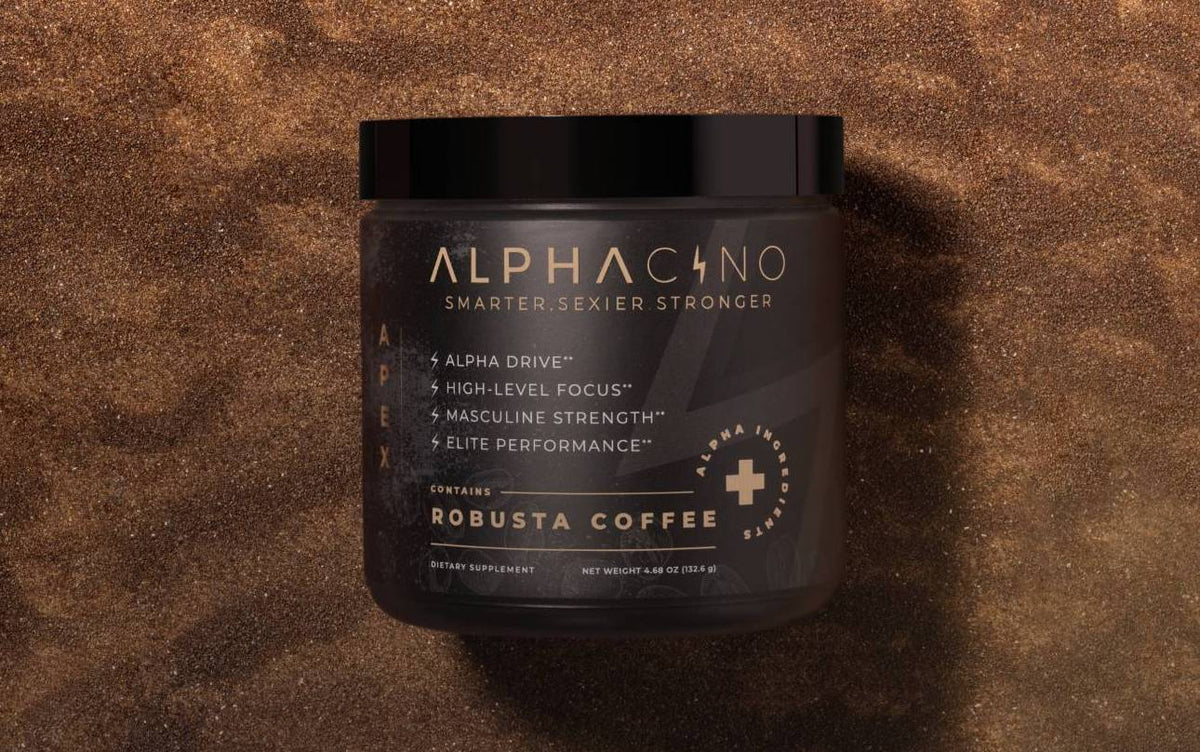
Alphacino is a different design, and the table makes the difference plain. Its figures are read from its own Supplement Facts panel22.
| Cuppa | Alphacino | |
|---|---|---|
| Coffee and caffeine | Arabica instant, about 70 mg | Robusta instant, 100 mg printed |
| Mushrooms | Lion's mane and cordyceps, about 125 mg of 8:1 extract each | Lion's mane only, 500 mg of fruiting-body extract printed |
| Ashwagandha | 250 mg KSM-66 | 600 mg KSM-66, the dose in the stress, strength and weight trials |
| L-theanine | 100 mg with 70 mg caffeine | 100 mg with 100 mg caffeine |
| Other actives | MCT and fibre, 1,000 mg combined | 224 mg black maca 4:1, 50 mg S7 blend, 83.3 mcg vitamin D |
| Calories and sugar | 15, none | 10, none |
| Price, 30 servings | $29 on sale, $39 list | $49.97 (list $55.97) |
| Per cup | 97 cents to $1.30 | $1.67 |
| Guarantee | 30 days, original packaging | 60 days |
| Built for | Anyone who wants a coffee-tasting instant with a light functional layer at the lowest price | Men who want a full coffee's caffeine and the men's-health stack at the trial doses |
Where they overlap, the comparison is direct. Both pair 100 mg of theanine with caffeine; Alphacino has more caffeine to pair it with. Both carry KSM-66; Alphacino's 600 mg is the dose in most of the trials and Cuppa's 250 mg is the low arm of one1011. Both carry lion's mane at a printed figure below the trial range; Alphacino's 500 mg of extract is four times Cuppa's 125 mg, and neither reaches the 1.8 g the smallest trial used5. Cuppa has cordyceps, a second mushroom; Alphacino spends that space on maca, S7 and vitamin D. Cuppa costs about 40 to 70 cents a cup less. The guarantee is twice as long on Alphacino.
Is Cuppa legit?
Yes. It is a real company with a complete printed label, an explained extract footnote, stated third-party testing, a 30-day money-back guarantee, free US shipping, international shipping and a subscription with pause, skip and cancel in the account1. The coffee is a real arabica instant at a real caffeine dose, and the theanine and ashwagandha are real doses of the right extracts.
Four fair criticisms. The "1,000 mg" mushroom figures are equivalents and the scoop holds 250 mg of extract; the brand says so in a footnote, but the big number is the one on the page. The FAQ's claim that its lines are "the recommended daily amounts for effective doses" is true of the theanine and arguable for the ashwagandha, and not true of the mushrooms, MCT or fibre against the trials1. The subscription discount is shown as 35% in one place and 15% in another on the same day, and the refund policy requires the product back in its original packaging, which is stricter than the "free returns" wording suggests1. And the label prints "Ashwagandha Root Fruiting Body Extract", a slip that a brand selling itself on label literacy should fix. None of that is a scam. It is a well-priced, well-disclosed mild functional coffee whose marketing numbers are bigger than its doses, which describes most of the category.
Who should pick which
Pick Cuppa if you want an instant that tastes like coffee, at 70 mg, with a light theanine-and-ashwagandha layer, at the lowest labelled price in the category, or if you want a decaf or K-cup version of that, which almost nobody else offers. It is a very good daily cup for the money.
Skip Cuppa if you are buying it for the mushrooms; 125 mg of extract, however concentrated, is not a trial dose, and a lion's mane or cordyceps capsule that prints its grams will do that job. Skip it if you drink coffee for the lift and 70 mg feels thin, or if you want the full 600 mg ashwagandha dose from one cup.
Pick Alphacino if you want a real coffee's caffeine paired with theanine, 600 mg of KSM-66 in one scoop, 500 mg of lion's mane, and the maca and vitamin D on top, with a 60-day guarantee, and you are willing to pay 40 to 70 cents a cup more for the doses.

Where Alphacino fits
We make the other kind of cup. Alphacino is a robusta instant at a printed 100 mg of caffeine with 100 mg of L-theanine, the pairing from the attention trial14; 600 mg of KSM-66 ashwagandha, the dose from the stress, strength and weight-management trials101213; 500 mg of HericiumPrime lion's mane fruiting-body extract; 224 mg of black maca 4:1; 50 mg of S7; and 83.3 mcg of vitamin D, every figure on the Supplement Facts panel22. It is $49.97 for 30 servings with a 60-day money-back guarantee. The best mushroom coffee for men ranking runs Cuppa, RYZE, Alphacino and the rest through the same label test, and the product page has the full panel.
Frequently asked questions
Is Cuppa mushroom coffee good for you?
For a healthy adult, yes, as a daily coffee: sugar-free, 15 calories, about 70 mg of caffeine, a theanine pairing with trial support and a low-arm dose of KSM-66 ashwagandha. Its mushroom and fibre lines are too small to carry the health claims made for them; think of it as a smoother coffee with a light functional layer.
What are the ingredients in Cuppa mushroom coffee?
Per serving, from the product page on 26 September 2026: 100% arabica instant coffee at about 70 mg of caffeine, organic lion's mane and cordyceps fruiting-body extracts printed as 1,000 mg each but held as 250 mg of 8:1 extract in total, 250 mg of KSM-66 ashwagandha, 1,000 mg of MCT and prebiotic fibre combined, and 100 mg of L-theanine, plus natural flavours in the flavoured versions.
How much caffeine is in Cuppa mushroom coffee?
About 70 mg a serving in the regular coffee, about 40 mg in the mushroom matcha, and traces in the decaf, which the brand describes as 99% or more caffeine-free.
Cuppa or RYZE?
Cuppa, on the label: it prints its doses, adds ashwagandha and theanine, has more caffeine, costs less at every size and offers a decaf and pods. RYZE if you want an organic-certified coffee and a creamier coconut-milk cup. Neither reaches a trial dose of any mushroom.
Does Cuppa mushroom coffee help you lose weight?
Not on its own. The ashwagandha trial the brand relies on used 600 mg a day in stressed adults, which is two cups of Cuppa, and found a small effect. The realistic mechanism is swapping a sweetened coffee for a 15-calorie one.
Where is Cuppa mushroom coffee made, and who owns it?
The brand's FAQ says it is made in the USA from globally sourced ingredients. The site does not name its founders or owners; its contact page tells the origin story in the first person without names.
Where can you buy Cuppa mushroom coffee?
From bettercuppa.com, where it was $29 for 30 servings on the day we read it, and on Amazon, where the same flavours and pod formats appeared in a search the same day. Shipping is free in the US.
Sources
- Better Cuppa. Healthy Coffee product page (ingredients, footnote, prices, subscription block, preparation, reviews widget), the FAQ page (fruiting body, caffeine, doses, testing, where made, organic status, weight loss, acidity, decaf, matcha, shipping), the refund policy page, the customer reviews page, the wholesale page and the contact page, bettercuppa.com, as read from the store's public product feed and pages on 26 September 2026; Amazon listings for Cuppa flavours and pods as returned by a web search the same day. bettercuppa.com
- U.S. Department of Agriculture, Agricultural Research Service (2018). SR Legacy, via FoodData Central: brewed coffee (fdcId 171890). Serving value calculated from the per-100 g figure and the USDA 8 oz portion. fdc.nal.usda.gov
- Mori, K., Inatomi, S., Ouchi, K., Azumi, Y., & Tuchida, T. (2009). Improving effects of the mushroom Yamabushitake (Hericium erinaceus) on mild cognitive impairment: a double-blind placebo-controlled clinical trial. Phytotherapy Research, 23(3), 367 to 372. doi:10.1002/ptr.2634
- Saitsu, Y., Nishide, A., Kikushima, K., Shimizu, K., & Ohnuki, K. (2019). Improvement of cognitive functions by oral intake of Hericium erinaceus. Biomedical Research, 40(4), 125 to 131. doi:10.2220/biomedres.40.125
- Docherty, S., Doughty, F. L., & Smith, E. F. (2023). The acute and chronic effects of lion's mane mushroom supplementation on cognitive function, stress and mood in young adults: a double-blind, parallel groups, pilot study. Nutrients, 15(22), 4842. doi:10.3390/nu15224842
- Menon, A., et al. (2025). Benefits, side effects, and uses of Hericium erinaceus as a supplement: a systematic review. Frontiers in Nutrition, 12, 1641246. doi:10.3389/fnut.2025.1641246
- Chen, S., Li, Z., Krochmal, R., Abrazado, M., Kim, W., & Cooper, C. B. (2010). Effect of Cs-4 (Cordyceps sinensis) on exercise performance in healthy older subjects: a double-blind, placebo-controlled trial. Journal of Alternative and Complementary Medicine, 16(5), 585 to 590. doi:10.1089/acm.2009.0226
- Hirsch, K. R., Smith-Ryan, A. E., Roelofs, E. J., Trexler, E. T., & Mock, M. G. (2017). Cordyceps militaris improves tolerance to high-intensity exercise after acute and chronic supplementation. Journal of Dietary Supplements, 14(1), 42 to 53. doi:10.1080/19390211.2016.1203386
- Parcell, A. C., Smith, J. M., Schulthies, S. S., Myrer, J. W., & Fellingham, G. (2004). Cordyceps sinensis (CordyMax Cs-4) supplementation does not improve endurance exercise performance. International Journal of Sport Nutrition and Exercise Metabolism, 14(2), 236 to 242. doi:10.1123/ijsnem.14.2.236
- Chandrasekhar, K., Kapoor, J., & Anishetty, S. (2012). A prospective, randomized double-blind, placebo-controlled study of safety and efficacy of a high-concentration full-spectrum extract of ashwagandha root in reducing stress and anxiety in adults. Indian Journal of Psychological Medicine, 34(3), 255 to 262. doi:10.4103/0253-7176.106022
- Salve, J., Pate, S., Debnath, K., & Langade, D. (2019). Adaptogenic and anxiolytic effects of ashwagandha root extract in healthy adults: a double-blind, randomized, placebo-controlled clinical study. Cureus, 11(12), e6466. doi:10.7759/cureus.6466
- Wankhede, S., Langade, D., Joshi, K., Sinha, S. R., & Bhattacharyya, S. (2015). Examining the effect of Withania somnifera supplementation on muscle strength and recovery: a randomized controlled trial. Journal of the International Society of Sports Nutrition, 12, 43. doi:10.1186/s12970-015-0104-9
- Choudhary, D., Bhattacharyya, S., & Joshi, K. (2017). Body weight management in adults under chronic stress through treatment with ashwagandha root extract: a double-blind, randomized, placebo-controlled trial. Journal of Evidence-Based Complementary and Alternative Medicine, 22(1), 96 to 106. doi:10.1177/2156587216641830
- Haskell, C. F., Kennedy, D. O., Milne, A. L., Wesnes, K. A., & Scholey, A. B. (2008). The effects of L-theanine, caffeine and their combination on cognition and mood. Biological Psychology, 77(2), 113 to 122. doi:10.1016/j.biopsycho.2007.09.008
- Mumme, K., & Stonehouse, W. (2015). Effects of medium-chain triglycerides on weight loss and body composition: a meta-analysis of randomized controlled trials. Journal of the Academy of Nutrition and Dietetics, 115(2), 249 to 263. doi:10.1016/j.jand.2014.10.022
- Scheller, M., et al. (2026). Gastrointestinal issues predominate among side effects of medium-chain triglyceride consumption: a systematic review. Frontiers in Nutrition. doi:10.3389/fnut.2026.1829954
- Nagy, D. U., Sándor-Bajusz, K. A., Bódy, B., Decsi, T., Van Harsselaar, J., Theis, S., & Lohner, S. (2023). Effect of chicory-derived inulin-type fructans on abundance of Bifidobacterium and on bowel function: a systematic review with meta-analyses. Critical Reviews in Food Science and Nutrition, 63(33), 12018 to 12035. doi:10.1080/10408398.2022.2098246
- EFSA Panel on Dietetic Products, Nutrition and Allergies (2015). Scientific opinion on the safety of caffeine. EFSA Journal, 13(5), 4102. doi:10.2903/j.efsa.2015.4102
- McLellan, T. M., Caldwell, J. A., & Lieberman, H. R. (2016). A review of caffeine's effects on cognitive, physical and occupational performance. Neuroscience & Biobehavioral Reviews, 71, 294 to 312. doi:10.1016/j.neubiorev.2016.09.001
- Drake, C., Roehrs, T., Shambroom, J., & Roth, T. (2013). Caffeine effects on sleep taken 0, 3, or 6 hours before going to bed. Journal of Clinical Sleep Medicine, 9(11), 1195 to 1200. doi:10.5664/jcsm.3170
- Everyday Dose. Coffee+ product listings, everydaydose.com, as read from the store's public product feed on 17 September 2026 and summarised in our Everyday Dose review. everydaydose.com
- Alphacino. Supplement Facts panel, Alphacino Premium Mushroom Coffee, as printed on the jar and shown on the product page, read 26 September 2026. alphacino.com