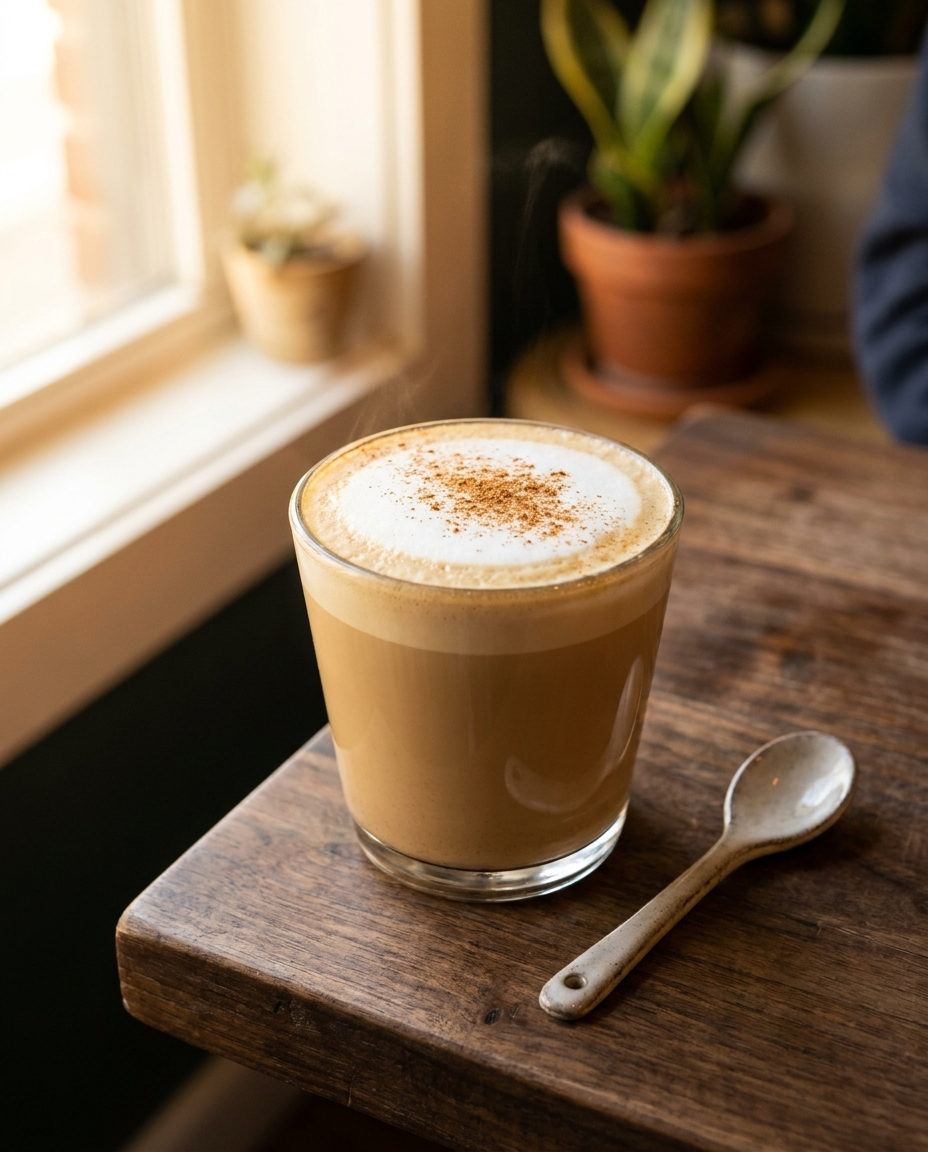
Short answer: maca has better human evidence than most things sold to men, and it is narrower than the marketing. In the trials, 1.5 to 3 g a day of maca improved sexual desire from week 8 in healthy men aged 21 to 561, a 2.4 g extract improved erectile scores more than placebo in men with mild erectile dysfunction over 12 weeks3, and 3 g of black or red maca extract improved mood, energy and self-rated health over 12 weeks in 175 adults5. What it did not do, in the same men over the same 12 weeks, is move testosterone, luteinising hormone, FSH, prolactin or oestradiol by any measurable amount2. Maca contains no caffeine10, works over weeks rather than hours, and the "black is best for men" claim rests on composition and tradition rather than a won head-to-head5. Below: the trials one by one, the testosterone answer, black against red and yellow, the dose the studies used, what "maca coffee" actually is, and who should be careful.
What is black maca?
Maca, Lepidium meyenii, is a root vegetable in the brassica family, the same family as mustard and broccoli. It has been cultivated for more than 2,000 years and grows only in the central Peruvian Andes at 4,000 to 4,500 m, where it is eaten as food and used in traditional medicine9. The edible part is the hypocotyl, the swollen root-stem, which is dried and either milled into powder, gelatinised (cooked to remove starch), or extracted. Exports from Peru rose from about 1.4 million to 6.2 million US dollars a year between 2001 and 2010 as the root found a market outside the Andes9.
The colours are natural variants of the same species, sorted at harvest by the skin of the hypocotyl: yellow (the most common), red and black, with several shades between. They are not different plants, and the trials that gave maca its reputation mostly used gelatinised maca of unspecified colour1,2. The one trial that compared colours directly found that spray-dried black maca extract carried more fatty acids and macamides, the compounds most associated with maca's effects, while red maca carried more GABA5. That composition difference is the basis of the "black for men" tradition. Whether it produces a different result in men is the question the trials section answers.
Black maca benefits for men: what the trials show
Everything in this table is a randomised, placebo-controlled human trial, with the dose the trial used and the result its abstract reports. Where a study used unspecified or mixed-colour maca, the row says so, because most of the evidence was not built on black maca specifically.
| Outcome | Trial | Dose and length | Result |
|---|---|---|---|
| Sexual desire | Healthy men aged 21 to 56, gelatinised maca1 | 1,500 or 3,000 mg a day, 12 weeks | Self-rated desire improved from week 8, with no change in testosterone or oestradiol and no link to mood scores |
| Erectile function, mild ED | 50 men with mild erectile dysfunction, maca dry extract3 | 2,400 mg a day, 12 weeks | Erectile score (IIEF-5) rose 1.6 points on maca against 0.5 on placebo; physical and social well-being scores improved only on maca |
| Mood, energy, health status | 175 adults at low and high altitude, black or red maca spray-dried extract5 | 3,000 mg a day, 12 weeks | Both colours improved mood, energy and health-related quality of life against placebo; red did better on mood and energy; black lowered blood glucose; no serious adverse effects |
| Endurance | 8 trained male cyclists, maca extract, crossover4 | 2,000 mg a day, 14 days | 40 km time-trial time improved against baseline but not against placebo; sexual desire improved against both |
| Semen quality | 20 healthy men aged 20 to 40, milled maca8 | 1,750 mg a day, 12 weeks | Sperm concentration and motility showed rising trends against placebo, not statistically significant; hormones unchanged |
| Antidepressant-related sexual dysfunction | 20 remitted patients on SSRIs, 17 of them women7 | 1,500 or 3,000 mg a day | Sexual function scores improved on 3,000 mg but not on 1,500 mg; well tolerated |
| Testosterone and other hormones | Healthy men aged 21 to 56, gelatinised maca2 | 1,500 or 3,000 mg a day, 12 weeks | No effect on testosterone, LH, FSH, prolactin, 17-OH-progesterone or oestradiol at 2, 4, 8 or 12 weeks |
The systematic review that pooled the sexual-function trials up to 2010 found four that qualified, called the evidence for maca "limited", and said the trials were too small and too few to draw firm conclusions6. That is the honest frame. Within it, three things are consistent across studies: desire goes up in healthy men after about eight weeks, the erectile effect in mild ED is small but real, and none of it runs through testosterone. The energy and mood result is the newest and the largest trial, and it is the one that used black maca by name5. Nothing in the table happens on day one; the earliest measured effect is the cyclists' 14 days, and the desire effect was first significant at week 8.

Does black maca increase testosterone?
No, and this is the best-measured thing about it. The same research group that found the desire effect ran a second 12-week trial in healthy men aged 21 to 56 specifically to test the hormone claim. Men took 1.5 or 3 g of gelatinised maca a day and had luteinising hormone, follicle-stimulating hormone, prolactin, 17-alpha-hydroxyprogesterone, testosterone and oestradiol measured at baseline and at 2, 4, 8 and 12 weeks. Maca had no effect on any of them, at any dose, at any time point2. The semen pilot that came 12 years later reached the same conclusion on hormones at 1.75 g a day8.
What makes maca interesting is that desire rose anyway. In the desire trial, the improvement at weeks 8 and 12 was independent of testosterone, oestradiol and the depression and anxiety scores1, so whatever maca does, it is not doing it by raising androgens. For a man whose concern is genuinely low testosterone, that matters: maca is not a treatment for it, and a coffee with maca in it is not either. The ingredient with a men's trial showing higher testosterone is Tongkat Ali, in stressed adults and older men who started low, and the ingredient with the best stress-and-cortisol evidence is KSM-66 ashwagandha; both are set out in mushroom coffee for men's vitality and testosterone. If low testosterone is the worry, the answer is a morning blood test, and what to do about coffee before it is its own guide.
Black vs red vs yellow maca for men
Only one randomised trial has put two colours side by side in people. It gave 175 adults, half at sea level and half in the highlands, 3 g a day of spray-dried black maca extract, red maca extract or placebo for 12 weeks5. Both colours beat placebo on mood, energy and health-related quality of life, and both were well tolerated. Red maca did slightly better on mood and energy. Black maca lowered blood glucose, which red did not, and black maca reduced haemoglobin in highlanders with abnormally high levels, which is a finding for people living at altitude rather than for men in general. Chemically, black maca carried more fatty acids and macamides, red more GABA.
So the traditional ranking, black for men, red for women and bone, yellow for everyday use, is not what the trial found. On the outcomes it measured, red edged black. Black's case rests on its macamide content, which is the compound family most often linked to maca's effects on desire, and on the fact that it is the colour the traditional men's use points to9. That is a reasonable basis for choosing it, and it is the reason a men's formula picks black over yellow, but it is a composition argument, not a trial result. Anyone telling you black maca has been proven better for men in a head-to-head is describing a study that does not exist. The desire and hormone trials that built maca's reputation used gelatinised maca of unspecified colour1,2.
Does maca have caffeine?
No. Caffeine is made by a short list of plants: coffee, tea, cacao, yerba mate, guarana and kola. The biochemistry review that maps caffeine synthesis lists the caffeine-producing genera as Camellia, Coffea, Theobroma and Ilex10. Maca is a brassica, related to mustard, and makes none. That has two practical consequences. First, maca on its own gives no lift you can feel in the hour after taking it; the "energy" in the 2016 trial was a 12-week questionnaire result, not a stimulant effect5. Second, maca adds nothing to the caffeine of a coffee it is blended into, so a "maca coffee" has exactly the caffeine of its coffee, which the brand should print; the figures for every brand are in how much caffeine is in mushroom coffee.
How much black maca should a man take?
The trials give a clear range, and it is higher than most blends carry.
| Form | Trial dose | What it was tested for |
|---|---|---|
| Gelatinised maca powder | 1,500 to 3,000 mg a day for 12 weeks1,2 | Desire (positive); hormones (no change) |
| Milled maca powder | 1,750 mg a day for 12 weeks8 | Semen quality (trend only) |
| Maca extract | 2,000 mg a day for 14 days4; 2,400 mg a day for 12 weeks3; 3,000 mg a day for 12 weeks5 | Endurance and desire; erectile function in mild ED; mood, energy and health status |
| Alphacino, per scoop | 224 mg of a 4:1 black maca extract, about 900 mg of root equivalent | At the bottom of the powder range; below every extract trial's dose |
Two readings follow. If you want the dose the trials used, a standalone maca product at 1.5 to 3 g a day is how you get it, taken daily for at least eight weeks before judging it1. A coffee cannot carry 3 g of maca in a scoop alongside the coffee and everything else, and no coffee brand does; the ones that print a maca line at all are in the hundreds of milligrams, and some print a figure with no form, as the Alpha Brew review shows for a 1,000 mg line of unstated type. Alphacino's 224 mg is a 4:1 extract, which is why we quote it as about 900 mg of root equivalent: near the low end of the powder trials, and honestly below the extract trials. We would rather print that than pretend a scoop is a study dose. The dosing question for the whole cup, how many scoops a day and how the caffeine adds up, is in how much mushroom coffee can I drink a day.
On timing: the trials measured maca after 8 to 12 weeks of daily use, and the one that measured earlier found its desire effect at 14 days4. It does not matter what time of day you take it, and a missed day matters more than a late one. The week-by-week timeline for every ingredient in a mushroom coffee is in how long mushroom coffee takes to work.

Maca coffee for men: what it is, and what it can and cannot do
"Maca coffee" is a product category rather than a recipe: instant coffee or ground coffee with maca powder or extract blended in, usually sold to men on energy and drive. Read it with the two facts above in hand. The maca adds no caffeine, so the morning lift is whatever the coffee carries. And the maca dose in a scoop is a fraction of the trial dose, so what you are buying is a daily, low-dose maca habit with your coffee, not a trial replicated in a cup. That is not nothing: the trials' one consistent requirement was daily use for weeks, and the reason most supplements fail is that people stop taking them, which nobody does with coffee. But the honest expectation from a maca coffee is a slow, modest effect on desire and mood over two to three months, if any, and no effect at all on testosterone1,2,5.
Three questions sort a maca coffee quickly. Does it print the maca amount, and the form (powder, gelatinised, or an extract with its ratio)? Does it print the caffeine? And is maca the only men's ingredient, or is it sitting beside something with a stronger trial at a dose near the trial's, such as KSM-66 ashwagandha at 600 mg for stress11? A cup that answers all three is a serious product; a cup that answers none is a coffee with a word on the label. How the brands compare on exactly those questions is in the best mushroom coffee for men.
Maca side effects and who should be careful
Across the trials, maca was well tolerated. The 175-person trial recorded side effects by self-report and found no serious adverse effects on either colour at 3 g a day for 12 weeks5; the SSRI pilot reported it as well tolerated at up to 3 g7; the desire and hormone trials ran 12 weeks at up to 3 g without hormone disturbance1,2. Maca is a food in the Andes, eaten in far larger amounts than any capsule9. Three cautions are still worth stating.
Blood glucose. Black maca extract lowered blood glucose in the 2016 trial5. For most men that is neutral or welcome; for a man on glucose-lowering medication it is a reason to mention maca to the prescriber.
Thyroid. Maca is a brassica, and brassicas are the family associated with goitrogenic compounds. No maca trial reported a thyroid problem, and none was designed to look for one, so the honest position is that anyone with a thyroid condition should ask a doctor rather than assume.
Pregnancy, and medication. There are no trials of maca in pregnancy, so it is not for a partner who is pregnant or trying to be, whatever the fertility marketing says. And the erectile-function trial excluded men on other treatments; if you take medication for erectile dysfunction, blood pressure or a hormone condition, ask before adding maca. The general list of what can go wrong in a mushroom coffee, ingredient by ingredient, is in mushroom coffee side effects.

Where Alphacino fits
Alphacino carries 224 mg of a 4:1 black maca extract in every scoop, and we print it that way, ratio included, so you can do the arithmetic yourself: about 900 mg of root equivalent, near the bottom of the trial range. We chose black for its macamide content and its traditional use in men, and we say plainly that the trial evidence for "black beats red in men" does not exist. Maca is not the ingredient the cup is built around. That is the 600 mg of KSM-66 ashwagandha, the full dose the stress trial used11, with 500 mg of lion's mane extract, 100 mg of L-theanine against 100 mg of robusta caffeine, and the S7 blend, each on its own line with its amount. The maca is there for the same reason the trials give: a daily, modest dose over weeks, in a cup you will not forget to drink. The KSM-66 evidence is in the KSM-66 guide, the lion's mane evidence in lion's mane benefits for men, and the label is on the product page.
Frequently asked questions
What does black maca do for men?
In randomised trials, 1.5 to 3 g of maca a day improved sexual desire in healthy men from week 8, a 2.4 g extract improved erectile scores in men with mild erectile dysfunction over 12 weeks, and 3 g of black maca extract improved mood, energy and self-rated health over 12 weeks. It did not change testosterone or any other reproductive hormone.
Does black maca increase testosterone?
No. A 12-week trial in healthy men measured testosterone, LH, FSH, prolactin and oestradiol at 2, 4, 8 and 12 weeks on 1.5 or 3 g of maca a day and found no change at any point. Maca's effect on desire happens without any change in testosterone.
Is black maca better than red or yellow maca for men?
Not in the only trial that compared them. Black and red maca extracts both improved mood, energy and quality of life against placebo, and red did slightly better on mood and energy; black lowered blood glucose. Black maca carries more macamides and fatty acids, which is the basis for choosing it for men, but that is a composition argument, not a trial result.
Does maca have caffeine?
No. Maca is a brassica and makes no caffeine; the caffeine-producing plants are coffee, tea, cacao, mate, guarana and kola. A maca coffee has exactly the caffeine of the coffee in it.
How much black maca should a man take?
The trials used 1.5 to 3 g a day of maca powder, or 2 to 3 g a day of extract, for 12 weeks. Coffee blends carry a fraction of that; Alphacino's 224 mg of 4:1 extract is about 900 mg of root equivalent, near the bottom of the powder range.
How long does maca take to work?
Weeks, not hours. The desire effect was first significant at week 8 of 12; the cyclists' trial found a desire effect at 14 days; the mood and energy results were measured at 12 weeks. Nothing about maca is felt on the day you take it.
Is maca coffee good for men?
It is a low-dose daily maca habit with your coffee. The maca adds no caffeine and sits well below the trial doses, so expect a slow, modest effect on desire and mood over two to three months at most, and no effect on testosterone. Judge a maca coffee by whether it prints the maca amount and form, the caffeine, and what else is in the scoop.
Sources
- Gonzales, G. F., Córdova, A., Vega, K., Chung, A., et al. (2002). Effect of Lepidium meyenii (maca) on sexual desire and its absent relationship with serum testosterone levels in adult healthy men. Andrologia, 34(6), 367 to 372. doi:10.1046/j.1439-0272.2002.00519.x
- Gonzales, G. F., Córdova, A., Vega, K., Chung, A., et al. (2003). Effect of Lepidium meyenii (maca), a root with aphrodisiac and fertility-enhancing properties, on serum reproductive hormone levels in adult healthy men. Journal of Endocrinology, 176(1), 163 to 168. doi:10.1677/joe.0.1760163
- Zenico, T., Cicero, A. F., Valmorri, L., Mercuriali, M., et al. (2009). Subjective effects of Lepidium meyenii (maca) extract on well-being and sexual performances in patients with mild erectile dysfunction: a randomised, double-blind clinical trial. Andrologia, 41(2), 95 to 99. doi:10.1111/j.1439-0272.2008.00892.x
- Stone, M., Ibarra, A., Roller, M., Zangara, A., et al. (2009). A pilot investigation into the effect of maca supplementation on physical activity and sexual desire in sportsmen. Journal of Ethnopharmacology, 126(3), 574 to 576. doi:10.1016/j.jep.2009.09.012
- Gonzales-Arimborgo, C., Yupanqui, I., Montero, E., Alarcón-Yaquetto, D. E., et al. (2016). Acceptability, safety, and efficacy of oral administration of extracts of black or red maca (Lepidium meyenii) in adult human subjects: a randomized, double-blind, placebo-controlled study. Pharmaceuticals, 9(3), 49. doi:10.3390/ph9030049
- Shin, B. C., Lee, M. S., Yang, E. J., Lim, H. S., & Ernst, E. (2010). Maca (L. meyenii) for improving sexual function: a systematic review. BMC Complementary and Alternative Medicine, 10, 44. doi:10.1186/1472-6882-10-44
- Dording, C. M., Fisher, L., Papakostas, G., Farabaugh, A., et al. (2008). A double-blind, randomized, pilot dose-finding study of maca root (L. meyenii) for the management of SSRI-induced sexual dysfunction. CNS Neuroscience and Therapeutics, 14(3), 182 to 191. doi:10.1111/j.1755-5949.2008.00052.x
- Melnikovova, I., Fait, T., Kolarova, M., Fernandez, E. C., et al. (2015). Effect of Lepidium meyenii Walp. on semen parameters and serum hormone levels in healthy adult men: a double-blind, randomized, placebo-controlled pilot study. Evidence-Based Complementary and Alternative Medicine, 2015, 324369. doi:10.1155/2015/324369
- Gonzales, G. F. (2012). Ethnobiology and ethnopharmacology of Lepidium meyenii (maca), a plant from the Peruvian highlands. Evidence-Based Complementary and Alternative Medicine, 2012, 193496. doi:10.1155/2012/193496
- Ashihara, H., Sano, H., & Crozier, A. (2008). Caffeine and related purine alkaloids: biosynthesis, catabolism, function and genetic engineering. Phytochemistry, 69(4), 841 to 856. doi:10.1016/j.phytochem.2007.10.029
- Chandrasekhar, K., Kapoor, J., & Anishetty, S. (2012). A prospective, randomized double-blind, placebo-controlled study of safety and efficacy of a high-concentration full-spectrum extract of ashwagandha root in reducing stress and anxiety in adults. Indian Journal of Psychological Medicine, 34(3), 255 to 262. doi:10.4103/0253-7176.106022