Short answer: one to three cups a day for most healthy adults, and the number is set by caffeine, not by mushrooms. The ceiling that matters is 400 mg of caffeine a day and about 200 mg in any single serving, so a 50 mg cup allows more cups than a 100 mg one. Drinking it every day is not only fine but necessary if you want anything from the botanicals, because the trials behind lion's mane and ashwagandha ran for eight to sixteen weeks of daily use. The one rule worth keeping is the last cup: 400 mg of caffeine six hours before bed still measurably wrecked sleep in a controlled trial. The arithmetic, by brand, is below.
How many cups a day
Work from milligrams, not mugs. European food safety review put single doses up to 200 mg and daily intakes up to 400 mg in the range not raising safety concerns for healthy adults1, and that is the number every "how many cups" answer reduces to. Divide 400 by what your brand actually carries.
| If your cup carries | Cups to reach 400 mg | A sensible daily number | Example |
|---|---|---|---|
| 35 to 50 mg | 8 to 11 | 2 to 3, limited by taste and cost rather than caffeine | MUD\WTR, RYZE medium, Everyday Dose Mild |
| 70 to 90 mg | 4 to 5 | 2 to 3 | BodyBrain, Everyday Dose Medium, RYZE dark |
| 100 mg | 4 | 1 to 3 | Alphacino |
| 150 mg and up | 2 to 3 | 1 to 2 | a strong brewed coffee, for comparison |
Two cautions the cup count hides. The 400 mg is your whole day, not just the mushroom coffee, so tea, energy drinks, pre-workout and cola all come out of the same budget. And the 200 mg single-serving figure matters if you are the sort who makes one enormous mug. Our caffeine-by-brand table lists what each brand publishes, and how much caffeine is too much does the whole-day arithmetic.
How often should you drink mushroom coffee?
Every day, if you want the botanicals to do anything at all. This is the part most "how many cups" articles skip, and it inverts the usual supplement advice about cycling.
The caffeine works on the day you drink it and needs no consistency. The rest of the label is the opposite. The lion's mane cognition trial dosed 3 g a day for 16 weeks, and the improvement faded within four weeks of stopping2. The KSM-66 ashwagandha stress trial ran 60 days of daily dosing3. The shiitake immune study ran four weeks of daily mushrooms4. Nothing in this category was tested as an occasional drink, so an occasional cup is a coffee with a garnish.
The practical reading:
- Daily, at the same time, for at least eight weeks before you judge whether the botanicals did anything.
- Skipping days is fine for safety and pointless for effect. There is no need to cycle off mushroom coffee the way people cycle stimulants.
- Judge the caffeine on day one and the mushrooms in month two. If a brand promises the second on the first morning, it is describing the caffeine.
How quickly each part shows up is covered in how long mushroom coffee takes to work.
Can you drink mushroom coffee every day?
Yes, and the two things that change with daily use both belong to the caffeine. The first is tolerance. When volunteers took 3 mg of caffeine per kilogram every day for 20 days, the boost to their peak aerobic power shrank across the first 15 days and the boost to sprint power was still present on some days and gone on others8. The alertness you feel does not vanish, but the edge it gives you flattens with daily use, which is one reason a 100 mg cup that feels strong in week one feels ordinary by week four. The second is withdrawal if you stop. A review of 57 experimental studies validated headache, fatigue, low alertness, drowsiness and irritability as genuine withdrawal symptoms, with headache in about half of people, onset 12 to 24 hours after the last dose, a peak at 20 to 51 hours and a run of 2 to 9 days9. Neither is a reason to skip days. Tolerance is a reason not to escalate the cup count, and withdrawal is a reason to taper rather than stop cold if you ever want to.
The botanicals point the other way entirely, and this is the part worth holding onto: every positive trial on lion's mane, ashwagandha and shiitake was a daily-dosing trial, and the lion's mane benefit faded within a month of stopping2. Daily is the design, not a risk.

Can you drink two or three cups a day?
Yes, at almost any brand's caffeine level. Two 100 mg cups is 200 mg, half the daily ceiling. Three is 300 mg, still under. At 48 mg a cup you would need eight before the caffeine became the limiting factor, which is why low-caffeine blends are marketed as all-day drinks.
What changes with the second and third cup is not the mushroom dose in any meaningful way, since you are adding a few hundred milligrams of extract against trial doses measured in grams. What changes is the caffeine curve and, in latte-style blends, the fat and fibre load. If a second cup gives you loose stools or cramping, that is usually the MCT oil and coconut milk rather than the mushrooms, which the gut-effects guide separates out.

How much caffeine is in a cup of mushroom coffee?
Anywhere from a twentieth of a regular coffee to a full one, which is why "how many cups" has no single answer. Read from each brand's own product page on 6 September 2026:
| Brand | Caffeine per serving | Cups to 400 mg |
|---|---|---|
| Alphacino | 100 mg | 4 |
| Everyday Dose Coffee+ | 45 mg Mild, 90 mg Medium | 8, or 4 |
| RYZE | 48 mg medium roast, 80 to 90 mg dark roast | 8, or 4 to 5 |
| BodyBrain | About 70 mg | 5 |
| Cuppa | About 70 mg | 5 |
| Four Sigmatic Focus ground coffee | Regular brewed coffee, not stated as a number | About 4 |
| MUD\WTR Original | "A fraction" of coffee's, by the brand's wording | Not the limiting factor |
| Beyond Brew | One-twentieth of a cup of coffee, by the brand's wording | Not the limiting factor |
Two brands in that table do not state a milligram figure at all. That is a fair reason to pick a different one if the daily count matters to you, because you cannot budget what is not printed. The full comparison with sources is in how much caffeine is in mushroom coffee.
What happens if you drink too much
Almost every symptom people attribute to "too much mushroom coffee" is caffeine. Above roughly 400 mg in a day, expect jitteriness, a raised heart rate, anxiety, headache and disturbed sleep1. Coffee also stimulates colonic motility within about four minutes of drinking it, regular or decaf, which is why more cups means more trips to the bathroom5.
The genuinely ingredient-specific risks belong to mushrooms that are not in every blend, so read your own label rather than the category:
| Ingredient | What too much looks like | In Alphacino? |
|---|---|---|
| Caffeine | Jitters, raised heart rate, anxiety, broken sleep above 400 mg a day1 | Yes, 100 mg per serving |
| MCT oil, coconut milk | Loose stools and cramping, worst in the first week | No |
| Mushroom fibre and beta-glucans | Gas and bloating that settles as the gut adapts | Yes, at 500 mg of extract |
| Reishi | Documented case reports of liver injury and an antiplatelet effect6 | No |
| Chaga | High oxalate load; a documented kidney case at sustained high intake | No |
| Ashwagandha | Mild stomach upset or drowsiness in a minority; interacts with thyroid, sedative and immunosuppressant medication3 | Yes, 600 mg KSM-66 |
The full ingredient-by-ingredient version is in our side-effects guide, and reishi, chaga and turkey tail covers the three we deliberately leave out.
The one timing rule that is actually tested
Stop at least six hours before bed. In a controlled trial, 400 mg of caffeine taken at bedtime, three hours before bed and six hours before bed all significantly disrupted sleep against placebo, and the authors concluded the six-hour result was large enough to justify the standard sleep-hygiene advice7. Caffeine's half-life is roughly five hours, so a 3 pm cup is still working at bedtime.
That single rule does more for how you feel than the cup count does, because short sleep costs you the next morning, and the next morning is usually what the extra cup was for. Our post on why coffee makes you tired explains the loop, and when to drink mushroom coffee covers the rest of the day.
Who should drink less, or none
- Anyone sensitive to caffeine, or with an arrhythmia, uncontrolled high blood pressure or an anxiety disorder. Work from your doctor's number, not 400 mg.
- Anyone under 18. The same food-safety review put the figure for children and adolescents at 3 mg per kilogram of body weight a day1, which for a 60 kg teenager is under two 100 mg cups, and adaptogens have no adolescent trials at all.
- Pregnancy. Most guidance sets a much lower caffeine ceiling, and adaptogens are a separate conversation with a clinician.
- Anyone on blood thinners, thyroid medication, sedatives or immunosuppressants. Ashwagandha and reishi both have documented interactions3,6.
- Anyone whose blend hides its doses. If the label prints a blend total rather than per-ingredient milligrams, you cannot do this arithmetic at all. The RYZE review works through one such label.

How this works out for Alphacino
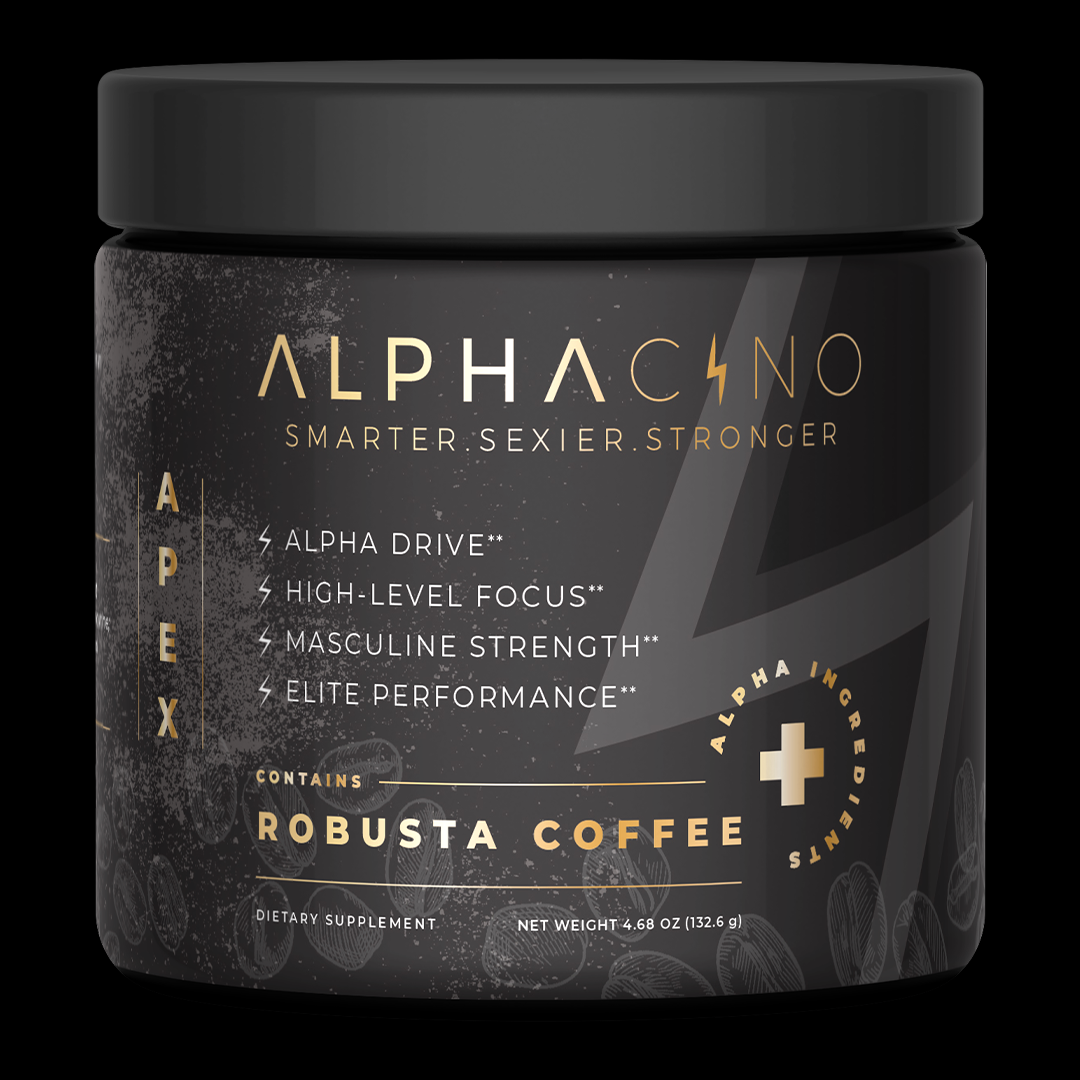
One scoop carries 100 mg of caffeine, so four cups would put you at the 400 mg daily ceiling and one or two is the normal pattern. The rest of the scoop is 600 mg of KSM-66 ashwagandha, the exact dose from its 60-day stress trial, 500 mg of HericiumPrime lion's mane fruiting-body extract, 224 mg of black maca, 100 mg of L-theanine, 50 mg of S7 and 83.3 mcg of vitamin D, all printed on the tub. There is no reishi, chaga, cordyceps or turkey tail, so four of the six rows in the caution table above do not apply, and no MCT oil or coconut milk, which is the usual cause of a second cup disagreeing with you.
Two cups is the honest upper limit, and not because of the caffeine. Two scoops is 200 mg of caffeine, half the daily ceiling, but it is also 1,200 mg of KSM-66. The escalating-dose safety study of ashwagandha took healthy volunteers to 1,250 mg a day for ten days with no safety signal10, so two cups sits inside tested amounts; three cups would be 1,800 mg, beyond anything that has been tested, with no trial suggesting a benefit above 600 mg. Caffeine sets the ceiling for most brands. For this one, the adaptogen does.
Because the ashwagandha is at its trial dose, this is a product that rewards the daily habit rather than the extra cup: one every morning for eight weeks tests it properly, and a third cup on a Tuesday does not. The 60-day money-back guarantee happens to cover exactly that test. See the label, or compare it against five other brands in best mushroom coffee for men. If you fast in the mornings, a black cup stays inside the window at 10 calories; what does and does not break a 16:8 fast is laid out ingredient by ingredient.
Frequently asked questions
How much mushroom coffee can I drink a day?
One to three cups for most healthy adults. The real limit is caffeine: up to 400 mg a day and about 200 mg in a single serving are the amounts food-safety reviews put outside safety concern. At 100 mg a cup that is four cups; at 48 mg it is eight, so check your brand rather than counting mugs.
How often should you drink mushroom coffee?
Daily, if you want the botanicals to matter. The lion's mane and ashwagandha trials dosed every day for 8 to 16 weeks, and the lion's mane benefit faded within a month of stopping. The caffeine works the same day; the mushrooms only work as a habit.
Can you drink 2 cups of mushroom coffee a day?
Yes, at any common brand's caffeine level. Two 100 mg cups is 200 mg, half the daily ceiling. If the second cup upsets your stomach it is usually the MCT oil and coconut milk in latte-style blends, not the mushrooms.
Can you drink mushroom coffee every day?
Yes, and you should if you bought it for the botanicals. There is no need to cycle off it. Keep total daily caffeine under 400 mg and stop at least 6 hours before bed.
What happens if you drink too much mushroom coffee?
Above about 400 mg of caffeine a day: jitters, raised heart rate, anxiety, headache and disturbed sleep. More cups also mean more bathroom trips, since coffee stimulates the colon within four minutes whether or not it is decaf. Ingredient-specific risks come from reishi and chaga, which are not in every blend.
This article is general information, not medical advice. If you are pregnant, take medication, or have a heart, thyroid or anxiety condition, ask your doctor for your own caffeine and adaptogen limits rather than using the general figures here.
Sources
- EFSA Panel on Dietetic Products, Nutrition and Allergies (2015). Scientific opinion on the safety of caffeine. EFSA Journal, 13(5), 4102. doi:10.2903/j.efsa.2015.4102
- Mori, K., et al. (2009). Improving effects of the mushroom Yamabushitake (Hericium erinaceus) on mild cognitive impairment: a double-blind placebo-controlled clinical trial. Phytotherapy Research, 23(3), 367 to 372. doi:10.1002/ptr.2634
- Chandrasekhar, K., Kapoor, J., & Anishetty, S. (2012). A prospective, randomized double-blind, placebo-controlled study of safety and efficacy of a high-concentration full-spectrum extract of ashwagandha root in reducing stress and anxiety in adults. Indian Journal of Psychological Medicine, 34(3), 255 to 262. doi:10.4103/0253-7176.106022
- Dai, X., et al. (2015). Consuming Lentinula edodes (shiitake) mushrooms daily improves human immunity: a randomized dietary intervention in healthy young adults. Journal of the American College of Nutrition, 34(6), 478 to 487. doi:10.1080/07315724.2014.950391
- Brown, S. R., Cann, P. A., & Read, N. W. (1990). Effect of coffee on distal colon function. Gut, 31(4), 450 to 453. doi:10.1136/gut.31.4.450
- Wachtel-Galor, S., et al. (2011). Ganoderma lucidum (Lingzhi or Reishi): a medicinal mushroom. In Herbal Medicine: Biomolecular and Clinical Aspects, 2nd ed. NCBI Bookshelf NBK92757
- Drake, C., Roehrs, T., Shambroom, J., & Roth, T. (2013). Caffeine effects on sleep taken 0, 3, or 6 hours before going to bed. Journal of Clinical Sleep Medicine, 9(11), 1195 to 1200. doi:10.5664/jcsm.3170
- Lara, B., Ruiz-Moreno, C., Salinero, J. J., & Del Coso, J. (2019). Time course of tolerance to the performance benefits of caffeine. PLoS ONE, 14(1), e0210275. doi:10.1371/journal.pone.0210275
- Juliano, L. M., & Griffiths, R. R. (2004). A critical review of caffeine withdrawal: empirical validation of symptoms and signs, incidence, severity, and associated features. Psychopharmacology, 176(1), 1 to 29. doi:10.1007/s00213-004-2000-x
- Raut, A. A., et al. (2012). Exploratory study to evaluate tolerability, safety, and activity of ashwagandha (Withania somnifera) in healthy volunteers. Journal of Ayurveda and Integrative Medicine, 3(3), 111 to 114. doi:10.4103/0975-9476.100168