Short answer: yes, for many people, and it is mostly the coffee rather than the mushrooms. In a manometry study, black coffee increased motor activity in the lower colon within four minutes and the effect lasted at least half an hour; decaf did it too, so caffeine is only part of the story. What the mushroom side of the label adds is fibre and beta-glucans, which can mean gas and bloating in the first week, and what the creamer side of some blends adds is MCT oil and coconut milk, the usual reason a mushroom coffee causes loose stools. Constipation from mushroom coffee is rarer and is normally a sign you dropped from a strong coffee to a weak one. Every ingredient is laid out below with what it does to your gut, followed by how to keep the benefit and lose the urgency.
Why coffee makes you poop in the first place
This is one of the better-studied quirks of coffee. When researchers surveyed 99 healthy adults, 29% said coffee gave them the urge to go. They then put pressure sensors in the lower colon of 14 volunteers and watched what happened after a cup: in the people who had reported the effect, motility rose within four minutes of drinking either regular or decaffeinated coffee, stayed up for at least 30 minutes, and did not rise at all after hot water1. A second study measured the whole colon over ten hours and found that a 240 ml black coffee with 150 mg of caffeine produced more colonic motor activity than water, comparable to a 1,000-calorie meal, with decaf producing a weaker response in between2. Because coffee has no calories, volume or acidity that could explain this, the effect is pharmacological: coffee stimulates gastrin and gastric acid, contracts the gallbladder and triggers the colon3. The compounds responsible are still being worked out, and chlorogenic acids and the gut hormones coffee releases are the leading candidates4.
Two practical points fall out of that. Switching to a lower-caffeine mushroom coffee will reduce the effect but not remove it, because decaf works too. And the effect is strongest first thing in the morning, when the gastrocolic reflex is already primed by waking and breakfast.
What each ingredient does to your gut
| Ingredient | Gut effect | What the evidence says | Typical result |
|---|---|---|---|
| Coffee itself | Stimulates colonic motility, gastrin and acid1,3 | Manometry studies in healthy adults; effect within 4 minutes, both regular and decaf | The urge to go, 5 to 30 minutes after the cup |
| Caffeine dose | Adds to the motility effect; higher doses can cause cramping on an empty stomach | Caffeinated coffee produced more colonic activity than decaf2 | Stronger and faster at 150 mg than at 48 mg |
| Mushroom fibre and beta-glucans | Fermented by gut bacteria; prebiotic in laboratory and animal work5 | No human trials on mushroom coffee for gut health | Gas and bloating in week one, settling as the microbiome adapts |
| MCT oil and coconut milk (in latte-style blends) | Fats that draw water into the bowel when taken in a bolus | Loose stools and cramping are the commonly reported first-week effect of MCT supplements | Diarrhea, usually only until the dose is built up gradually |
| Sugar alcohols and sweeteners (in some sweetened sachets) | Osmotic; poorly absorbed | Well documented for erythritol, xylitol and similar | Bloating and loose stools in sensitive people |
| Reishi | Mild digestive upset reported in some users6 | Case reports and traditional-use records | Nausea or upset in a minority |
| Ashwagandha | Mild stomach upset or drowsiness in a small share of trial participants7 | 600 mg KSM-66, 60 days, well tolerated overall | Rare, mild |
Read the table as a diagnosis tool. If the effect is a prompt, comfortable bowel movement after your morning cup, that is the coffee doing what coffee does and it is not a problem. If it is diarrhea, look at the creamer line. If it is bloating, look at the fibre and the frother. If it is nothing at all and you used to go every morning, look at the caffeine.

Can mushroom coffee cause diarrhea?
It can, and the cause is nearly always one of three things. First, a latte-style blend with MCT oil and coconut milk taken at a full scoop from day one; MCT is a well-known cause of loose stools when started at full dose, which is why supplement makers recommend building up over a week. Second, a strong coffee on an empty stomach, which combines the motility effect with acid stimulation; coffee on an empty stomach covers what actually happens and what does not. Third, a sweetened sachet that uses sugar alcohols. If none of those applies and the diarrhea persists beyond a week or comes with pain, fever or blood, stop the product and see a doctor; a coffee should not be doing that. Cuppa keeps its MCT to a combined gram with fibre, a fraction of the trial amounts; the label is in our Cuppa review.
Bloating and gas
Mushroom fruiting bodies and extracts carry beta-glucans and chitin, which your gut bacteria ferment. That fermentation is the whole basis of the "gut health" claim on mushroom coffee labels, and it is also why the first week can be gassy. The human evidence for a gut-health benefit from mushrooms is mostly laboratory and animal work on their polysaccharides5; there are no trials of a mushroom coffee for gut health, so treat the claim as plausible rather than proven. Two other bloating sources are easy to miss: a frother whips air into the cup, and dairy or oat creamers add their own fermentable load. Halve the scoop for a week, skip the frother, and see whether it settles. The gut claim, and every other benefit on the label, is checked against the human trials in our guide to mushroom coffee benefits.
Can mushroom coffee cause constipation?
Not directly, and the opposite is more likely. The common story behind this question is a man who drank two 150 mg coffees a day, switched to a 35 to 50 mg mushroom blend, and lost the morning stimulus he did not know he was relying on. That is a caffeine-dose change, not a mushroom effect; our caffeine-by-brand table shows how far the blends range. The other suspect people name is dehydration, and that one is a myth at normal intakes: in a controlled crossover in habitual drinkers, four cups a day produced no difference in hydration markers compared with water8. If a new blend has left you backed up, the fix is usually a coffee with a real caffeine dose, more water with the added fibre, and time.
Is mushroom coffee good for gut health?
Honestly: it might be, a little, and nobody has tested it. Coffee itself has a reasonable record for the gut in observational and mechanistic work, including effects on the microbiome and motility4. Mushroom beta-glucans are prebiotic in the laboratory5. Put the two in a cup and you have a plausible hypothesis with no trial behind it. What is not in doubt is the reflux side: a meta-analysis found no significant association between coffee intake and reflux disease, but coffee does trigger symptoms in people who already have it9. If reflux is your gut problem, the mushrooms will not fix it and the coffee may aggravate it; the side-effects guide covers who should be careful.
How to keep the benefit and lose the urgency
- Drink it after breakfast, not before the commute. The colon response peaks within 30 minutes1. Have the cup where a bathroom is, then leave.
- Start any latte-style blend at half a scoop for a week if it contains MCT oil or coconut milk.
- Skip the frother for a week if you are bloated, and drop dairy or oat creamers to test them.
- Keep the caffeine dose you are used to. A sudden drop from 150 mg to 48 mg is the usual cause of "mushroom coffee constipated me". Our timing guide has the morning routine.
- Add water with the fibre. Mushroom powders are dry fibre; they need it.
- Give it two weeks. Fermentation-related gas settles as the microbiome adapts. Diarrhea that does not settle is a reason to stop, not to persist.

Where Alphacino fits
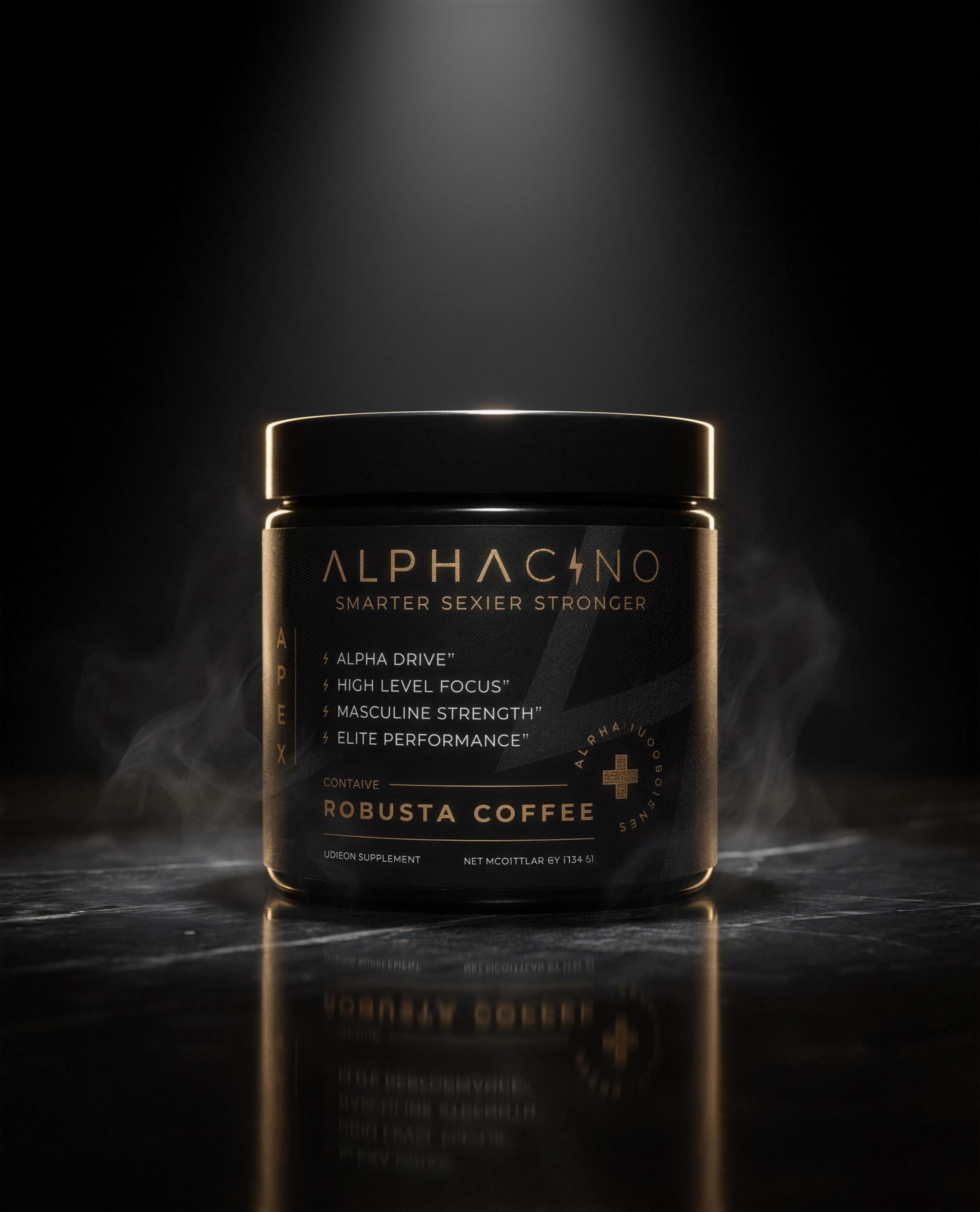
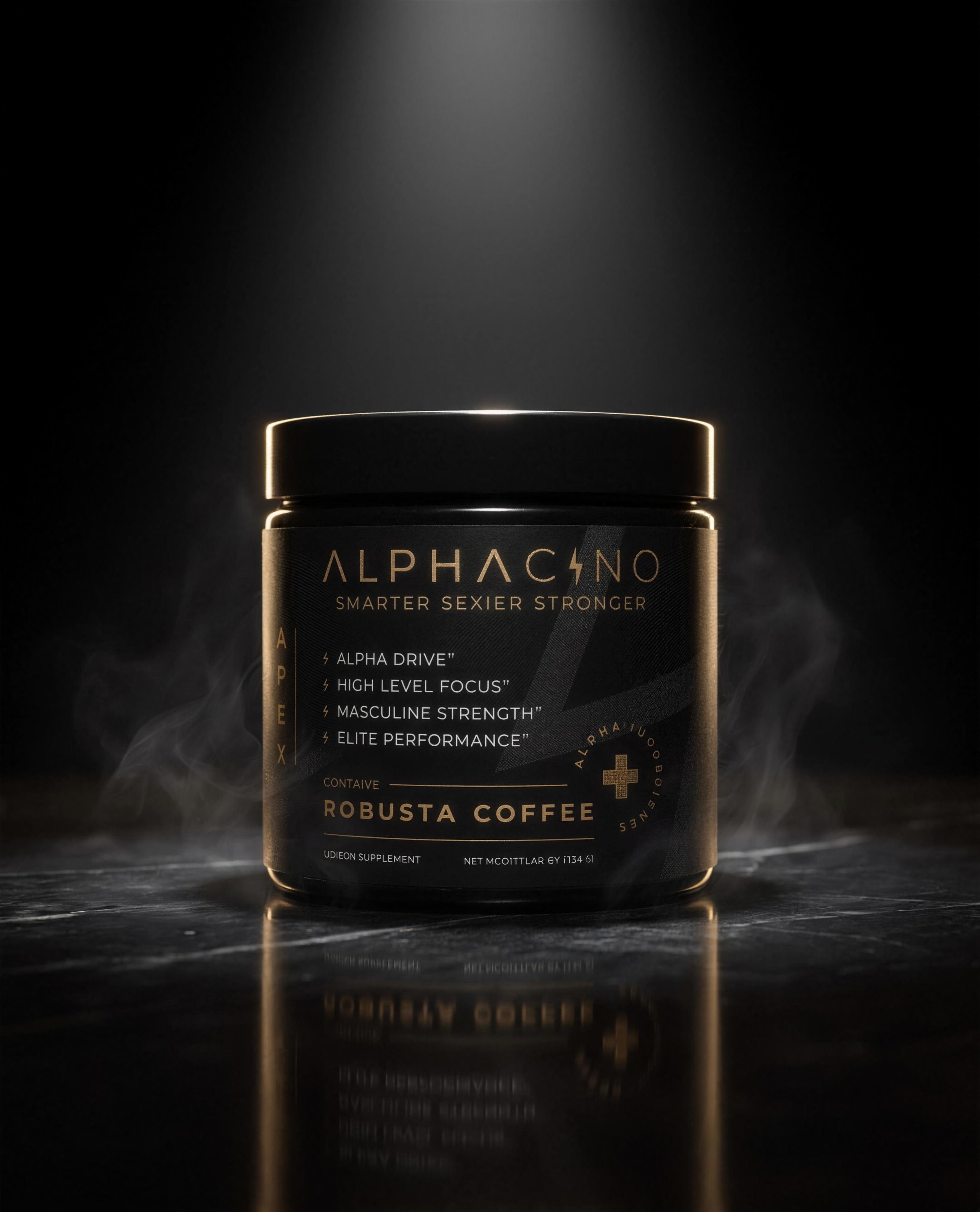
Alphacino is a black instant coffee, not a latte sachet. Its label lists the actives, 10 calories and 3 g of carbohydrate per 4.42 g scoop, and its other-ingredients line reads coffee bean powder, natural flavour, silicon dioxide and green tea leaf extract: no MCT oil, no coconut milk, no sugar alcohols, no sweetener. That removes the diarrhea cause from the table above. What it keeps is the coffee itself, at a full 100 mg of caffeine, so it will do what coffee does to your colon in the morning, and it carries a single mushroom, 500 mg of Lion's Mane fruiting-body extract, rather than a six-mushroom fibre load. The 600 mg of KSM-66 ashwagandha was well tolerated over 60 days in its stress trial7. If a blend with MCT and coconut milk has been running through you, the RYZE review explains the difference in the creamer line. Alphacino is $49.97 for 30 servings with a 60-day money-back guarantee.
Frequently asked questions
Does mushroom coffee make you poop?
For many people, yes, and it is the coffee: motility in the lower colon rises within four minutes of regular or decaf coffee and lasts at least 30 minutes, with no response to hot water. The mushrooms add fibre, which can bloat at first but does not cause the urge.
Why does mushroom coffee give me diarrhea?
Usually the creamer line, not the mushroom: MCT oil and coconut milk in latte-style blends cause loose stools until the dose is built up. A strong coffee on an empty stomach and sugar alcohols in sweetened sachets are the other two causes.
Does mushroom coffee cause constipation?
Not directly. The usual story is a drop from a 150 mg coffee to a 35 to 50 mg blend, which removes the morning stimulus. Coffee does not dehydrate you at normal intakes, so that explanation does not hold.
Is mushroom coffee good for gut health?
Plausibly, and untested. Coffee has a reasonable record for motility and the microbiome, and mushroom beta-glucans are prebiotic in laboratory work, but no trial has tested a mushroom coffee for gut health. It does not help reflux.
How do I stop mushroom coffee making me poop?
You mostly cannot, because decaf does it too. You can time it: drink it after breakfast where a bathroom is, keep the caffeine dose steady, start latte-style blends at half a scoop, and skip the frother if you are bloated.
This article is general information, not medical advice. Diarrhea that lasts more than a week, or comes with pain, fever or blood, needs a doctor, not a different coffee.
Sources
- Brown, S. R., Cann, P. A., & Read, N. W. (1990). Effect of coffee on distal colon function. Gut, 31(4), 450–453. doi:10.1136/gut.31.4.450
- Rao, S. S., et al. (1998). Is coffee a colonic stimulant? European Journal of Gastroenterology & Hepatology, 10(2), 113–118. doi:10.1097/00042737-199802000-00003
- Boekema, P. J., et al. (1999). Coffee and gastrointestinal function: facts and fiction. A review. Scandinavian Journal of Gastroenterology, 34(Suppl 230), 35–39. doi:10.1080/003655299750025525
- Iriondo-DeHond, A., et al. (2020). Effects of coffee and its components on the gastrointestinal tract and the brain-gut axis. Nutrients, 13(1), 88. doi:10.3390/nu13010088
- Jayachandran, M., Xiao, J., & Xu, B. (2017). A critical review on health promoting benefits of edible mushrooms through gut microbiota. International Journal of Molecular Sciences, 18(9), 1934. doi:10.3390/ijms18091934
- Wachtel-Galor, S., et al. (2011). Ganoderma lucidum (Lingzhi or Reishi): a medicinal mushroom. In Herbal Medicine: Biomolecular and Clinical Aspects, 2nd ed. NCBI Bookshelf NBK92757
- Chandrasekhar, K., Kapoor, J., & Anishetty, S. (2012). A prospective, randomized double-blind, placebo-controlled study of safety and efficacy of a high-concentration full-spectrum extract of ashwagandha root in reducing stress and anxiety in adults. Indian Journal of Psychological Medicine, 34(3), 255–262. doi:10.4103/0253-7176.106022
- Killer, S. C., Blannin, A. K., & Jeukendrup, A. E. (2014). No evidence of dehydration with moderate daily coffee intake: a counterbalanced cross-over study in a free-living population. PLoS ONE, 9(1), e84154. doi:10.1371/journal.pone.0084154
- Kim, J., et al. (2014). Association between coffee intake and gastroesophageal reflux disease: a meta-analysis. Diseases of the Esophagus, 27(4), 311–317. doi:10.1111/dote.12099