Short answer: 30 to 60 minutes after you wake, or about an hour before training if that is what the cup is for, and no later than roughly nine hours before bed for a 100 mg cup. Caffeine sets the clock. It peaks in the blood 30 to 120 minutes after you drink it and clears with a half-life of four to six hours1, so the hour you choose decides when you feel it and how much of it is still in you at midnight. The mushrooms and adaptogens do not care what time it is: lion's mane and ashwagandha were tested as daily doses over 8 to 16 weeks, so for them the calendar matters and the clock does not. This guide covers the morning window, the "wait 90 minutes" claim, night and before-bed cut-offs by brand, the empty-stomach question, pre-workout timing, and a one-table routine by goal, with the trial behind each number.
When is the best time to drink mushroom coffee?
In the morning, after a glass of water, within the first hour of being up, and in front of the work you want it for. Three facts set that answer. First, caffeine is absorbed fast and completely: peak blood levels arrive 30 to 120 minutes after the cup, and the average half-life is four to six hours, with a range of 1.5 to 10 hours between individuals1. A 7 am cup is therefore at full strength between 8 and 9 am and half gone by early afternoon. Second, the caffeine and L-theanine pairing that most mushroom coffees use was measured inside that same window: in the crossover trial that tested the two together, the combination produced faster simple reaction time, better accuracy on a sustained-attention task and lower "tired" and "headache" ratings than either alone, at 60 and 90 minutes after the dose7. Third, every hour later that you drink it is an hour it costs you at night, which the sleep section below puts numbers on.
The practical version is a table. Pick the row that matches what the cup is for.
| What the cup is for | When to drink it | Why |
|---|---|---|
| Waking up and starting the day | 30 to 60 minutes after waking | Peaks as your first block of work begins; leaves the whole afternoon to clear before bed |
| Deep work, study, a long meeting | 30 to 45 minutes before you start | Absorption window of 30 to 120 minutes1; the theanine and caffeine effects were measured at 60 to 90 minutes7 |
| Training | 45 to 60 minutes before the session | 60 minutes is the timing used in most caffeine and exercise trials1 |
| The afternoon slump | Before about 2 pm for an 11 pm bedtime, for a 100 mg cup | A 107 mg cup should be at least 8.8 hours before bed to protect total sleep time2 |
| A fasting morning | Whenever you like, black | Black mushroom coffee is 5 to 10 calories; see does mushroom coffee break a fast |
| Evening | Skip it, or use a blend with no real caffeine | 400 mg taken six hours before bed still cut sleep in the home study3 |
Two of those rows are the questions people actually search for, so they get their own sections: at night, and on an empty stomach. The first thing to settle, though, is the claim that you should not drink it on waking at all.
Should you wait 90 minutes after waking? The cortisol claim, checked
The advice you will have seen is that cortisol peaks naturally in the first 30 to 45 minutes after waking, that caffeine on top of that peak blunts your body's own morning energy, and that waiting 90 minutes prevents an afternoon crash. The first half is true: there is a cortisol awakening response. The second half does not hold up when you look at what caffeine does to cortisol in someone who drinks it every day.
The relevant trial is a four-week crossover in 96 men and women. After five days with no caffeine at all, a 250 mg dose at 9 am produced a large rise in cortisol. After five days of taking 300 mg or 600 mg a day, the same 9 am dose produced no cortisol response whatsoever, and the response to later doses in the day was reduced but not eliminated4. In other words, if you drink coffee daily, your morning cup is not adding a cortisol spike to your cortisol peak. The physiology the 90-minute rule is built on applies to people who do not normally drink caffeine.
What about the crash? We could not find a trial that compared caffeine on waking against caffeine 90 minutes later and measured afternoon energy. The crash that people describe is better explained by the half-life arithmetic in the first section: a cup at 6 am is mostly gone by 2 pm, and a bigger cup produces a bigger drop. If afternoons are the problem, the fix is a smaller morning dose plus a second, earlier-afternoon cup inside the sleep cut-off, not a 90-minute wait. Our guide to why coffee can make you tired covers the rebound in detail.
There is one good reason to wait, and it has nothing to do with cortisol. It is what you eat with the cup, which is the next section.

Should you drink mushroom coffee on an empty stomach?
Most people can, and two effects are documented well enough to plan around. The first is on the gut. Coffee reliably stimulates gastric acid, bile and pancreatic secretion, and it gets the colon moving; whether it causes reflux or ulcers in people who did not already have them is unproven, and a 2022 review of the literature calls those links controversial rather than established6. The practical reading: if a black coffee on an empty stomach gives you heartburn or a churning gut, that is your answer, and the fix is to drink it with or after food. If it does not, there is no evidence you are harming anything. The mushroom and herbal extracts in the scoop are in milligram amounts and do not change that picture. The full treatment of the general question is in coffee on an empty stomach.
The second effect is on blood sugar, and it is the one the timing advice should be built on. In a crossover study, 29 healthy adults drank a strong black coffee (about 300 mg of caffeine) roughly an hour after waking and 30 minutes before a glucose drink. Compared with the same glucose drink without coffee, peak blood glucose rose from 8.2 to 9.0 mmol/L and peak insulin from 265 to 310 pmol/L5. Caffeine before carbohydrate makes the carbohydrate hit harder. That was a 300 mg coffee, three Alphacino cups' worth, before a pure sugar load, so it is the extreme case. It still gives a clean rule: if breakfast is toast, cereal or juice, drink the cup with or after it, not 30 minutes before. If you are fasting until lunch, the cup on its own has no carbohydrate to amplify, and an empty stomach is exactly where it belongs.
Ashwagandha adds nothing to this decision. The 60-day KSM-66 trial dosed 300 mg twice a day with no timing instruction tied to meals9, and there is no evidence that food changes what it does.
Can you drink mushroom coffee at night or before bed?
Not a caffeinated one, and "at night" starts earlier than most people think. The home study that sleep hygiene advice rests on gave 400 mg of caffeine at bedtime, three hours before bed, and six hours before bed, on separate nights, and measured sleep with a portable monitor. All three cut total sleep time significantly, including the six-hour dose, which the authors used to justify a minimum six-hour gap3. A 2023 meta-analysis of 24 studies then did the arithmetic by dose: across the studies, caffeine cut total sleep by 45 minutes, sleep efficiency by 7% and deep sleep by 11.4 minutes, and to avoid a loss of total sleep time a cup of coffee at 107 mg should be drunk at least 8.8 hours before bed, while a 217 mg pre-workout serving needs 13.2 hours2.
That converts directly into a last-cup time by brand, because the brands differ in caffeine by a factor of ten or more. The caffeine figures are the ones on each brand's own product page, as used in our caffeine-by-brand guide.
| Blend | Caffeine per serving | Last cup for an 11 pm bedtime |
|---|---|---|
| Alphacino | 100 mg | About 2 pm (8.8 hours before bed2) |
| Four Sigmatic Focus ground coffee | A regular brewed coffee | About 2 pm, same arithmetic |
| RYZE dark roast, Everyday Dose Medium | 80 to 90 mg | About 2 pm; treat it as a full cup |
| Cuppa, BodyBrain | About 70 mg | Early afternoon; no trial gives a figure for 70 mg, so use the coffee rule |
| RYZE medium roast, Everyday Dose Mild | 45 to 48 mg | No trial-derived figure for a half cup; six hours before bed (5 pm) is the floor the 400 mg study supports3, not a licence for an evening cup |
| MUD\WTR, Beyond Brew | A small fraction of a coffee, by the brands' wording | Evening is fine on caffeine grounds; these are cacao and tea drinks, not coffee |
| Any 200 mg pre-workout | About 217 mg | By 10 am (13.2 hours2) |
Two brand-specific searches deserve a straight answer. "Can I drink RYZE at night?" Its medium roast is 48 mg, which is half a coffee, not none; the sleep studies were run on full doses, so nobody has shown a 48 mg cup at 8 pm is harmless, and the six-hour rule is the safe floor. Our RYZE review has the label. "Can I drink Alphacino at night?" No. It is a 100 mg cup, and the 8.8-hour figure applies.
Does mushroom coffee help you sleep?
No mushroom coffee has been tested for sleep in a human trial that we could find. Products marketed as "mushroom coffee for sleep" are either caffeine-free cacao or tea blends, which help only in the sense that they are not coffee, or reishi products, and the reishi sleep story rests on animal studies and tradition rather than a trial in people drinking a coffee. L-theanine on its own has a relaxation literature, but in a coffee it is paired with caffeine, and at night the caffeine wins. If sleep is the goal, the useful move is the cut-off time above, not a different mushroom.
Why does mushroom coffee make some people sleepy?
Three ordinary reasons, none of them mushrooms. The half-life: a cup at 6 am is largely gone by 2 pm, and the dip as it clears reads as sleepiness. The dose: if you switched from a 150 to 200 mg mug of drip coffee to a 48 mg mushroom blend, you cut your caffeine by two thirds and are feeling the difference. And the theanine: the combination trial found lower "tired" ratings, not higher7, but the same pairing takes the edge off the jitters, and some people read calm as drowsy. The fix for the first two is timing and dose; the third is a feature. If it persists, our side-effects guide covers what else to rule out.

When to drink mushroom coffee before a workout
Forty-five to sixty minutes before the session. The International Society of Sports Nutrition position stand, which reviewed the caffeine and exercise literature, reports that 60 minutes before exercise is the timing used in most trials, that performance benefits are consistent at 3 to 6 mg of caffeine per kilogram of body weight, and that the minimal effective dose is unclear but may be as low as 2 mg/kg1. Put a mushroom coffee against those numbers and it is a light pre-workout. For an 80 kg man, a 100 mg cup is 1.25 mg/kg, below the tested range; two cups are 2.5 mg/kg, at the low end of where an effect has been shown; a 48 mg cup is 0.6 mg/kg and is a warm drink with a mild lift, nothing more.
That is not an argument against training on it. The same position stand notes caffeine helps trained and untrained people alike, and the benefits it lists include muscular endurance, strength and aerobic endurance1. It is an argument for honesty about the dose: a mushroom coffee replaces the coffee you would have had before the gym, not a 200 mg pre-workout. It also settles the evening-training question. A 217 mg pre-workout needs 13.2 hours before bed2, so a 6 pm scoop is a decision about tonight's sleep; a 100 mg cup at 6 pm is still five hours short of the 8.8-hour figure. Evening lifters do better with the caffeine-free option or nothing. What to expect from the session itself, and how the S7 blend and theanine fit, is in our gym guide.

Does the time of day change what lion's mane and ashwagandha do?
No, and this is the part of the timing question that matters most for the price of the tub. The lion's mane trial that the cognition claims come from gave 50 to 80 year olds with mild cognitive impairment 3 g of dried fruiting body a day, as four 250 mg tablets three times daily, for 16 weeks. Scores were significantly better than placebo from week 8, kept improving with duration, and fell back within four weeks of stopping8. The KSM-66 ashwagandha trial gave 300 mg twice a day for 60 days and found lower stress scores and lower serum cortisol than placebo at the end9. Neither trial timed the dose to the clock, and neither has a version where a single morning dose was compared with an evening one.
So for the functional half of the scoop the rule is the calendar, not the clock: the same time every day, because a missed day costs more than the wrong hour. The lion's mane result faded in a month once the daily dose stopped. Note the dose gap too. Alphacino carries 500 mg of a fruiting-body extract and 600 mg of KSM-66 in one scoop, which is the full ashwagandha trial dose taken once rather than split, and a fraction of the lion's mane trial dose, as in every coffee blend. Whether one cup or two is the right daily amount, and how often is often enough, is worked through in how much mushroom coffee you can drink a day. How quickly each ingredient shows up is in how long mushroom coffee takes to work.
A day that works: the timing template
Here is the whole guide as a schedule for an 11 pm bedtime. Shift every line by the same amount if you sleep earlier or later.
- 6:30 am, wake. Water first. Daylight if you can get it.
- 7:00 to 7:30 am, cup one. With breakfast if breakfast is carbohydrate-heavy, on its own if you are fasting or eating protein and fat5. Peak effect 8 to 9 am1.
- 8:00 to 10:00 am, the block that matters. The hardest work of the day goes here, on the peak.
- 11:00 am to 1:00 pm, cup two if you want one. Either 45 to 60 minutes before a lunchtime session1, or as the afternoon cup. Two 100 mg cups are 200 mg, half the 400 mg daily figure that the European safety assessment set for healthy adults10.
- 2:00 pm, last call. Nothing caffeinated after this: 8.8 hours before an 11 pm bedtime for a 100 mg cup2. Sensitive sleepers, or anyone whose half-life sits at the long end of the 1.5 to 10 hour range1, move this to noon.
- Evening. Caffeine-free, or nothing. A late training session gets water and a meal, not a scoop.
- Every day. The mushroom and ashwagandha doses only did anything in the trials because they were taken daily for weeks8,9. The cup you repeat is the cup that works.
Where Alphacino fits
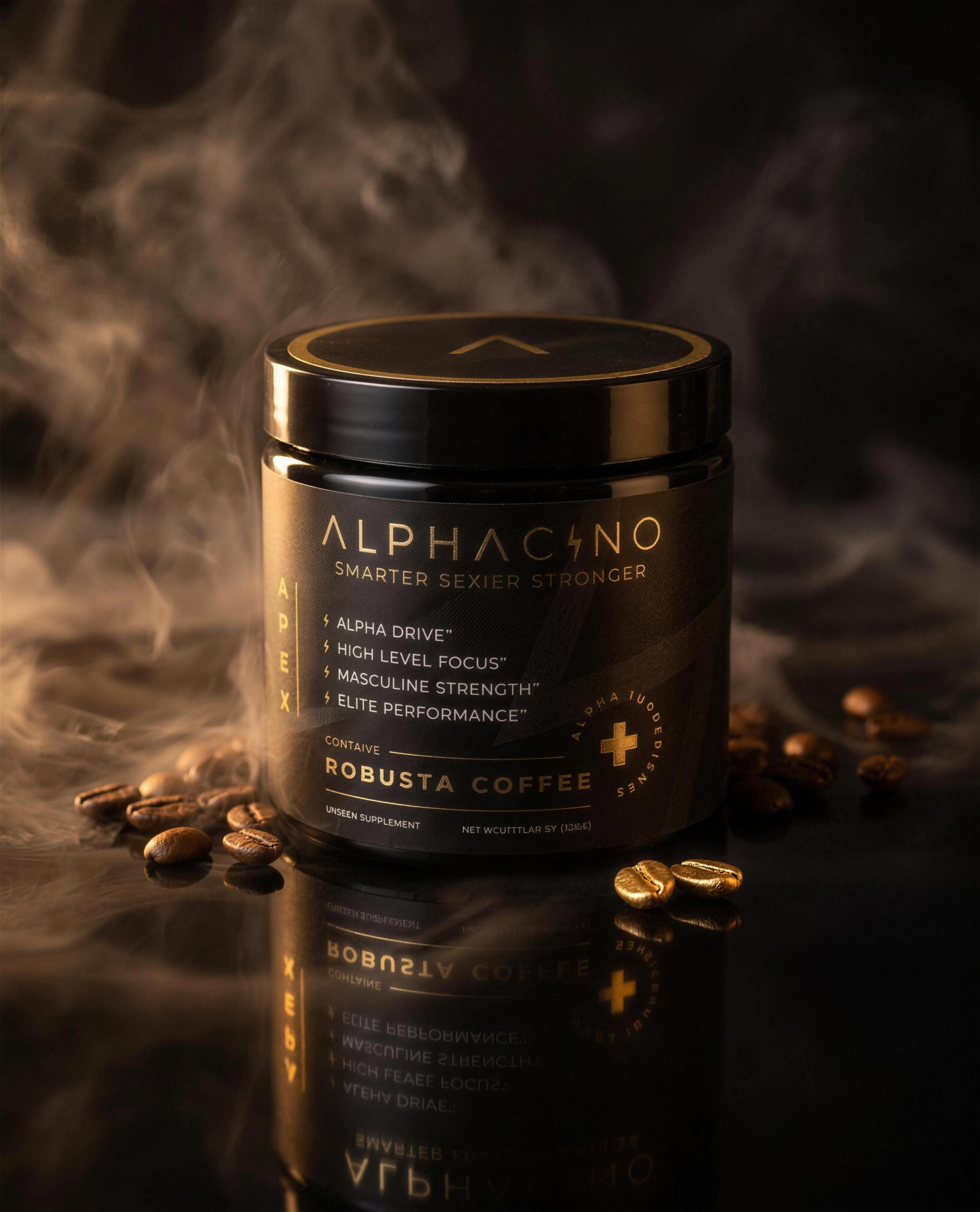
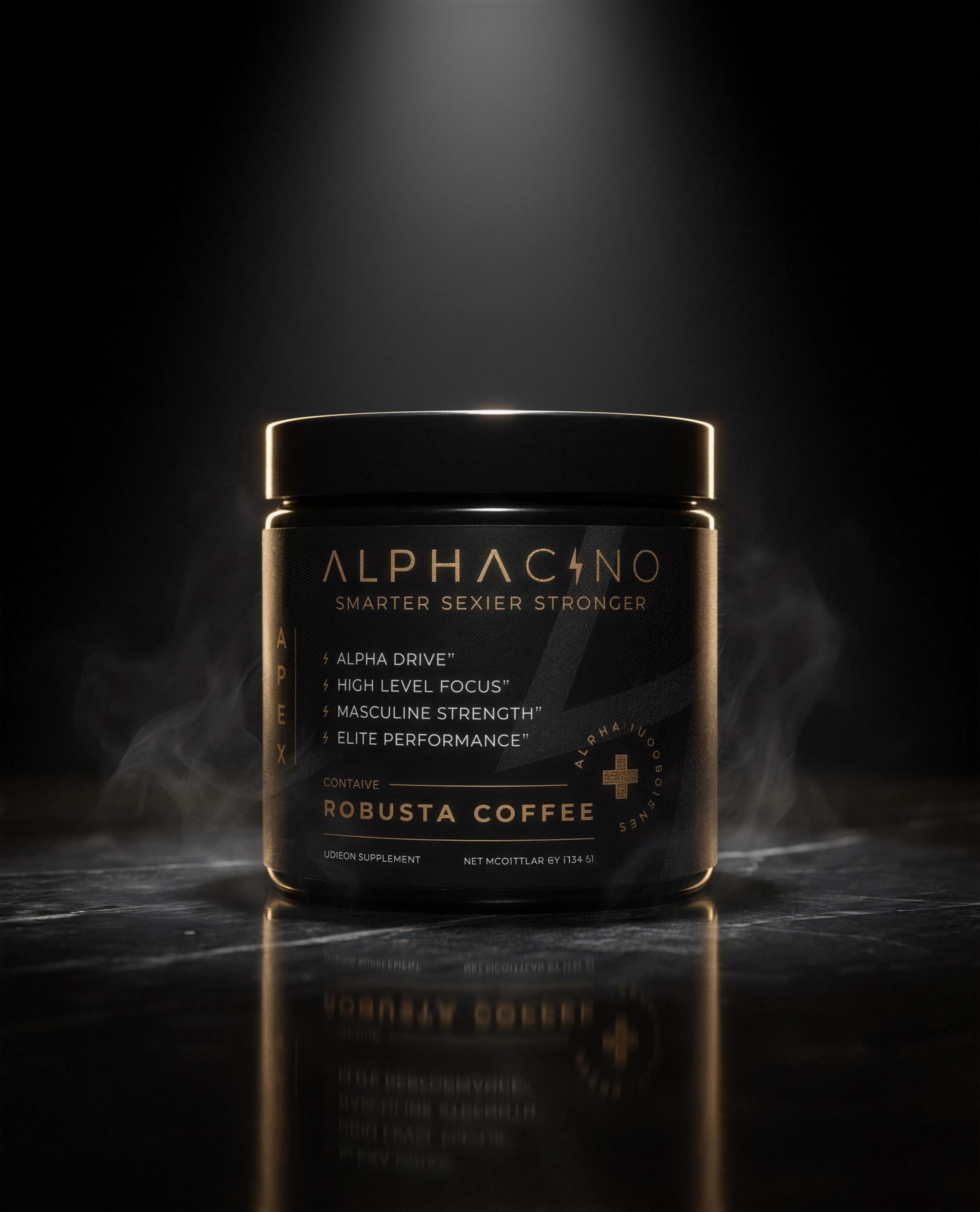
Alphacino is a 100 mg caffeine cup, so every "regular coffee" line in this guide applies to it as written: the first hour after waking, an hour before training, nothing after about 2 pm for an 11 pm bedtime. It carries 100 mg of L-theanine alongside the caffeine, the pairing whose attention and "tired" results were measured at 60 to 90 minutes7, which is why the deep-work row in the first table says 30 to 45 minutes before you start rather than "immediately". The label directions are one scoop into 6 to 8 ounces of hot water, and one scoop is the serving every figure here assumes; a double scoop is 200 mg and moves your cut-off to about 10 am. The 600 mg of KSM-66 and 500 mg of lion's mane extract are timing-independent, so the only rule for them is the same cup at the same time each day. The full label and doses are on the product page. For the daily ceiling and the cups-by-bedtime arithmetic, our how much caffeine is too much guide has the numbers.
Frequently asked questions
What is the best time of day to drink mushroom coffee?
Within the first hour of waking, or 30 to 45 minutes before the work you want it for. Caffeine peaks 30 to 120 minutes after the cup and the theanine and caffeine effects were measured at 60 to 90 minutes, so drinking it before the task, not after, is the whole trick.
Can you drink mushroom coffee at night?
Not a caffeinated one. A 100 mg cup should be at least 8.8 hours before bed to protect total sleep time, and even 400 mg taken six hours before bed cut sleep in the home study. Only the near-caffeine-free cacao and tea blends are evening drinks.
Can I drink mushroom coffee before bed?
No, unless it is a caffeine-free blend. Caffeine at bedtime, three hours before and six hours before all reduced total sleep time against placebo. A low-caffeine 48 mg blend has no trial showing it is safe before bed, so the six-hour gap is the floor for it too.
Is it OK to drink mushroom coffee on an empty stomach?
For most people, yes. Coffee stimulates stomach acid and gut movement, so if it gives you reflux, have it with food. The stronger reason to eat first is blood sugar: a strong coffee 30 minutes before carbohydrate raised the glucose and insulin peaks, so put the cup with or after a carbohydrate breakfast, or drink it alone if you are fasting.
How long before a workout should I drink mushroom coffee?
Forty-five to sixty minutes. Sixty minutes is the timing most caffeine and exercise trials used. At 100 mg the cup is a light pre-workout, about 1.25 mg/kg for an 80 kg man, below the 3 to 6 mg/kg range where performance effects are consistent.
Should I drink mushroom coffee every day, and how often?
Daily, at the same time, if you are drinking it for the mushrooms and ashwagandha: the lion's mane trial ran 16 weeks and its benefit faded within a month of stopping, and the ashwagandha trial ran 60 days. How many cups a day is a caffeine question, answered in our how-much guide.
This article is general information, not medical advice. If you are pregnant, take medication, or have a heart, thyroid, reflux or anxiety condition, ask your doctor about your own caffeine timing and limits rather than using the general figures here.
Sources
- Guest, N. S., et al. (2021). International society of sports nutrition position stand: caffeine and exercise performance. Journal of the International Society of Sports Nutrition, 18(1), 1. doi:10.1186/s12970-020-00383-4
- Gardiner, C., et al. (2023). The effect of caffeine on subsequent sleep: a systematic review and meta-analysis. Sleep Medicine Reviews, 69, 101764. doi:10.1016/j.smrv.2023.101764
- Drake, C., Roehrs, T., Shambroom, J., & Roth, T. (2013). Caffeine effects on sleep taken 0, 3, or 6 hours before going to bed. Journal of Clinical Sleep Medicine, 9(11), 1195 to 1200. doi:10.5664/jcsm.3170
- Lovallo, W. R., et al. (2005). Caffeine stimulation of cortisol secretion across the waking hours in relation to caffeine intake levels. Psychosomatic Medicine, 67(5), 734 to 739. doi:10.1097/01.psy.0000181270.20036.06
- Smith, H. A., et al. (2020). Glucose control upon waking is unaffected by hourly sleep fragmentation during the night, but is impaired by morning caffeinated coffee. British Journal of Nutrition, 124(10), 1114 to 1120. doi:10.1017/S0007114520001865
- Nehlig, A. (2022). Effects of coffee on the gastro-intestinal tract: a narrative review and literature update. Nutrients, 14(2), 399. doi:10.3390/nu14020399
- Haskell, C. F., Kennedy, D. O., Milne, A. L., Wesnes, K. A., & Scholey, A. B. (2008). The effects of L-theanine, caffeine and their combination on cognition and mood. Biological Psychology, 77(2), 113 to 122. doi:10.1016/j.biopsycho.2007.09.008
- Mori, K., Inatomi, S., Ouchi, K., Azumi, Y., & Tuchida, T. (2009). Improving effects of the mushroom Yamabushitake (Hericium erinaceus) on mild cognitive impairment: a double-blind placebo-controlled clinical trial. Phytotherapy Research, 23(3), 367 to 372. doi:10.1002/ptr.2634
- Chandrasekhar, K., Kapoor, J., & Anishetty, S. (2012). A prospective, randomized double-blind, placebo-controlled study of safety and efficacy of a high-concentration full-spectrum extract of ashwagandha root in reducing stress and anxiety in adults. Indian Journal of Psychological Medicine, 34(3), 255 to 262. doi:10.4103/0253-7176.106022
- EFSA Panel on Dietetic Products, Nutrition and Allergies (2015). Scientific opinion on the safety of caffeine. EFSA Journal, 13(5), 4102. doi:10.2903/j.efsa.2015.4102