Short answer: for most healthy adults, mushroom coffee is safe, and its side effects are the side effects of the coffee in it: a little more urine in the first days, a bump in blood pressure for an hour or two, and jitters or poor sleep if you drink too much or too late15. The mushrooms add three specific cautions that belong to particular ingredients, not to the category. Chaga carries enough oxalate to have damaged kidneys in people who took large amounts for months1516. Reishi has a small number of liver case reports and a measurable anti-clotting effect that matters on blood thinners1820. And the latte-style blends built on MCT oil are the ones that send new drinkers to the bathroom27. Pregnancy, diabetes, kidney disease and a handful of medicines change the answer, and each gets its own section below. Everything here is sourced to human trials, case reports and the European safety opinion on caffeine, and the last section reads Alphacino's own label with the same rules.
Is mushroom coffee safe?
Yes, in the sense that matters: there is no published case of harm from a mushroom coffee drunk at one or two cups a day by a healthy adult. The ingredients are foods and food extracts. Coffee's caffeine has a safety ceiling set by the European Food Safety Authority at 400 mg a day for healthy adults, with 200 mg as the single-dose figure, and a mushroom coffee carries anywhere from 45 to 100 mg a cup depending on the brand1. Lion's mane, the mushroom most brands lead with, has been given to adults in trials at up to 3.2 g a day for months with no serious adverse events, and a 2025 systematic review of its human studies found the side effects reported were mild and gastrointestinal2223. Cordyceps has been used in a randomised trial as an add-on to an antidepressant with no safety signal25.
"Safe" is not the same as "safe for everyone at any dose". The cases of harm in the literature share a pattern: a large daily amount of a single mushroom, usually chaga or reishi, taken for months as a remedy, by someone with a condition that made them vulnerable1518. A scoop of coffee carries a fraction of a gram of any mushroom. The risk scales with the dose, the months and the person, which is why this guide is organised by ingredient and by who you are, rather than by scare.
The side effects depend on what is in the cup
"Mushroom coffee" covers everything from a two-ingredient instant to a blend with six mushrooms, MCT oil, coconut milk, collagen and adaptogens. The side effects follow the label, so read it before you read the internet. Here is each common ingredient with the effect it can cause and the evidence behind it.
| Ingredient | Side effect it can cause | Evidence | Who should be careful |
|---|---|---|---|
| Caffeine (coffee) | Jitters, faster heart rate, a short blood-pressure rise, more urine at first, poor sleep if late, withdrawal headache if you cut down | Safety opinion and trial literature158 | Anxiety, high blood pressure, pregnancy, some heart rhythm conditions |
| Lion's mane | Mild stomach upset in a minority; rare allergy, as with any mushroom | Trials at 1.8 to 3.2 g a day; systematic review2223 | Mushroom allergy |
| Chaga | Oxalate load on the kidneys with heavy, long use | Case reports of oxalate nephropathy and kidney failure151617 | Kidney stones, kidney disease, gout |
| Reishi | Reduced platelet clotting; rare liver injury with powdered preparations | Clinical platelet study; hepatitis case reports181920 | Blood thinners, surgery within two weeks, liver disease |
| Cordyceps, turkey tail, shiitake, king trumpet | Nothing specific at coffee doses; shiitake can cause a skin reaction when eaten raw in quantity | Trial safety data for cordyceps; food use for the rest25 | Mushroom allergy |
| MCT oil and coconut milk (latte blends) | Loose stools, cramps, nausea in the first week; calories that break a fast | Systematic review of MCT trials27 | Anyone starting at a full scoop; irritable bowel |
| Ashwagandha (some men's blends, including Alphacino) | Drowsiness or stomach upset in some; rare liver injury in case reports | Randomised trials; scoping review of liver cases; 2026 safety trial282930 | Thyroid disease, sedatives, pregnancy, liver disease, autoimmune conditions |
| L-theanine | None reported at 100 to 200 mg | Trials with caffeine33 | Nobody in particular |
Two things follow from that table. A mushroom coffee with no chaga, no reishi and no MCT has removed three of the four real cautions before you open the bag. And a label that prints milligrams lets you check the dose against the trial dose, which a label that says "proprietary blend" does not; our caffeine-by-brand guide shows how few brands print even the caffeine.
The common side effects, and what causes each one
Does mushroom coffee make you poop, or give you diarrhea?
It can, and the cause is nearly always one of two things. Coffee itself stimulates the gut, which is why a plain cup sends many people to the bathroom within the hour. And the latte-style blends add MCT oil, which a 2026 systematic review of MCT trials identified as the ingredient behind most reported side effects: loose stools, cramping and nausea, dose-related and easing as people adapt27. The fix is a half scoop for the first week. Constipation is the opposite complaint and is rarer; it usually means a drop in fluid or fibre rather than the coffee. Our guide to mushroom coffee and your gut takes both questions in detail, brand by brand.
Does mushroom coffee make you pee a lot?
For the first few days, probably, and then less. Caffeine is a mild diuretic at higher doses in people who do not drink it regularly, and the effect fades with habitual use; a 2003 review of the fluid-balance studies concluded that moderate caffeine does not cause a net loss of body water in regular drinkers4. A 2014 crossover trial in habitual coffee drinkers found no difference in hydration between four cups of coffee a day and the same volume of water3. So a mushroom coffee at 50 to 100 mg of caffeine is not dehydrating you. If you switched to it from a much stronger coffee, you will probably pee less, not more.
Does mushroom coffee make you sleepy?
Three separate things get called "sleepy". The first is relative: many mushroom coffees carry half the caffeine of the coffee they replaced, so a habitual three-cup drinker who moves to a 48 mg blend is running a caffeine deficit, and a withdrawal slump in the first week is normal8. The second is theanine, which some blends add at 100 to 200 mg; in trials it made people calmer without making them drowsy, and paired with caffeine it improved attention rather than reducing it33. The third is reishi, which is sold as a calming mushroom; there is no human trial showing sedation at any dose a coffee could carry21. If your mushroom coffee makes you sleepy, check its caffeine figure against what you used to drink. That usually explains it.
Headaches
The most common cause is caffeine withdrawal, not an ingredient. When a regular coffee drinker moves to a low-caffeine blend, headache begins 12 to 24 hours after the last full dose, peaks at one to two days and clears within a week or so; the withdrawal literature puts headache in about half of people who stop abruptly8. The cure is to step down over a week rather than switch in a day, or to pick a mushroom coffee with a full coffee's caffeine. A headache that persists beyond a week, or that started with a new ingredient rather than a lower dose, is worth a doctor's look.
Jitters and anxiety
These are caffeine effects and they are dose-dependent, like every other effect caffeine has32. A 2024 meta-analysis found that caffeine raised anxiety measures in healthy adults, with the effect concentrated at doses above 400 mg; below that the effect was small7. Most mushroom coffees sit at 45 to 100 mg a cup, so a single cup is well under the range that worried the reviewers, and the theanine that some blends add has been shown to take the edge off caffeine's tension in trials33. If you are jittery on one cup of a low-caffeine blend, the cup is not the likely cause; look at the rest of the day's caffeine. Our guide on how much caffeine is too much does that arithmetic.
Acid reflux, bloating and an upset stomach
Coffee gets blamed for reflux, but a 2014 meta-analysis of the observational studies found no significant association between coffee intake and gastro-oesophageal reflux disease overall10. Individual people do react, and the practical variables are the same for any coffee: black on an empty stomach is the harshest way to take it, and instant blends with coconut milk are gentler. Bloating usually traces to the MCT and coconut fat in latte blends, or to the sugar alcohols some brands sweeten with. Our post on whether mushroom coffee is acidic covers the reflux question properly, and the timing guide covers the empty-stomach one.

Does mushroom coffee raise blood pressure?
A little, for a short time, because of the caffeine, and the size of the rise depends on the dose and on whether you drink coffee regularly. In a meta-analysis of controlled trials, chronic coffee drinking raised systolic pressure by about 2 mmHg and diastolic by under 1 mmHg on average, with caffeine given as tablets producing a larger rise than coffee itself5. In people with existing high blood pressure, a 200 to 300 mg dose of caffeine raised systolic pressure by about 8 mmHg and diastolic by about 6 mmHg for three hours or more, while long-term coffee drinking showed no association with worse blood pressure or cardiovascular disease in the same review6.
Translate that to a mushroom coffee at 48 to 100 mg and the acute rise is smaller and shorter than the figures above, which were measured at two to three times that dose. None of the mushrooms has a human trial showing a blood-pressure effect in either direction at a coffee dose; the reishi and cordyceps claims come from animal and cell work21. If you have diagnosed hypertension, the practical rules are the same as for any coffee: drink it after your morning reading, not before, keep the day under 200 mg, and tell your doctor, since some blood-pressure medicines change how fast caffeine clears. There is no reason a person with controlled blood pressure cannot drink one cup a day.
Does mushroom coffee make you high, or show up on a drug test?
No, and no. The mushrooms used in coffee, lion's mane, chaga, cordyceps, reishi, turkey tail, shiitake and king trumpet, are culinary and functional species. None of them produces psilocybin, the compound in "magic" mushrooms, which belongs to a different set of species that no food company sells. Nothing in a mushroom coffee is psychoactive beyond the caffeine, and nothing in it is screened for on a workplace drug test; caffeine, culinary mushrooms, coconut and MCT are food. The "does mushroom coffee make you high" search is common enough that the brands should answer it on their labels, and most do not.
Is mushroom coffee bad for your liver or kidneys?
Kidneys: the chaga problem
This is the one place where "mushroom" side effects are documented in people, and it belongs to chaga. Chaga is unusually high in oxalate, the compound that forms kidney stones, and there are now several published cases of oxalate nephropathy, one of them ending in permanent kidney failure, in people who took chaga daily for months to years, typically as a tea or powder at gram doses151617. The amounts in those reports were far above what a scoop of coffee carries, and the patients had used it as a remedy, not a drink. But the mechanism is simple and cumulative, so anyone with kidney stones, chronic kidney disease or gout should treat chaga as an ingredient to avoid, and everyone else should know it is the reason to prefer a blend without it. Lion's mane, cordyceps and reishi are not high-oxalate foods, and there is no kidney signal for them in the literature.
Liver: reishi, and a note on ashwagandha
Reishi has a small number of liver case reports: a hepatitis linked to a powdered reishi formulation, and one fatal fulminant hepatitis in a person taking reishi powder, both at supplement doses taken for weeks1819. Those are rare events against millions of users, but they are real, and a blend that lists reishi is a blend to stop if you develop dark urine, pale stools, yellowing or unusual fatigue. Ashwagandha, which some men's blends add and Alphacino carries at 600 mg, has a similar profile: randomised trials at that dose report only mild effects30, a 2026 safety trial in healthy adults found it well tolerated29, and a 2026 scoping review collected the published liver-injury cases, which are rare, mostly linked to unspecified extracts, and resolved on stopping28. The rule is the same for both: fine for a healthy liver, not for a diseased one, and stop at the first sign of trouble. Coffee itself is not a liver risk at these doses.
Mushroom coffee and diabetes or blood sugar
Two effects pull in opposite directions and both are about the coffee, not the mushrooms. In the short term, caffeine raises blood glucose in people with type 2 diabetes: in a trial of coffee-drinking diabetics, 500 mg of caffeine a day raised average daytime glucose by about 8% and blunted the response to meals12. Over years, coffee drinking, caffeinated or decaffeinated, is associated with a lower risk of developing type 2 diabetes in a large pooled analysis, which points to compounds in coffee other than caffeine13. The mushroom extracts have lowered blood sugar in animal studies but not in a human trial at any coffee-relevant dose, so they should be treated as neutral. If you have diabetes, a low-caffeine mushroom coffee is a reasonable swap for a strong coffee, and a sweetened latte blend is not; and if you are on insulin or a sulfonylurea, a change in your coffee habit is worth mentioning to whoever manages your doses.
Can you drink mushroom coffee while pregnant or breastfeeding?
The caffeine part has a clear answer. The European safety opinion sets 200 mg a day as the ceiling in pregnancy and while breastfeeding, and a 2022 dose-response analysis found the risk of pregnancy loss rising with caffeine intake across the studies it pooled, which is why most obstetric advice says to keep well under that figure114. A mushroom coffee at 45 to 100 mg fits inside the limit if it is your only caffeine that day.
The mushroom part has no answer, because no supplement trial enrols pregnant or breastfeeding women. There is no evidence of harm from lion's mane or cordyceps in pregnancy, and there is no evidence of safety either, which is a different thing. Ashwagandha is traditionally advised against in pregnancy and every trial of it excluded pregnant women, so a blend that contains it, Alphacino included, is not one to drink while pregnant or nursing. Chaga's oxalate and reishi's clotting effect are extra reasons to avoid those two. The honest advice is: plain coffee under 200 mg is well studied, mushroom extracts are not, so ask the person managing your pregnancy before adding any of them, and expect them to say wait.

Medications and interactions
Most of the interactions are caffeine's, and they are the ones your pharmacist already knows. The mushroom-specific ones are few and specific.
- Blood thinners and antiplatelet drugs. Reishi reduced platelet aggregation in a clinical study, which is a real effect at supplement doses20. On warfarin, apixaban, clopidogrel or daily aspirin, skip blends that list reishi, and stop any mushroom blend two weeks before surgery.
- Immunosuppressants. Mushroom beta-glucans are studied precisely because they stimulate immune cells26. There is no case report of a transplant or autoimmune patient harmed by a mushroom coffee, but the direction of the effect is the wrong one, so ask first.
- Diabetes medicines. Caffeine raises glucose in the short term in type 2 diabetes12; changing your coffee habit while on insulin or a sulfonylurea deserves a mention to your prescriber.
- Thyroid medicine, sedatives and antidepressants. Ashwagandha can nudge thyroid hormone levels and adds to the drowsiness of sedatives, which is why the trials excluded people on them30. Blends with ashwagandha are the ones this applies to.
- Stimulant medicines. Caffeine adds to methylphenidate and amphetamine-type ADHD medicines in the obvious way; a low-caffeine mushroom coffee is a smaller addition than an espresso, but it is still an addition.
- Iron supplements. Coffee taken with a meal cut the absorption of iron from that meal by about 39% in a classic study11. Take iron an hour away from any coffee, mushroom or otherwise.
If you take ashwagandha with your coffee, our ashwagandha and coffee guide goes through that pairing on its own.
Allergies and histamine
Mushroom allergy exists and is uncommon; the classic description is of reactions to eating mushrooms in people already sensitised to mould spores24. Anyone who reacts to mushrooms on a plate should not drink them in a cup, and lion's mane is a mushroom like any other for that purpose. The lion's mane systematic review found no allergic events in the trials it covered, which involved a few hundred people, so the risk is low rather than zero22. On histamine: coffee is not a high-histamine food, and the mushroom extracts in coffee are used in tiny amounts, but many low-histamine diet lists exclude mushrooms on principle. If you have a diagnosed histamine intolerance, treat mushroom coffee as something to test one cup at a time rather than assume either way.
Can you drink it every day, and how long does it stay in your system?
Yes, at one to two cups. The daily caffeine ceiling is 400 mg for healthy adults, so two cups of a 100 mg blend or four of a 48 mg one stays comfortably inside it1. The mushroom trials ran for two to four months at daily doses far above a coffee's, without serious adverse events2223, and there is no evidence that a small daily dose accumulates to anything, chaga's oxalate excepted. Caffeine's half-life in a healthy adult is around five hours, so a morning cup is mostly gone by evening, but it is slower to clear in pregnancy, on the contraceptive pill and with some antibiotics and antidepressants, and faster in smokers2. A 400 mg dose taken six hours before bed still shortened measured sleep by about an hour in the timing trial; at a tenth of that dose the effect is small, but a cup after 2 pm is still the first thing to change if your sleep is poor9. Our guide on how much mushroom coffee you can drink a day runs the arithmetic by brand.
Who should not drink mushroom coffee, or should ask first
- Anyone with kidney stones, kidney disease or gout: avoid chaga altogether; other blends are fine at one cup with your doctor's knowledge.
- Anyone on blood thinners or within two weeks of surgery: avoid reishi; ask about the rest.
- Anyone with liver disease: avoid reishi and ashwagandha blends; plain coffee-plus-lion's-mane is the least risky version.
- Pregnant or breastfeeding: keep caffeine under 200 mg and ask before any mushroom or herbal extract; skip ashwagandha, chaga and reishi.
- Transplant recipients and people on immunosuppressants: ask before any mushroom product.
- Mushroom allergy: none of it.
- Thyroid disease or sedative medicines: avoid ashwagandha blends unless your prescriber agrees.
- Diagnosed anxiety disorder or a heart rhythm condition: a low-caffeine blend is the sensible choice, and the total day's caffeine matters more than the cup.
- Children and teenagers: the caffeine ceilings are lower and the mushroom extracts are untested; this is an adult product.
If none of those is you, the list of real side effects is short: the bathroom in the first week if the blend has MCT, a mild headache if you stepped down from strong coffee too fast, and the sleep effect of any caffeine taken late.
Where Alphacino fits
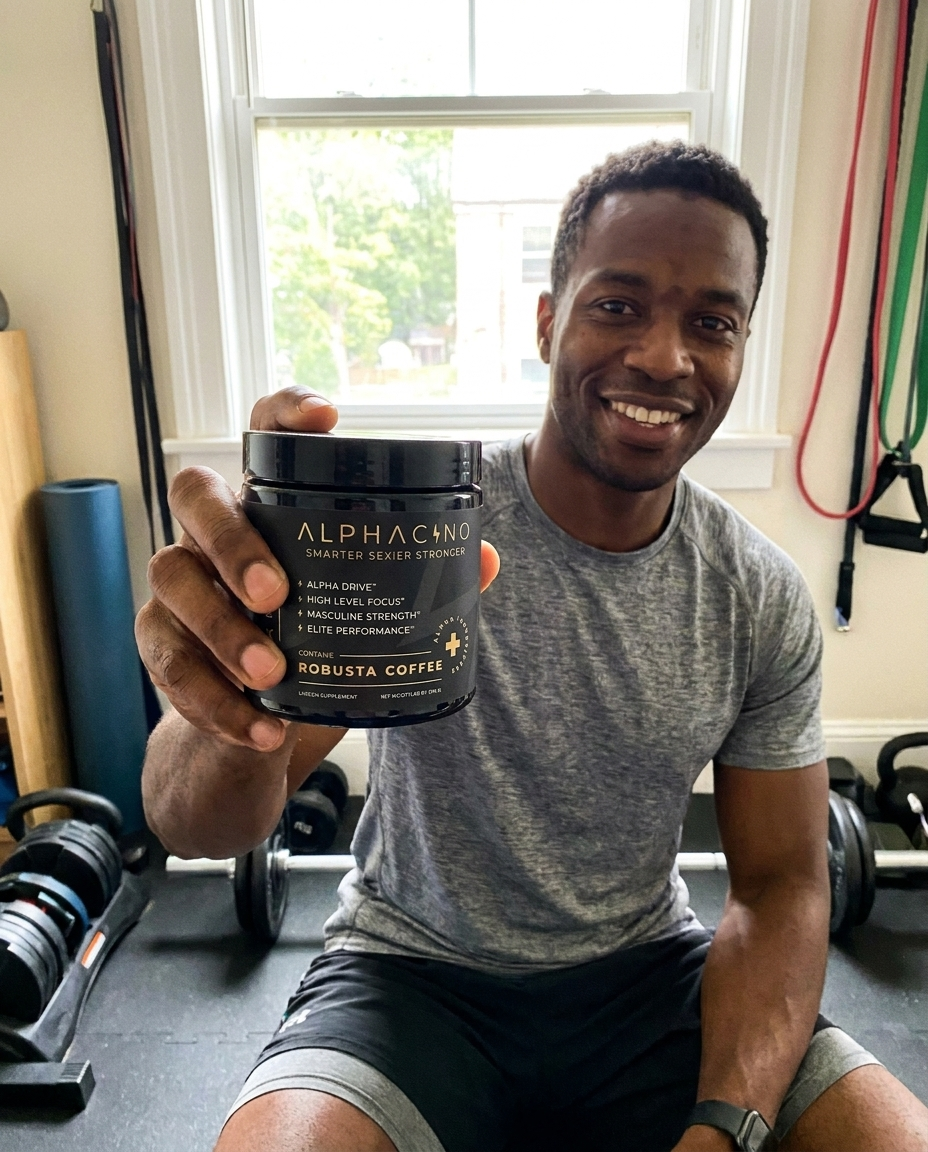
Read by the same rules, Alphacino's label removes three of the four cautions above and keeps one. It contains no chaga and no reishi, so the kidney and clotting sections do not apply, and no MCT oil or coconut milk, so the loose-stool section does not either. Its single mushroom is lion's mane at a printed 500 mg of fruiting-body extract, the ingredient with the cleanest safety record in the category2231. Its caffeine is a printed 100 mg, a full coffee's worth, paired with 100 mg of L-theanine, the combination that improved attention and reduced caffeine's tension in trials33. The caution it keeps is the 600 mg of KSM-66 ashwagandha: that is the dose from the stress trial and it was well tolerated there, but it is the reason the product is not for pregnancy, thyroid disease, sedative users or a diseased liver, and we say so on the product page2830. It is $49.97 for 30 servings with a 60-day money-back guarantee, so the first-week test costs nothing if it does not suit you. See the full Supplement Facts panel, and for the men's-health questions that sit next to safety, the testosterone and mushroom coffee guide.
Frequently asked questions
Is mushroom coffee safe?
For healthy adults at one or two cups a day, yes. The documented harms in the literature come from large daily doses of a single mushroom, mostly chaga or reishi, taken for months as a remedy, at amounts far above a scoop of coffee. The everyday side effects are caffeine's.
Does mushroom coffee raise blood pressure?
Slightly and briefly, because of the caffeine. Trials put the chronic effect of coffee at about 2 mmHg systolic, and a 200 to 300 mg caffeine dose raises pressure in people with hypertension by about 8 mmHg for a few hours. A 48 to 100 mg mushroom coffee produces a smaller, shorter rise. No mushroom has a human blood-pressure effect at coffee doses.
Does mushroom coffee make you pee a lot?
Only at first, and only if you are not a regular caffeine drinker. Trials in habitual drinkers found no dehydration from moderate coffee, and the mild diuretic effect fades within days.
Does mushroom coffee make you sleepy?
Usually because it has less caffeine than the coffee it replaced, so you are in mild withdrawal for the first week. Theanine, which some blends add, calms without sedating, and reishi has no human sedation trial at any coffee dose.
Can you drink mushroom coffee while pregnant?
The caffeine fits under the 200 mg pregnancy ceiling. The mushroom and herbal extracts have never been trialled in pregnancy, so nobody can call them safe; avoid ashwagandha, chaga and reishi blends and ask your doctor before any of the rest.
Does mushroom coffee make you high or show on a drug test?
No. None of the culinary and functional mushrooms used in coffee produces psilocybin, nothing in the cup is psychoactive beyond the caffeine, and nothing in it is screened for on a workplace drug test.
Who should not drink mushroom coffee?
People with kidney disease or stones (no chaga), people on blood thinners or facing surgery (no reishi), people with liver disease (no reishi or ashwagandha), pregnant or breastfeeding women (ask first), transplant and immunosuppressed patients (ask first), anyone with a mushroom allergy, and anyone whose thyroid or sedative medicines conflict with ashwagandha.
Sources
- EFSA Panel on Dietetic Products, Nutrition and Allergies (2015). Scientific opinion on the safety of caffeine. EFSA Journal, 13(5), 4102. doi:10.2903/j.efsa.2015.4102
- Grzegorzewski, J., Bartsch, F., Köller, A., & König, M. (2021). Pharmacokinetics of caffeine: a systematic analysis of reported data for application in metabolic phenotyping and liver function testing. Frontiers in Pharmacology, 12, 752826. doi:10.3389/fphar.2021.752826
- Killer, S. C., Blannin, A. K., & Jeukendrup, A. E. (2014). No evidence of dehydration with moderate daily coffee intake: a counterbalanced cross-over study in a free-living population. PLoS ONE, 9(1), e84154. doi:10.1371/journal.pone.0084154
- Maughan, R. J., & Griffin, J. (2003). Caffeine ingestion and fluid balance: a review. Journal of Human Nutrition and Dietetics, 16(6), 411 to 420. doi:10.1046/j.1365-277x.2003.00477.x
- Noordzij, M., Uiterwaal, C. S., Arends, L. R., Kok, F. J., Grobbee, D. E., & Geleijnse, J. M. (2005). Blood pressure response to chronic intake of coffee and caffeine: a meta-analysis of randomized controlled trials. Journal of Hypertension, 23(5), 921 to 928. doi:10.1097/01.hjh.0000166828.94699.1d
- Mesas, A. E., Leon-Muñoz, L. M., Rodriguez-Artalejo, F., & Lopez-Garcia, E. (2011). The effect of coffee on blood pressure and cardiovascular disease in hypertensive individuals: a systematic review and meta-analysis. American Journal of Clinical Nutrition, 94(4), 1113 to 1126. doi:10.3945/ajcn.111.016667
- Liu, C., Wang, L., Zhang, C., Hu, Z., Tang, J., Xue, J., & Lu, W. (2024). Caffeine intake and anxiety: a meta-analysis. Frontiers in Psychology, 15, 1270246. doi:10.3389/fpsyg.2024.1270246
- Juliano, L. M., & Griffiths, R. R. (2004). A critical review of caffeine withdrawal: empirical validation of symptoms and signs, incidence, severity, and associated features. Psychopharmacology, 176(1), 1 to 29. doi:10.1007/s00213-004-2000-x
- Drake, C., Roehrs, T., Shambroom, J., & Roth, T. (2013). Caffeine effects on sleep taken 0, 3, or 6 hours before going to bed. Journal of Clinical Sleep Medicine, 9(11), 1195 to 1200. doi:10.5664/jcsm.3170
- Kim, J., Oh, S. W., Myung, S. K., Kwon, H., Lee, C., Yun, J. M., & Lee, H. K. (2014). Association between coffee intake and gastroesophageal reflux disease: a meta-analysis. Diseases of the Esophagus, 27(4), 311 to 317. doi:10.1111/dote.12099
- Morck, T. A., Lynch, S. R., & Cook, J. D. (1983). Inhibition of food iron absorption by coffee. American Journal of Clinical Nutrition, 37(3), 416 to 420. doi:10.1093/ajcn/37.3.416
- Lane, J. D., Feinglos, M. N., & Surwit, R. S. (2008). Caffeine increases ambulatory glucose and postprandial responses in coffee drinkers with type 2 diabetes. Diabetes Care, 31(2), 221 to 222. doi:10.2337/dc07-1112
- Ding, M., Bhupathiraju, S. N., Chen, M., van Dam, R. M., & Hu, F. B. (2014). Caffeinated and decaffeinated coffee consumption and risk of type 2 diabetes: a systematic review and a dose-response meta-analysis. Diabetes Care, 37(2), 569 to 586. doi:10.2337/dc13-1203
- Jafari, A., Naghshi, S., Shahinfar, H., Salehi, S. O., Kian, F., Ghaffari, F., ... & Shab-Bidar, S. (2022). Relationship between maternal caffeine and coffee intake and pregnancy loss: a grading of recommendations assessment, development, and evaluation-assessed, dose-response meta-analysis of observational studies. Frontiers in Nutrition, 9, 886224. doi:10.3389/fnut.2022.886224
- Kwon, O., Kim, Y., Paek, J. H., Park, W. Y., Han, S., Sin, H., & Jin, K. (2022). Chaga mushroom-induced oxalate nephropathy that clinically manifested as nephrotic syndrome: a case report. Medicine, 101(10), e28997. doi:10.1097/MD.0000000000028997
- Lee, S., Lee, H. Y., Park, Y., Ko, E. J., Ban, T. H., Chung, B. H., ... & Yang, C. W. (2020). Development of end stage renal disease after long-term ingestion of chaga mushroom: case report and review of literature. Journal of Korean Medical Science, 35(19), e122. doi:10.3346/jkms.2020.35.e122
- Kikuchi, Y., Seta, K., Ogawa, Y., Takayama, T., Nagata, M., Taguchi, T., & Yahata, K. (2014). Chaga mushroom-induced oxalate nephropathy. Clinical Nephrology, 81(6), 440 to 444. doi:10.5414/CN107655
- Yuen, M. F., Ip, P., Ng, W. K., & Lai, C. L. (2004). Hepatotoxicity due to a formulation of Ganoderma lucidum (lingzhi). Journal of Hepatology, 41(4), 686 to 687. doi:10.1016/j.jhep.2004.06.016
- Wanmuang, H., Leopairut, J., Kositchaiwat, C., Wananukul, W., & Bunyaratvej, S. (2007). Fatal fulminant hepatitis associated with Ganoderma lucidum (Lingzhi) mushroom powder. Journal of the Medical Association of Thailand, 90(1), 179 to 181. PMID 17621752
- Tao, J., & Feng, K. Y. (1990). Experimental and clinical studies on inhibitory effect of Ganoderma lucidum on platelet aggregation. Journal of Tongji Medical University, 10(4), 240 to 243. doi:10.1007/BF02887938
- Wachtel-Galor, S., Yuen, J., Buswell, J. A., & Benzie, I. F. F. (2011). Ganoderma lucidum (Lingzhi or Reishi): a medicinal mushroom. In Herbal Medicine: Biomolecular and Clinical Aspects, 2nd ed. NCBI Bookshelf NBK92757
- Menon, A., et al. (2025). Benefits, side effects, and uses of Hericium erinaceus as a supplement: a systematic review. Frontiers in Nutrition, 12, 1641246. doi:10.3389/fnut.2025.1641246
- Docherty, S., Doughty, F. L., & Smith, E. F. (2023). The acute and chronic effects of lion's mane mushroom supplementation on cognitive function, stress and mood in young adults: a double-blind, parallel groups, pilot study. Nutrients, 15(22), 4842. doi:10.3390/nu15224842
- Koivikko, A., & Savolainen, J. (1988). Mushroom allergy. Allergy, 43(1), 1 to 10. doi:10.1111/j.1398-9995.1988.tb02037.x
- Zhou, J., et al. (2021). Efficacy and safety of Cordyceps militaris as an adjuvant to duloxetine in the treatment of insomnia in patients with depression: a 6-week double-blind, randomized, placebo-controlled trial. Frontiers in Psychiatry, 12, 754921. doi:10.3389/fpsyt.2021.754921
- Timm, T. G., Costa, T. M., Alberton, M. D., Helm, C. V., & Tavares, L. B. B. (2023). Mushroom beta-glucans: application and innovation for food industry and immunotherapy. Applied Microbiology and Biotechnology, 107(16), 5035 to 5049. doi:10.1007/s00253-023-12656-4
- Scheller, M., et al. (2026). Gastrointestinal issues predominate among side effects of medium-chain triglyceride consumption: a systematic review. Frontiers in Nutrition. doi:10.3389/fnut.2026.1829954
- McIntyre, D., et al. (2026). Ashwagandha (Withania somnifera)-associated liver injury: a scoping review of clinical cases. Cureus. doi:10.7759/cureus.109764
- Movva, N., et al. (2026). Safety and tolerability of ashwagandha (Withania somnifera) root extract in healthy adults: a randomized, placebo-controlled trial. Frontiers in Nutrition. doi:10.3389/fnut.2026.1823678
- Chandrasekhar, K., Kapoor, J., & Anishetty, S. (2012). A prospective, randomized double-blind, placebo-controlled study of safety and efficacy of a high-concentration full-spectrum extract of ashwagandha root in reducing stress and anxiety in adults. Indian Journal of Psychological Medicine, 34(3), 255 to 262. doi:10.4103/0253-7176.106022
- Mori, K., Inatomi, S., Ouchi, K., Azumi, Y., & Tuchida, T. (2009). Improving effects of the mushroom Yamabushitake (Hericium erinaceus) on mild cognitive impairment: a double-blind placebo-controlled clinical trial. Phytotherapy Research, 23(3), 367 to 372. doi:10.1002/ptr.2634
- McLellan, T. M., Caldwell, J. A., & Lieberman, H. R. (2016). A review of caffeine's effects on cognitive, physical and occupational performance. Neuroscience & Biobehavioral Reviews, 71, 294 to 312. doi:10.1016/j.neubiorev.2016.09.001
- Haskell, C. F., Kennedy, D. O., Milne, A. L., Wesnes, K. A., & Scholey, A. B. (2008). The effects of L-theanine, caffeine and their combination on cognition and mood. Biological Psychology, 77(2), 113 to 122. doi:10.1016/j.biopsycho.2007.09.008