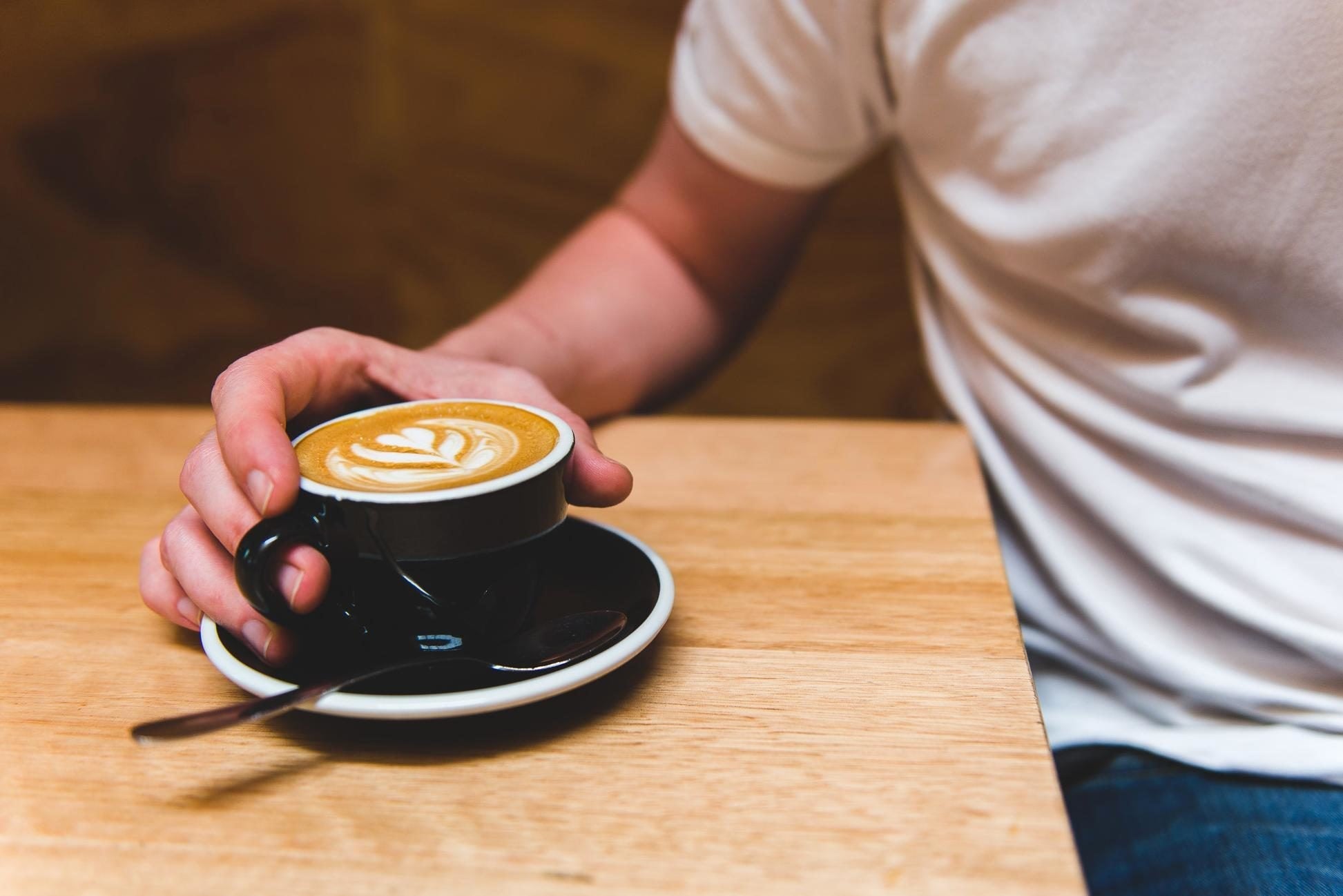
Short answer: lion's mane coffee is coffee with an extract of Hericium erinaceus in it, the one functional mushroom with human trials behind its focus and memory claims345. Those trials used 1.8 to 3.2 g of the mushroom a day for four to sixteen weeks, which is the catch: most mushroom coffees carry a fraction of that and do not print how much. Alphacino is built to be the lion's mane coffee that answers the dose question on the jar: 500 mg of HericiumPrime fruiting-body extract in every scoop, alongside 100 mg of caffeine from robusta coffee and 100 mg of L-theanine, the pairing that improved attention in a controlled trial114. It is $49.97 for 30 servings, about $1.67 a cup, with a 60-day money-back guarantee, which is long enough to run the same eight-week test the trials ran. This page explains what lion's mane does and does not do, what dose the evidence supports, how to take it in coffee, and what you get when you take it in ours.
What is lion's mane coffee?
Two different products share the name. The first is ground coffee with dried lion's mane mixed into the beans, brewed like any coffee; the mushroom share is often around a tenth of the bag, and what reaches the cup depends on how much of the mushroom's compounds hot water pulls out in four minutes. The second is an instant: a coffee powder with a measured amount of lion's mane extract already in it, so the dose is fixed per scoop and printed, or should be. Alphacino is the second kind. Each 4.42 g scoop carries 500 mg of HericiumPrime, a fruiting-body extract from the ingredient maker NuLiv Science, named on the jar and sold by the supplier at that same 500 mg dose12. It contains no other mushroom. The rest of the scoop is robusta instant coffee at a printed 100 mg of caffeine, 600 mg of KSM-66 ashwagandha, 224 mg of black maca, 100 mg of L-theanine, 50 mg of the S7 plant blend and 83.3 mcg of vitamin D1.
"Lion's mane in coffee" therefore means one of two things: a mushroom you add to your own cup, which is covered lower down, or a coffee that already has it. Either way the questions are the same. What does the mushroom do, how much of it does that take, and how much is in the cup.

Lion's mane coffee benefits: what the human trials show
Lion's mane earned its place in coffee because it is the one culinary mushroom with repeated placebo-controlled trials on the brain. Here they are, with the dose and the length, because both decide whether a coffee can deliver the same thing.
| Trial | Who | Dose and length | Result |
|---|---|---|---|
| Mori 20093 | 30 adults aged 50 to 80 with mild cognitive impairment | 3 g a day of dried fruiting-body powder in tablets, 16 weeks | Cognitive scores rose from week 8 and kept rising to week 16, then fell back within 4 weeks of stopping |
| Saitsu 20194 | Healthy adults over 50 | 3.2 g a day, 12 weeks | Better scores on a cognitive test than placebo |
| Docherty 20235 | 41 healthy adults aged 18 to 45 | 1.8 g a day, 28 days | Faster performance on a task an hour after a single dose; lower self-rated stress at 28 days; the authors call the evidence tentative |
| Nagano 20106 | 30 menopausal women | Cookies containing the mushroom, 4 weeks | Lower depression and anxiety scores than placebo cookies |
| Vigna 20197 | 77 adults with overweight on a diet | A supplement, 8 weeks | Improved mood, anxiety and sleep scores |
| Li 20208 | Patients with mild Alzheimer's disease | Three 350 mg capsules a day of an erinacine-A-enriched mycelium, 49 weeks | Better cognitive and daily-living scores than placebo; well tolerated |
| Surendran 20259 | Healthy younger adults | A single 3 g dose of a 10:1 fruiting-body extract | No significant overall improvement in cognition or mood; any effect was task-specific |
| Grozier 202210 | College-age adults | 10 g a day baked into muffins, 4 weeks | No effect on cognition or metabolic markers |
The pattern is consistent. The positive trials are the long ones: eight to sixteen weeks of daily use, in people with something to improve, and the Mori trial's scores fell back within a month of stopping3. The single-dose trial in healthy young adults found nothing overall9, and even four weeks at a very high dose did nothing measurable in students10. A 2025 systematic review of the human studies reached the same reading: modest, real effects on cognition and mood with sustained use, side effects mild and gastrointestinal, and a literature that is still small11. So lion's mane in coffee is a habit, not a hit. It is the slow build; the same-morning lift in any coffee is the caffeine.
How it works, and why the part of the mushroom matters
Two families of compounds carry the interest: hericenones, found in the fruiting body, and erinacines, found in the mycelium, both of which raised nerve growth factor in laboratory work, which is the mechanism behind every "supports the brain" claim1213. That split is why "fruiting body" and "mycelium" on a label are not marketing words. The Mori and Saitsu trials used the fruiting body; the Alzheimer's trial used a mycelium grown to be rich in erinacine A348. Alphacino's HericiumPrime is a fruiting-body extract, which is the part that carries the hericenones and the part the two cognition trials in adults used2.
The dose is the whole question
Every positive trial above used between 1.8 and 3.2 g of the mushroom a day, or a gram a day of a purpose-grown mycelium extract3458. A scoop of coffee weighs four to five grams in total, and the coffee has to be most of it, so no instant coffee carries three grams of mushroom. What a coffee can carry is an extract, which concentrates the water-soluble compounds of several grams of mushroom into a fraction of a gram. That is what "500 mg of extract" means and it is why the number matters: an extract weight is the one figure that lets a reader compare a coffee with the trials at all.
Here is where the category stands on that single figure, read from each brand's own label in our reviews. Alphacino prints 500 mg of fruiting-body extract1. BodyBrain prints 600 mg. Cuppa prints "1,000 mg" but holds it as part of 250 mg of 8:1 extracts, about 125 mg of lion's mane extract by its own footnote. Everyday Dose prints 1,500 mg of lion's mane and chaga together with no split. RYZE prints no lion's mane amount at all. Our best mushroom coffee for men ranking runs every brand through the same label test. The honest summary is that no coffee, ours included, matches the 1.8 g of the smallest trial, that a printed 500 mg of concentrated fruiting-body extract is at the high end of what an instant coffee carries, and that a label without a number cannot be compared with anything.
What follows from that for a buyer: if you want the full trial dose, take a lion's mane extract supplement that prints its grams as well as your coffee. If you want the daily habit in one cup with the dose printed and the rest of the label built around it, that is what Alphacino is for.

Lion's mane and caffeine: does the coffee get in the way?
No. There is no known interaction between lion's mane and caffeine, the mushroom trials did not ask participants to stop drinking coffee, and hot-water extraction is how lion's mane extracts are made in the first place, so a hot cup does the compounds no harm11. The two work on different clocks. Caffeine improves alertness, vigilance and reaction time within the hour, with effects measurable from around 40 mg and clear at 75 to 150 mg16; lion's mane's effects, where they appear, take weeks3. A good lion's mane coffee gets the first part right as well as the second, which is why Alphacino keeps a full coffee's caffeine, 100 mg against about 95 mg in an 8 oz brewed cup, rather than the half-caffeine blends most of the category sells117. It pairs that with 100 mg of L-theanine, because in the trial that tested the combination, theanine with caffeine improved attention and reduced the tension that caffeine alone produced14. The European safety ceiling is 400 mg of caffeine a day and 200 mg in one sitting, so two Alphacinos a day sit comfortably inside it15.
On timing: take it in the morning, every day, for at least eight weeks, because that is the shape of the trials that worked. Alphacino's 60-day guarantee is set to that length on purpose, so the experiment costs nothing if it does nothing for you. Our guide on how long mushroom coffee takes to work separates what you feel on day one from what you might notice in week eight.
Can you put lion's mane powder in your own coffee?
Yes, and it is the cheapest way to reach the trial dose. Buy a lion's mane extract powder that prints its extract ratio and, ideally, its beta-glucan content, stir one to three grams into a hot cup, and drink it daily. Three things to know. Whole dried mushroom powder is not the same as an extract; the trials that used powder used three grams of it, and a teaspoon of extract powder is a different, more concentrated thing, so match the dose to what the packet says it is. The taste is mild and slightly savoury, and it registers more in a weak coffee than a strong one; a dark roast or a splash of milk covers it. And measure it; "a spoonful" of a fluffy powder can be half a gram or two grams, which is the difference between a trial dose and a token one.
The trade-off is convenience and consistency. A pre-blended instant fixes the dose per scoop, dissolves clean and adds nothing to the morning beyond hot water. Alphacino's scoop is that: 500 mg of extract, weighed once at the factory, with the caffeine and theanine already in the same scoop. If you are adding your own powder to a strong coffee, our caffeine limits guide is worth a read, because the usual reason people stop a lion's mane habit is not the mushroom, it is the third cup.
How to make Alphacino, and how to drink it
The jar's direction is one scoop into 6 to 8 oz of hot water, stirred1. It is a robusta instant, so it tastes like a dark, full coffee rather than a latte; the lion's mane extract is flavourless at this amount and the ashwagandha and maca sit under the coffee. Milk works, and it dissolves in cold water for an iced version, stirred then poured over ice. One scoop is one serving: 100 mg of caffeine, 500 mg of lion's mane, 600 mg of ashwagandha. A second scoop later in the morning is fine on caffeine; a third pushes the ashwagandha past the 600 mg the trials used, so two is the sensible ceiling18. Take it before 2 pm if your sleep is light; a 400 mg caffeine dose six hours before bed still cost about an hour of sleep in the timing trial, and although 100 mg is a quarter of that, coffee at 4 pm is still coffee at 4 pm19. The timing guide covers the empty-stomach and pre-workout questions.
Is lion's mane coffee good for you? Side effects and who should skip it
For a healthy adult, lion's mane coffee is a safe daily habit. The mushroom has been given at up to 3.2 g a day for months and 10 g a day for a month in trials without serious adverse events, and the systematic review found the reported side effects mild and gastrointestinal41011. Anyone allergic to mushrooms should not drink it. The coffee's caffeine carries the usual notes: keep the day under 400 mg, and under 200 mg in pregnancy15. In Alphacino specifically, the ingredient with real cautions is not the lion's mane but the 600 mg of KSM-66 ashwagandha: it was well tolerated in its trials, and it is still not for pregnancy or breastfeeding, and people on thyroid medicine, sedatives or immunosuppressants, or with liver disease, should ask a prescriber first18. We say that on the product page and in our mushroom coffee side effects guide, which goes through every ingredient in the category. Alphacino contains no chaga and no reishi, the two mushrooms with kidney and liver case reports, and no MCT oil, which is the ingredient behind most of the loose-stool complaints about mushroom lattes.
Who lion's mane coffee is for, and what Alphacino adds to it
Lion's mane coffee suits a man who wants his morning coffee to do two jobs: the same-hour alertness he already drinks it for, and a daily dose of the one mushroom with human evidence for focus and mood over weeks. It does not suit someone who wants a mushroom supplement at trial dose in a cup, because no coffee can carry it, or someone who wants to feel the mushroom on day one, because the trials say he will not.
Alphacino is that coffee built for men in particular. Around the 500 mg of HericiumPrime it adds the ingredients with trials at doses a scoop can actually reach: 600 mg of KSM-66 ashwagandha, the dose in the stress and strength trials18; 100 mg of L-theanine against 100 mg of caffeine, the attention pairing14; 224 mg of black maca; 50 mg of S7; and 83.3 mcg of vitamin D, every figure on the panel1. It is made in the USA, 10 calories a scoop, $49.97 for 30 servings, about $1.67 a cup, with a 60-day money-back guarantee1. See the product page and the full Supplement Facts panel. For the wider question of what the mushroom does for men specifically, our lion's mane benefits for men guide takes it ingredient by ingredient.
Frequently asked questions
Is lion's mane coffee good for you?
For a healthy adult, yes, as a daily coffee. Lion's mane has placebo-controlled trials showing modest cognitive and mood benefits over eight to sixteen weeks, with mild side effects, and coffee's caffeine is well studied. The benefit depends on the dose and on drinking it daily; a single cup does what the caffeine does.
Does lion's mane coffee have caffeine?
Almost always, because it is coffee. The amount depends on the brand: Alphacino prints 100 mg a scoop, about one brewed cup; many mushroom coffees carry half that. Lion's mane itself contains no caffeine and does not interact with it.
How much lion's mane should be in a coffee?
The trials used 1.8 to 3.2 g of the mushroom a day, more than any coffee scoop can hold, so coffees use extracts. The figure to look for is a printed extract weight. Alphacino prints 500 mg of fruiting-body extract; most brands print nothing or a blend total.
Can you put lion's mane powder in coffee?
Yes. Stir one to three grams of a lion's mane extract powder into a hot cup; heat does not harm it, since hot water is how the extract is made. Measure it, match the dose to what the packet says the powder is, and take it daily. A pre-blended instant does the same with the dose fixed per scoop.
Does lion's mane coffee work?
Over weeks, modestly, on the evidence: better cognitive scores in older adults at 12 to 16 weeks, and lower stress in young adults at 28 days, in small trials. On the day, what you feel is the caffeine. Trials of a single dose in healthy young adults found no overall effect.
What are the side effects of lion's mane coffee?
The mushroom's are mild and gastrointestinal in trials; mushroom allergy is the one reason to avoid it. The coffee's are caffeine's. In Alphacino, the ingredient with the real cautions is the ashwagandha, not the lion's mane: not for pregnancy, and a prescriber's call for thyroid, sedative or immunosuppressant medicines and liver disease.
Which lion's mane coffee is best?
The one that prints its lion's mane extract weight, names the part of the mushroom and prints its caffeine, because those three numbers are the only way to compare it with the trials. Alphacino prints all three: 500 mg of fruiting-body extract, 100 mg of caffeine, plus the rest of its label. Our best-for-men ranking applies the same test to every brand.
Sources
- Alphacino. Supplement Facts panel and directions, Alphacino Premium Mushroom Coffee, as printed on the jar and shown on the product page, read 26 September 2026. alphacino.com
- NuLiv Science. HericiumPrime (LionsManePrime) ingredient page: Hericium erinaceus fruiting body extract, 500 mg dose, as read 26 September 2026. nulivscience.com
- Mori, K., Inatomi, S., Ouchi, K., Azumi, Y., & Tuchida, T. (2009). Improving effects of the mushroom Yamabushitake (Hericium erinaceus) on mild cognitive impairment: a double-blind placebo-controlled clinical trial. Phytotherapy Research, 23(3), 367 to 372. doi:10.1002/ptr.2634
- Saitsu, Y., Nishide, A., Kikushima, K., Shimizu, K., & Ohnuki, K. (2019). Improvement of cognitive functions by oral intake of Hericium erinaceus. Biomedical Research, 40(4), 125 to 131. doi:10.2220/biomedres.40.125
- Docherty, S., Doughty, F. L., & Smith, E. F. (2023). The acute and chronic effects of lion's mane mushroom supplementation on cognitive function, stress and mood in young adults: a double-blind, parallel groups, pilot study. Nutrients, 15(22), 4842. doi:10.3390/nu15224842
- Nagano, M., Shimizu, K., Kondo, R., Hayashi, C., Sato, D., Kitagawa, K., & Ohnuki, K. (2010). Reduction of depression and anxiety by 4 weeks Hericium erinaceus intake. Biomedical Research, 31(4), 231 to 237. doi:10.2220/biomedres.31.231
- Vigna, L., Morelli, F., Agnelli, G. M., Napolitano, F., Ratto, D., Occhinegro, A., ... & Rossi, P. (2019). Hericium erinaceus improves mood and sleep disorders in patients affected by overweight or obesity: could circulating pro-BDNF and BDNF be potential biomarkers? Evidence-Based Complementary and Alternative Medicine, 2019, 7861297. doi:10.1155/2019/7861297
- Li, I. C., Chang, H. H., Lin, C. H., Chen, W. P., Lu, T. H., Lee, L. Y., ... & Chen, C. C. (2020). Prevention of early Alzheimer's disease by erinacine A-enriched Hericium erinaceus mycelia pilot double-blind placebo-controlled study. Frontiers in Aging Neuroscience, 12, 155. doi:10.3389/fnagi.2020.00155
- Surendran, G., et al. (2025). Acute effects of a standardised extract of Hericium erinaceus (lion's mane mushroom) on cognition and mood in healthy younger adults: a double-blind randomised placebo-controlled study. Frontiers in Nutrition, 12, 1405796. doi:10.3389/fnut.2025.1405796
- Grozier, C. D., Alves, V. A., Killen, L. G., Simpson, J. D., O'Neal, E. K., & Waldman, H. S. (2022). Four weeks of Hericium erinaceus supplementation does not impact markers of metabolic flexibility or cognition. International Journal of Exercise Science, 15(2). doi:10.70252/XZKO8571
- Menon, A., et al. (2025). Benefits, side effects, and uses of Hericium erinaceus as a supplement: a systematic review. Frontiers in Nutrition, 12, 1641246. doi:10.3389/fnut.2025.1641246
- Lai, P. L., Naidu, M., Sabaratnam, V., Wong, K. H., David, R. P., Kuppusamy, U. R., Abdullah, N., & Malek, S. N. (2013). Neurotrophic properties of the lion's mane medicinal mushroom, Hericium erinaceus (higher Basidiomycetes) from Malaysia. International Journal of Medicinal Mushrooms, 15(6), 539 to 554. doi:10.1615/intjmedmushr.v15.i6.30
- Spangenberg, E. T., et al. (2025). Unveiling the role of erinacines in the neuroprotective effects of Hericium erinaceus. Frontiers in Pharmacology, 16, 1582081. doi:10.3389/fphar.2025.1582081
- Haskell, C. F., Kennedy, D. O., Milne, A. L., Wesnes, K. A., & Scholey, A. B. (2008). The effects of L-theanine, caffeine and their combination on cognition and mood. Biological Psychology, 77(2), 113 to 122. doi:10.1016/j.biopsycho.2007.09.008
- EFSA Panel on Dietetic Products, Nutrition and Allergies (2015). Scientific opinion on the safety of caffeine. EFSA Journal, 13(5), 4102. doi:10.2903/j.efsa.2015.4102
- McLellan, T. M., Caldwell, J. A., & Lieberman, H. R. (2016). A review of caffeine's effects on cognitive, physical and occupational performance. Neuroscience & Biobehavioral Reviews, 71, 294 to 312. doi:10.1016/j.neubiorev.2016.09.001
- U.S. Department of Agriculture, Agricultural Research Service (2018). SR Legacy, via FoodData Central: brewed coffee (fdcId 171890). Serving value calculated from the per-100 g figure and the USDA 8 oz portion. fdc.nal.usda.gov
- Chandrasekhar, K., Kapoor, J., & Anishetty, S. (2012). A prospective, randomized double-blind, placebo-controlled study of safety and efficacy of a high-concentration full-spectrum extract of ashwagandha root in reducing stress and anxiety in adults. Indian Journal of Psychological Medicine, 34(3), 255 to 262. doi:10.4103/0253-7176.106022
- Drake, C., Roehrs, T., Shambroom, J., & Roth, T. (2013). Caffeine effects on sleep taken 0, 3, or 6 hours before going to bed. Journal of Clinical Sleep Medicine, 9(11), 1195 to 1200. doi:10.5664/jcsm.3170