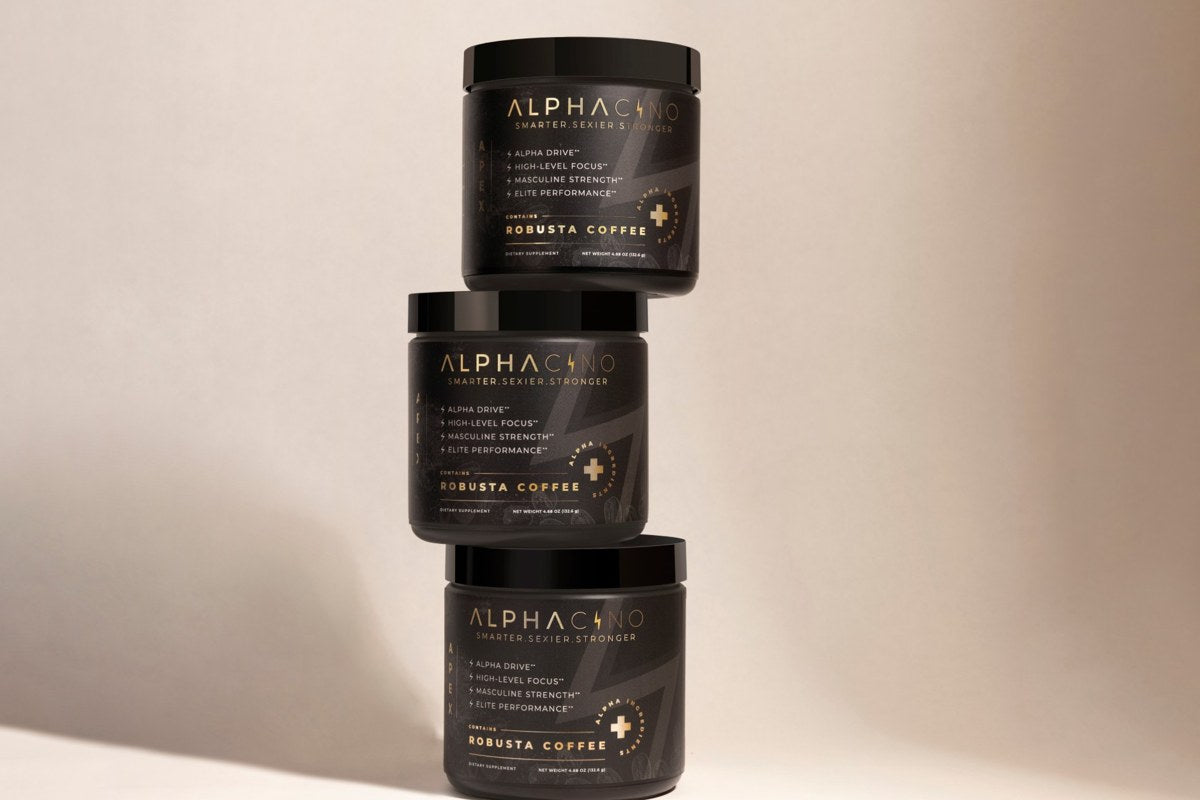
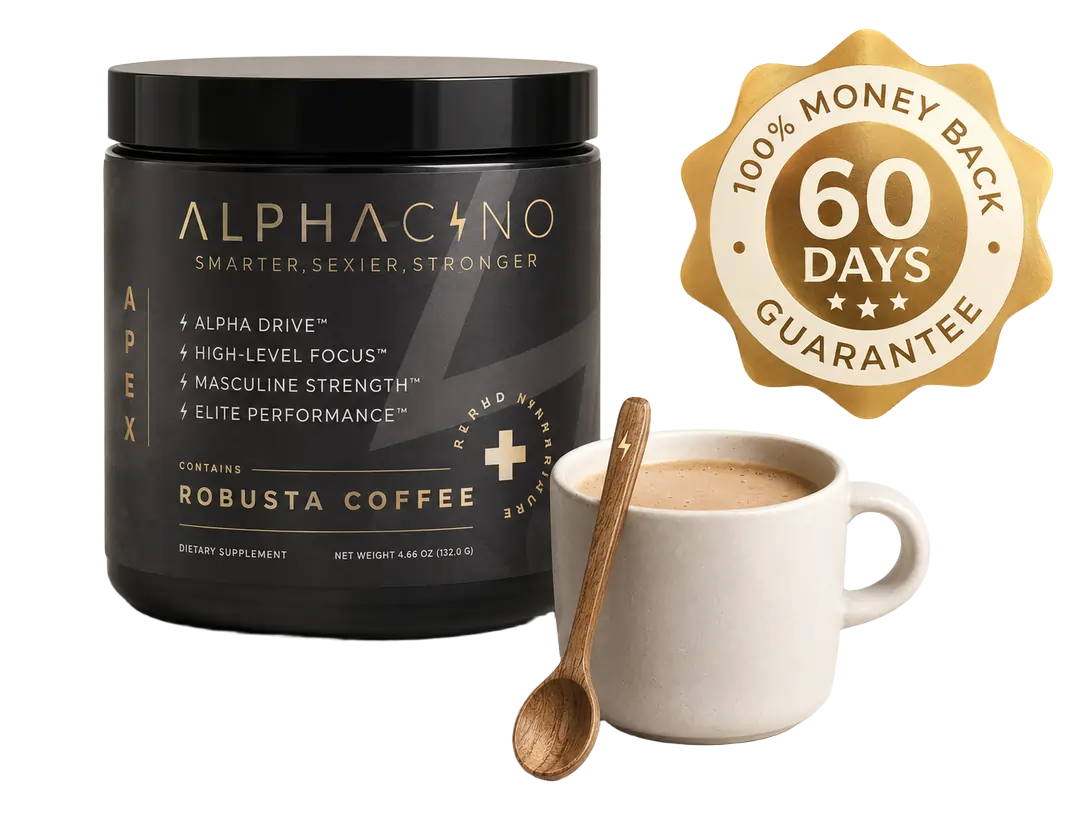
Short answer: most mushroom coffee is instant, so you make it like instant coffee: one scoop stirred into 6 to 8 oz of hot water. That is exactly what Alphacino's jar says1. Ground mushroom coffees are brewed like any ground coffee, and if you want to make your own, you stir a measured mushroom extract into the coffee you already drink. Making it taste good comes down to a few things with evidence behind them: a blend that is mostly coffee, a splash of milk, which measurably softens bitterness and roast notes2, a pinch of salt, which suppresses bitterness3, and as little sugar as you can manage, since added sugar counteracted coffee's small weight benefit in large cohort studies4. Below are the three ways to make it, seven recipes with amounts, how to fix a cup that tastes wrong, and how to make your own at home.
How to make mushroom coffee: three ways
| Method | Which products | How | Best for |
|---|---|---|---|
| Instant | Most mushroom coffees, including Alphacino, RYZE, Cuppa and BodyBrain | One scoop or sachet into 6 to 8 oz of hot water, stir or froth | Speed, travel, iced drinks |
| Ground or pods | A few brands, such as Four Sigmatic's ground coffee | Brew exactly as you would ground coffee: drip, pour-over, French press | People who like their brewing ritual |
| Do it yourself | Your own coffee plus a mushroom extract powder | Brew your coffee, then stir in the extract at the dose on its label | People who already own a coffee they love |
The instant method, step by step
- Heat 6 to 8 oz of water. Hot from the kettle is fine; let it sit a moment if you like your coffee less harsh.
- Add one level scoop to the mug first, then pour the water over it. Powder poured onto water tends to float and clump.
- Stir for 15 to 20 seconds, or use a handheld frother. Frothing dissolves it faster and gives a light crema.
- Taste before you add anything. A coffee-first blend should taste like a strong black instant coffee. Adjust with the steps in the taste section below, not with a second scoop.
For Alphacino specifically, that is the whole recipe: one 4.42 g scoop in 6 to 8 oz of hot water gives a full cup's caffeine, 100 mg, with 100 mg of L-theanine, at 10 calories1. The product page says it works hot or iced1, and both versions are below.

The ground-coffee method
If your mushroom coffee is ground rather than instant, nothing changes from your usual routine: use the dose of grounds on the bag, the same grind and the same brewer. The extract is mixed into the grounds and comes through into the cup. A paper filter catches more of the fine powder than a metal one, so if you notice sediment in a French press, try drip or pour-over.
How much mushroom coffee powder per cup?
Start with what the label says, because the caffeine is set by the scoop, not by the water. Water changes strength, not caffeine: 6 oz gives a bolder cup, 8 oz a milder one, and the same 100 mg of caffeine either way in Alphacino's case1. For scale, an 8 oz brewed coffee is about 95 mg5. Two scoops at once would be 200 mg, which is the single-dose level the European safety opinion considers safe for healthy adults, inside a daily total of 400 mg6. Brands vary a lot, from about 45 mg to 100 mg a serving, so check yours in our caffeine-by-brand guide, and the cup-by-cup daily maths is in how much mushroom coffee can I drink a day.
Mushroom coffee recipes
Each recipe uses one scoop of an instant mushroom coffee. Amounts are a starting point; adjust to taste.
1. Classic black
- 1 scoop mushroom coffee
- 6 to 8 oz hot water
Scoop into the mug, pour, stir or froth for 15 seconds. Use 6 oz the first few times; most people find a slightly stronger cup tastes more like coffee and less like the powder. This is the version with nothing added, the one to drink on a fasting morning, and our fasting guide explains where it stands on a fast.
2. Mushroom coffee latte
- 1 scoop mushroom coffee
- 2 oz hot water
- 6 oz milk or unsweetened oat milk, heated
- Optional: a pinch of cinnamon
Dissolve the scoop in the hot water, froth the warm milk with a handheld frother or in a sealed jar shaken hard for 30 seconds, then pour the milk over the coffee. Milk is the single most reliable taste fix: in a 2025 tasting study, adding cow or oat milk to coffee reduced the perception of its bitter and roasted notes and added dairy-like or caramel- and vanilla-like ones2.
3. Iced mushroom coffee
- 1 scoop mushroom coffee
- 2 oz hot water
- A tall glass of ice
- 4 to 6 oz cold water or cold milk
Dissolve the scoop in the small amount of hot water first, because instant powder dissolves slowly in cold liquid and clumps. Pour it over the ice, then top up with cold water for an iced black or cold milk for an iced latte. Stir and drink.
4. No-kettle shaken coffee
- 1 scoop mushroom coffee
- 8 oz cold water or milk
- A jar or shaker bottle with a lid
Add the powder and the cold liquid, seal, and shake hard for 20 to 30 seconds until no clumps remain, then pour over ice. This is the closest thing to cold brew you can make from an instant blend, and the easiest at the office or the gym.
5. Mocha
- 1 scoop mushroom coffee
- 1 teaspoon unsweetened cocoa powder
- 2 oz hot water, 6 oz hot milk
- Optional: half a teaspoon of honey or maple syrup
Whisk the coffee and cocoa into the hot water until smooth, then add the frothed milk. Cocoa's own bitterness blends with the coffee's, and the milk softens both. Keep the sweetener to the half teaspoon; the reason is in the taste section.
6. Cinnamon vanilla
- 1 scoop mushroom coffee
- 6 to 8 oz hot water or a latte base
- A pinch of cinnamon and 2 to 3 drops of vanilla extract
Stir the cinnamon into the powder before adding water so it does not float. Cinnamon and vanilla read as sweet without adding sugar, which makes them the best first step for anyone used to a sweetened coffee.
7. Pre-workout protein shake
- 1 scoop mushroom coffee
- 1 serving of vanilla or chocolate protein powder
- 10 oz cold milk or water, and ice
Shake or blend everything together. It turns the morning coffee into a training drink, though a light one: at 100 mg a scoop it carries less caffeine than most pre-workouts, and in the research the physical performance effects are clearest from about 200 mg7. Our mushroom coffee for the gym guide has the timing.

How to make mushroom coffee taste better
Most complaints about mushroom coffee are really complaints about a weak or earthy blend made with too little water, or too much powder. Work through these in order.
- Start with a coffee-first blend. If mushroom or botanical powders make up most of the scoop, no recipe will hide them. Blends built on a full cup of real coffee taste like coffee. Alphacino is robusta instant coffee with its extracts measured in milligrams, so the coffee dominates1. Why some blends taste earthier than others is explained in what does mushroom coffee taste like.
- Use the full amount of water. Too little water concentrates whatever earthiness there is. Try 8 oz before you add anything else.
- Add milk or an unsweetened milk alternative. In the 2025 study, cow and oat milk both reduced bitterness and roast notes in coffee2. It is the most effective single change.
- Add a pinch of salt. A few grains, not enough to taste salty. Salt suppresses bitterness: in taste studies, table salt reduced the bitterness of quinine, while the quinine barely reduced the saltiness38.
- Use spice before sugar. Cinnamon, vanilla or a little cocoa make the cup taste sweeter without sweetening it.
- If you sweeten, keep it small. In three large cohorts, unsweetened coffee went with slightly less weight gain over time, and each added teaspoon of sugar counteracted that benefit4. Half a teaspoon of honey or maple syrup in a latte is a different drink from a sweetened sachet.
- Froth it. A handheld frother makes a smoother texture and dissolves the powder completely, which removes the grainy finish some people read as "mushroom".
Can you put creamer in mushroom coffee?
Yes. Milk, cream and plant creamers all work, and they change nothing about the mushroom side of the drink. What to watch is the sugar in flavoured creamers: in the large cohort study, added sugar counteracted coffee's small weight benefit, while cream or non-dairy whitener on its own was not linked to weight gain4. Some mushroom coffees build their creaminess in, with MCT oil and fibre as Cuppa does, or collagen as Everyday Dose does; our Cuppa review and Everyday Dose review read those labels. A "mushroom creamer" is a separate product: a creamer with mushroom extracts added, used in ordinary coffee. If you combine one with a mushroom coffee, add the two labels' mushroom amounts together.
How to make your own mushroom coffee at home
You can make mushroom coffee from scratch with your own coffee and a mushroom extract powder. Three rules keep it safe and worth doing.
- Buy an extract with a printed dose, not a vague "blend". The label should name the species, say fruiting body or mycelium, and give the extract ratio; what those mean is explained in what is mushroom coffee.
- Measure it. Stir the label's dose into a finished cup. More is not better: the human trials behind lion's mane used set doses daily for weeks, and our lion's mane coffee guide sets them out.
- Know which mushrooms carry cautions. Chaga is very high in oxalate and has a published case of kidney damage after months of heavy use9; reishi has a published case of fatal liver injury from a powdered product10. Grinding dried mushrooms yourself gives you whole mushroom powder, not a concentrated extract, so it takes several times more powder for the same amount of extract, and more powder means a more earthy cup. The reishi, chaga and turkey tail guide covers each one.
The do-it-yourself route makes sense if you already love your coffee and want one mushroom at a known dose. If you would rather not measure anything, a coffee with the extract built in does the same job in one scoop: Alphacino carries 500 mg of lion's mane fruiting-body extract, 600 mg of KSM-66 ashwagandha, 224 mg of black maca and 100 mg of L-theanine on a 100 mg cup of robusta, every amount printed, at $49.97 for 30 servings, about $1.67 a cup, with a 60-day money-back guarantee1. The panel and bundle prices are on the product page.
Troubleshooting: when the cup tastes or feels wrong
| Problem | Likely cause | Fix |
|---|---|---|
| Too bitter | Too little water, a dark or robusta base | 8 oz of water, a splash of milk, a few grains of salt23 |
| Earthy or "mushroomy" | A mushroom-heavy blend or raw mushroom powder | Milk and cinnamon; next time, a coffee-first blend |
| Clumps or grit | Powder added to water, or cold liquid | Powder first, then hot water; froth; dissolve in a little hot water before icing |
| Tastes weak | Too much water, or a half-caf blend | 6 oz of water; check the caffeine figure on the label |
| Jittery or anxious | Caffeine dose; caffeine raises anxiety more at higher doses11 | Count every cup; choose a blend with L-theanine, which lowered tiredness and headache ratings with caffeine in trials1213; see mushroom coffee and jitters |
| Upset stomach | Coffee on an empty stomach, or a latte blend's oils | Drink it with food; see coffee on an empty stomach and is mushroom coffee acidic |
| Poor sleep | Caffeine taken too late | Last cup at least 8.8 hours before bed14 |
When and how often to drink it
Make it in the morning or before training, the same as any coffee; the caffeine cut-off for good sleep is about 8.8 hours before bed14, and the full timing guide is best time to drink mushroom coffee. Once a day is how most labels are designed, Alphacino's included, and the mushroom and herb ingredients need daily use for weeks before you can judge them, as how long mushroom coffee takes to work explains. If you are moving over from regular coffee, mushroom coffee vs regular coffee covers the switch.
Frequently asked questions
How do you make mushroom coffee?
For instant mushroom coffee, put one scoop in a mug and stir in 6 to 8 oz of hot water. Ground mushroom coffee is brewed like any ground coffee. To make your own, stir a measured mushroom extract into a cup of your usual coffee.
How do you make mushroom coffee taste better?
Use a coffee-first blend and the full 8 oz of water, then add a splash of milk and a few grains of salt, both of which reduce bitterness. Add cinnamon or vanilla before reaching for sugar, and froth it for a smoother cup.
Can you make iced mushroom coffee?
Yes. Dissolve the scoop in about 2 oz of hot water first, because instant powder clumps in cold liquid, then pour it over ice and top up with cold water or milk. Or shake it with cold water in a sealed jar for 30 seconds.
Can you put creamer in mushroom coffee?
Yes. Milk, cream and plant creamers all work and do not affect the mushroom extract. Choose unsweetened ones: in a large cohort study, added sugar counteracted coffee's small weight benefit, while cream on its own did not.
How much water do you use for mushroom coffee?
Most instant mushroom coffees use 6 to 8 oz of hot water per scoop; Alphacino's jar says exactly that. Less water makes a stronger cup, more makes a milder one, and the caffeine stays the same either way.
Can you make your own mushroom coffee?
Yes. Brew your usual coffee and stir in a mushroom extract at the dose on its label. Choose an extract that names the species, the part used and the extract ratio, and be careful with chaga and reishi, which have published safety cases.
Can you cold brew mushroom coffee?
Instant mushroom coffee does not need brewing: shake one scoop with cold water or milk in a sealed jar until dissolved and pour it over ice. Ground mushroom coffee can be cold brewed like any ground coffee.
Does mushroom coffee taste good?
A blend built on real coffee tastes like coffee, sometimes slightly earthier. Blends with a lot of mushroom powder or latte bases taste more of their extras. Milk, a pinch of salt and cinnamon fix most complaints.
Sources
- Alphacino. Directions and label warning as printed on the jar, Supplement Facts panel, and the product page, read 13 October 2026. alphacino.com
- Cleve, N., Gonzalez-Estanol, K., Khomenko, I., Pedrotti, M., Cappellin, L., Biasioli, F., & Beauchamp, J. (2025). Effects of Roasting Level and Milk Addition on In Vivo Aroma Release and Perception of Coffee. Journal of Agricultural and Food Chemistry, 73(22), 13792 to 13808. doi:10.1021/acs.jafc.4c12852
- Breslin, P. A. S., & Beauchamp, G. K. (1997). Salt enhances flavour by suppressing bitterness. Nature, 387(6633), 563. doi:10.1038/42388
- Henn, M., Glenn, A. J., Willett, W. C., Martínez-González, M. A., Sun, Q., & Hu, F. B. (2023). Changes in coffee intake, added sugar and long-term weight gain: results from three large prospective US cohort studies. American Journal of Clinical Nutrition, 118(6), 1164 to 1171. doi:10.1016/j.ajcnut.2023.09.023
- U.S. Department of Agriculture, Agricultural Research Service (2018). SR Legacy, via FoodData Central: brewed coffee (fdcId 171890). Serving value calculated from the per-100 g figure and the USDA 8 oz portion. fdc.nal.usda.gov
- EFSA Panel on Dietetic Products, Nutrition and Allergies (2015). Scientific opinion on the safety of caffeine. EFSA Journal, 13(5), 4102. doi:10.2903/j.efsa.2015.4102
- McLellan, T. M., Caldwell, J. A., & Lieberman, H. R. (2016). A review of caffeine's effects on cognitive, physical and occupational performance. Neuroscience & Biobehavioral Reviews, 71, 294 to 312. doi:10.1016/j.neubiorev.2016.09.001
- Frijters, J. E., & Schifferstein, H. N. (1994). Perceptual interactions in mixtures containing bitter tasting substances. Physiology & Behavior, 56(6), 1243 to 1249. doi:10.1016/0031-9384(94)90372-7
- Kikuchi, Y., Seta, K., Ogawa, Y., Takayama, T., Nagata, M., Taguchi, T., & Yahata, K. (2014). Chaga mushroom-induced oxalate nephropathy. Clinical Nephrology, 81(6), 440 to 444. doi:10.5414/CN107655
- Wanmuang, H., Leopairut, J., Kositchaiwat, C., Wananukul, W., & Bunyaratvej, S. (2007). Fatal fulminant hepatitis associated with Ganoderma lucidum (Lingzhi) mushroom powder. Journal of the Medical Association of Thailand, 90(1), 179 to 181. PMID 17621752
- Liu, C., Wang, L., Zhang, C., Hu, Z., Tang, J., Xue, J., & Lu, W. (2024). Caffeine intake and anxiety: a meta-analysis. Frontiers in Psychology, 15, 1270246. doi:10.3389/fpsyg.2024.1270246
- Haskell, C. F., et al. (2008). The effects of L-theanine, caffeine and their combination on cognition and mood. Biological Psychology, 77(2), 113 to 122. doi:10.1016/j.biopsycho.2007.09.008
- Owen, G. N., Parnell, H., De Bruin, E. A., & Rycroft, J. A. (2008). The combined effects of L-theanine and caffeine on cognitive performance and mood. Nutritional Neuroscience, 11(4), 193 to 198. doi:10.1179/147683008x301513
- Gardiner, C., Weakley, J., Burke, L. M., Roach, G. D., Sargent, C., Maniar, N., Townshend, A., & Halson, S. L. (2023). The effect of caffeine on subsequent sleep: a systematic review and meta-analysis. Sleep Medicine Reviews, 69, 101764. doi:10.1016/j.smrv.2023.101764
This article is general information, not medical advice. Alphacino is a food supplement, not a treatment for any condition. If you are pregnant, have a medical condition or take medication, talk to a doctor before changing your caffeine intake or adding a mushroom or herbal supplement.