Short answer: mushroom coffee is regular coffee with a mushroom extract stirred in, so most of what is true of one is true of the other. The real differences are three. Caffeine: a brewed 8 oz cup is about 95 mg1, while mushroom coffees run from 35 mg to 150 mg a serving depending on the brand2, which is why some feel gentler and some do not. What rides along with it: the better blends add L-theanine, which smoothed caffeine's effects on attention and tiredness in controlled trials34, and a mushroom or herb extract whose value depends entirely on whether the dose is printed and whether it is near the doses the trials used. And price: $0.97 to $1.67 a cup against whatever your current coffee costs25. On health, the strongest evidence belongs to the coffee itself: an umbrella review of 201 meta-analyses found coffee drinking more often associated with benefit than harm, with the largest associations at three to four cups a day6, and a mushroom coffee keeps all of that only if it keeps the coffee. Is it better? For a regular coffee drinker who wants the same cup to carry theanine and a dosed extract, yes. For someone who likes their coffee and wants nothing from it but coffee, no. And yes, you can mix or drink both, as long as you add the caffeine up. Everything below is the comparison line by line, with the trials.
What is the same: it is coffee
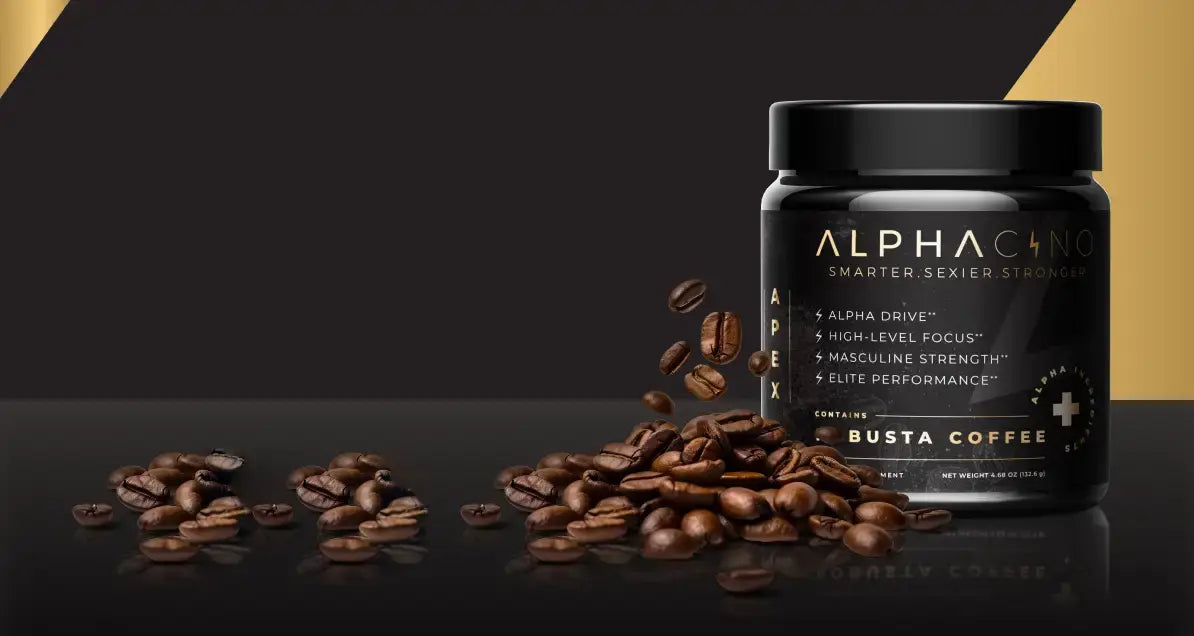
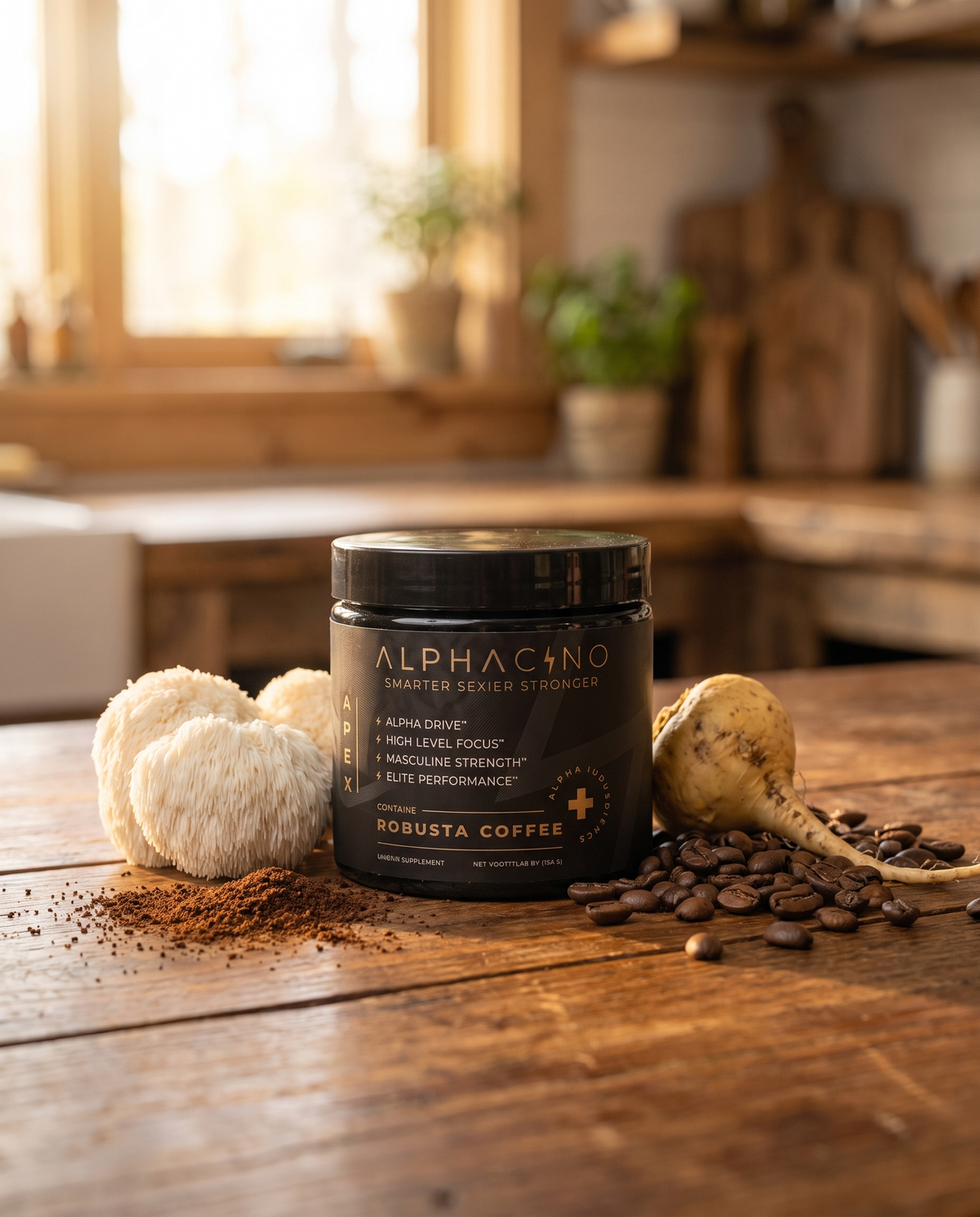
Start with the misconception, because it drives the whole question. Mushroom coffee is not made from mushrooms instead of coffee and it does not taste like a forest floor. It is coffee, usually instant, with a measured amount of mushroom extract and often an herb or two mixed in2. A scoop of Alphacino, for example, is robusta instant coffee carrying 500 mg of lion's mane extract, 600 mg of KSM-66 ashwagandha, 224 mg of black maca, 100 mg of L-theanine and 50 mg of a plant blend, with 100 mg of caffeine from the coffee5. A bag of Four Sigmatic Focus is organic ground coffee you brew normally, with lion's mane in the bag2. What goes into one, and how the extract is made, is in what is mushroom coffee. The exception is the cacao-based "coffee alternatives" such as MUD\WTR Original, which are not coffee at all and are compared in the MUD\WTR review.
That matters for the health question, because coffee's own evidence is large. The 2017 BMJ umbrella review covered 201 meta-analyses of observational studies and 17 of trials: coffee drinking was more often associated with benefit than harm, with the largest associations at three to four cups a day against none, including lower all-cause mortality (relative risk 0.83) and cardiovascular disease (0.85), and lower risks of several cancers and of liver, metabolic and neurological conditions; the harmful associations mostly disappeared once smoking was accounted for, except in pregnancy and for fracture in women6. A separate meta-analysis of 28 cohorts with over a million people found type 2 diabetes risk falling with each daily cup, for caffeinated and decaffeinated coffee alike7. These are associations, not proof that coffee causes the benefit, but they are the best evidence either kind of cup has, and a mushroom coffee that is mostly coffee inherits them. A latte-style blend built on a coffee extract with coconut milk inherits less of the coffee and more of the creamer.
Caffeine: the number that explains most of the difference
When people say mushroom coffee feels gentler, they are usually describing less caffeine. Here is the figure by brand, from each label, against a brewed cup251:
| Cup | Caffeine a serving | Against a 95 mg brewed cup |
|---|---|---|
| Brewed coffee, 8 oz | About 95 mg | The baseline |
| Four Sigmatic Focus Ground, 12 oz brewed | About 150 mg (the brand's figure) | More: it is a big mug of regular coffee |
| Alphacino | 100 mg | About the same |
| Everyday Dose Medium | 90 mg | About the same |
| BodyBrain, Cuppa | About 70 mg | Three quarters |
| Four Sigmatic Focus Instant, Four Sigmatic Original | 50 mg | Half |
| RYZE, Everyday Dose Mild, MUD\WTR Coffee | 45 to 48 mg | Half |
| MUD\WTR Original (cacao, not coffee) | 35 mg | A third |
So "mushroom coffee has less caffeine" is true of the half-caf lattes and false of the full-strength cups. The research puts caffeine's useful range for alertness, attention and reaction time at about 40 mg to about 300 mg8. A 35 to 50 mg cup sits at the bottom of that range; for a two-cup-a-day coffee drinker it is closer to a withdrawal dose than an energy dose, and caffeine withdrawal is well mapped: headache in about half of people, plus fatigue, drowsiness and poor concentration, from 12 to 24 hours after the last cup and lasting 2 to 9 days, with symptoms seen after habitual intakes as low as 100 mg a day9. If you switch from regular coffee to a half-caf mushroom latte and feel worse for a week, that is the reason, not the mushrooms. The brand-by-brand list is in how much caffeine is in mushroom coffee.
Jitters and the crash: where regular coffee loses points
Regular coffee's main complaint is not the caffeine dose but the shape of it: a sharp lift, a jittery edge and a fade. Caffeine does raise anxiety in healthy people, modestly at ordinary doses and sharply above 400 mg a day10. The ingredient that changes the shape is L-theanine, the amino acid from tea, and this is the one addition in a mushroom coffee with same-day evidence behind it. With 97 mg of theanine and 40 mg of caffeine, people were more accurate on a task-switching test and reported more alertness and less tiredness than on placebo3; with 250 mg and 150 mg, the combination gave faster reaction times and lower headache and tiredness ratings, while theanine on its own did not help4. Regular coffee has none; among mushroom coffees, Alphacino, BodyBrain, Cuppa, Everyday Dose and MUD\WTR Coffee carry it, and RYZE and Four Sigmatic do not25. The ratio arithmetic is in the L-theanine and caffeine ratio, and the jittery cup specifically in mushroom coffee and jitters.
The afternoon crash is mostly timing and sugar. Caffeine taken too late shortens sleep: a meta-analysis of 24 studies put the cut-off for a cup of coffee at 8.8 hours before bed11, and that applies to a 100 mg mushroom coffee exactly as it does to a 95 mg regular one. Sugar in the cup matters more than the label: in three large cohorts, added sugar counteracted coffee's small weight benefit, while cream or whitener alone did not12. A sweetened mushroom latte is not a health upgrade on a black coffee.
Is mushroom coffee healthier than regular coffee?
Only to the extent that the extras are at doses that did something in people. Here is what the added ingredients have shown, against what the cups contain25:
| Addition | What human trials found | Amount in the trials | What mushroom coffees carry |
|---|---|---|---|
| Lion's mane | Better cognitive scores than placebo from week 8 in adults aged 50 to 80 with mild cognitive impairment, fading within 4 weeks of stopping13; faster performance on one task after a single dose and a trend to lower stress after 28 days in young adults14 | 3 g a day for 16 weeks; 1.8 g a day for 28 days | 500 to 600 mg of extract where printed (Alphacino, BodyBrain); a combined two-species figure (Everyday Dose); a four- or six-mushroom total or nothing (MUD\WTR, RYZE, Four Sigmatic) |
| KSM-66 ashwagandha | Lower stress scores and serum cortisol than placebo over 60 days in 64 chronically stressed adults15 | 300 mg twice a day | 600 mg (Alphacino); 250 mg (Cuppa); 400 mg unbranded (BodyBrain); none elsewhere |
| L-theanine | Better attention and alertness and less tiredness with caffeine, as above34 | 97 to 250 mg with 40 to 150 mg caffeine | 100 to 200 mg where carried |
| Chaga, reishi, cordyceps, turkey tail | No trial of these for energy or focus at the amounts a coffee holds | Blend totals, if printed at all |
Read that way, "healthier" has a plain answer. A mushroom coffee that keeps the coffee, prints a lion's mane extract dose and carries the ashwagandha dose from the stress trial gives you coffee's evidence plus two ingredients with trials behind them. A mushroom coffee that replaces most of the coffee with a creamer and lists six mushrooms at no dose gives you less coffee and a promise. The fuller treatment, with the caveats, is in is mushroom coffee good for you.
Stomach and acidity
Mushroom coffee is about as acidic as any other coffee: the pH of the cup is set by the beans and the roast, and a few hundred milligrams of extract does not change it measurably, as is mushroom coffee acidic works through. Two findings help here. A meta-analysis of 15 case-control studies found no significant association between coffee intake and reflux disease overall, though in the studies that diagnosed reflux by endoscopy the odds were higher16; coffee as a cause of reflux is weaker than its reputation. And if a half-caf mushroom coffee has settled your stomach, check its caffeine: a smaller dose of coffee is a smaller dose of everything in it. On blood pressure, 16 randomised trials of at least a week found coffee raised systolic pressure by about 1.2 mmHg, a small effect, and caffeine on its own by more17; that applies equally to both cups at the same dose. And neither dehydrates you: three days of four 200 ml coffees a day left total body water and urine volume no different from water in 50 habitual drinkers18.
Does mushroom coffee taste like regular coffee?
The coffee-first blends do: a strong instant coffee, sometimes a little earthier. The latte-style blends taste of their coconut milk or collagen, and the cacao alternatives taste of cacao and spice. If you want your mushroom coffee to taste like your regular coffee, choose one that is mostly coffee, use the full 6 to 8 oz of water, and read what mushroom coffee tastes like for the brand-by-brand notes and how to make mushroom coffee taste good for the fixes.
For training
Here the comparison is simple: caffeine is the only same-day performance ingredient in either cup. An umbrella review of 21 meta-analyses found caffeine improved aerobic endurance, strength, muscular endurance, power, jumping and speed19. A 100 mg mushroom coffee and a 95 mg regular coffee do the same job before a workout; a 45 mg latte does less of it. The mushroom and herb ingredients, where dosed, work over weeks, not before a session. Timing is in mushroom coffee for the gym.
Cost per cup
This is where regular coffee wins outright. Mushroom coffees cost $0.97 (Cuppa) to $1.67 (Alphacino, MUD\WTR) a cup at one-time prices, with most at $1.5025, and a bag of ground coffee makes a cup for a fraction of that. The premium pays for the extract, so the question to ask is whether the extract is printed as a dose. Paying $1.50 a cup for "a six-mushroom blend" at no stated amount is paying for a word. Paying it for 500 mg of a named extract and 600 mg of KSM-66 is paying for something you can check against a trial. Price per cup across seven brands is in the best mushroom coffee ranking.
Can you mix mushroom coffee with regular coffee?
Yes, and people do it for two different reasons.
- To get a mushroom dose into the coffee you already like. Stir a scoop of an instant mushroom coffee into a brewed cup, or use a mushroom powder made for the purpose. It works; just count the caffeine. A scoop of Alphacino in an 8 oz brewed coffee is about 195 mg in one mug51, still under the 400 mg a day that European food safety authorities found raises no safety concern for healthy adults20, but it is two coffees' worth in one sitting. A half-caf blend such as RYZE or Four Sigmatic Instant adds about 50 mg and is the gentler way to do it.
- To drink both in a day. A regular coffee in the morning and a mushroom coffee later, or the reverse, is fine on the same arithmetic: add the milligrams, stay under 400, and keep the last cup 8.8 hours from bed2011.
Two cautions. Mixing does not change the mushroom dose, so a blend with no printed amount is still a blend with no printed amount in a bigger mug. And if the reason you want to mix is that the mushroom coffee tastes weak, you have probably bought a half-caf latte when you wanted a coffee; the coffee-first blends do not need topping up. Making your own, with a measured extract in your usual coffee, is covered in how to make mushroom coffee.
Who should stick with regular coffee
- You like your coffee, you sleep fine, and you want nothing from the cup but coffee. Coffee's own evidence is the strongest part of either drink6, and you already have it.
- You are price-sensitive. The premium only earns its keep if the extract is dosed and you take it daily for weeks.
- You want a stronger cup. Several mushroom coffees are half-caf; a full-strength one exists, but check the label before assuming.
And who should switch: you get jitters or an afternoon fade from plain coffee and want theanine with your caffeine; you want a daily dose of lion's mane or KSM-66 without a separate capsule, at a printed amount; or you want to cut caffeine and would rather do it with a coffee than a tea. For men over 40 the case is spelled out in mushroom coffee for men over 40.
Where Alphacino fits
Alphacino is built for the person who wants to keep regular coffee and have it carry more. It is a robusta instant coffee at a regular cup's caffeine, 100 mg, paired with 100 mg of L-theanine, with 600 mg of KSM-66 ashwagandha, the stress trial's daily dose, 500 mg of lion's mane fruiting-body extract, 224 mg of black maca and 50 mg of S7, every amount printed, at 10 calories with no sweetener in the ingredients5. It is not cheaper than regular coffee and does not claim to be: $49.97 for 30 cups, $1.67 a cup or $1.50 in the 3 pack, with a 60-day money-back guarantee that covers the eight weeks the ashwagandha trial ran. If you drink coffee anyway, it is the same habit with the ingredients added; if you do not, it will not make you a coffee drinker. The tub is on the product page, and lion's mane for men covers the mushroom on its own.
Alphacino at a glance
Real robusta coffee with 100 mg of caffeine and 100 mg of L‑theanine, 600 mg of KSM‑66 ashwagandha, 500 mg of lion's mane and 224 mg of black maca, every dose printed on the tub.
30 cups a tub: $1.67 a cup, or $1.50 a cup in the 3 pack. 60‑day money-back guarantee.
Frequently asked questions
Is mushroom coffee better than regular coffee?
It is regular coffee with extras, so it is better only if the extras are worth having: L-theanine, which smoothed caffeine's effects in trials, and a mushroom or herb extract at a printed dose. A blend that cuts most of the coffee and lists mushrooms at no amount is not better than a plain black coffee.
Does mushroom coffee have more caffeine than regular coffee?
Usually less. A brewed 8 oz cup is about 95 mg; mushroom coffees run from 35 mg (MUD\WTR's cacao blend) and 45 to 50 mg (RYZE, Everyday Dose Mild, Four Sigmatic Instant) to 100 mg (Alphacino) and about 150 mg for a 12 oz mug of Four Sigmatic's ground coffee.
Can you mix mushroom coffee with regular coffee?
Yes. Stir an instant mushroom coffee or a mushroom powder into a brewed cup, and add the caffeine up: a 100 mg scoop in a 95 mg cup is about 195 mg in one mug, under the 400 mg daily guideline but two coffees' worth at once. A half-caf blend adds about 50 mg.
Can you drink mushroom coffee and regular coffee on the same day?
Yes. Keep the day's total under 400 mg and the last cup at least 8.8 hours before bed. The mushroom dose does not change whether you drink one cup or two.
Is mushroom coffee healthier than regular coffee?
Coffee's own evidence, from an umbrella review of 201 meta-analyses, is the strongest part of either drink, and a mushroom coffee keeps it only if it keeps the coffee. The added ingredients are healthier in a meaningful sense only at trial-level doses: 600 mg of KSM-66 for stress, and lion's mane at a printed extract amount.
Does mushroom coffee taste like regular coffee?
The coffee-first instants do, a little earthier. Latte-style blends taste of coconut milk or collagen, and cacao-based alternatives taste of cacao and chai, not coffee.
Why does mushroom coffee feel gentler than regular coffee?
Mostly because many blends carry half the caffeine, and some add L-theanine, which reduced tiredness and headache ratings alongside caffeine in trials. A full-strength mushroom coffee with theanine feels like a smooth regular coffee, not a weaker one.
Is mushroom coffee worth the extra cost?
Only when the extract is printed as a dose you can check. $1.50 a cup for a named lion's mane extract and the trial dose of KSM-66 buys something measurable; the same price for an undisclosed blend buys a word on a label.
Sources
- U.S. Department of Agriculture, Agricultural Research Service (2018). SR Legacy, via FoodData Central: brewed coffee (fdcId 171890). Serving value calculated from the per-100 g figure and the USDA 8 oz portion. fdc.nal.usda.gov
- Brand labels and listings as read for our reviews: RYZE on 26 September 2026, BodyBrain and Cuppa on 14 October, Everyday Dose on 16 September, Four Sigmatic on 18 October and MUD\WTR on 19 October 2026. Prices are one-time prices for the standard pack on those dates. Our label test, brand by brand
- Giesbrecht, T., et al. (2010). The combination of L-theanine and caffeine improves cognitive performance and increases subjective alertness. Nutritional Neuroscience, 13(6), 283 to 290. doi:10.1179/147683010X12611460764840
- Haskell, C. F., et al. (2008). The effects of L-theanine, caffeine and their combination on cognition and mood. Biological Psychology, 77(2), 113 to 122. doi:10.1016/j.biopsycho.2007.09.008
- Alphacino. Supplement Facts panel as printed on the tub and the product page, read 19 October 2026. alphacino.com
- Poole, R., et al. (2017). Coffee consumption and health: umbrella review of meta-analyses of multiple health outcomes. BMJ, 359, j5024. doi:10.1136/bmj.j5024
- Ding, M., et al. (2014). Caffeinated and decaffeinated coffee consumption and risk of type 2 diabetes: a systematic review and a dose-response meta-analysis. Diabetes Care, 37(2), 569 to 586. doi:10.2337/dc13-1203
- McLellan, T. M., Caldwell, J. A., & Lieberman, H. R. (2016). A review of caffeine's effects on cognitive, physical and occupational performance. Neuroscience & Biobehavioral Reviews, 71, 294 to 312. doi:10.1016/j.neubiorev.2016.09.001
- Juliano, L. M., & Griffiths, R. R. (2004). A critical review of caffeine withdrawal: empirical validation of symptoms and signs, incidence, severity, and associated features. Psychopharmacology, 176(1), 1 to 29. doi:10.1007/s00213-004-2000-x
- Liu, C., Wang, L., Zhang, C., Hu, Z., Tang, J., Xue, J., & Lu, W. (2024). Caffeine intake and anxiety: a meta-analysis. Frontiers in Psychology, 15, 1270246. doi:10.3389/fpsyg.2024.1270246
- Gardiner, C., Weakley, J., Burke, L. M., Roach, G. D., Sargent, C., Maniar, N., Townshend, A., & Halson, S. L. (2023). The effect of caffeine on subsequent sleep: a systematic review and meta-analysis. Sleep Medicine Reviews, 69, 101764. doi:10.1016/j.smrv.2023.101764
- Henn, M., Glenn, A. J., Willett, W. C., Martínez-González, M. A., Sun, Q., & Hu, F. B. (2023). Changes in coffee intake, added sugar and long-term weight gain: results from three large prospective US cohort studies. American Journal of Clinical Nutrition, 118(6), 1164 to 1171. doi:10.1016/j.ajcnut.2023.09.023
- Mori, K., et al. (2009). Improving effects of the mushroom Yamabushitake (Hericium erinaceus) on mild cognitive impairment: a double-blind placebo-controlled clinical trial. Phytotherapy Research, 23(3), 367 to 372. doi:10.1002/ptr.2634
- Docherty, S., et al. (2023). The acute and chronic effects of Lion's Mane mushroom supplementation on cognitive function, stress and mood in young adults: a double-blind, parallel groups, pilot study. Nutrients, 15(22), 4842. doi:10.3390/nu15224842
- Chandrasekhar, K., Kapoor, J., & Anishetty, S. (2012). A prospective, randomized double-blind, placebo-controlled study of safety and efficacy of a high-concentration full-spectrum extract of ashwagandha root in reducing stress and anxiety in adults. Indian Journal of Psychological Medicine, 34(3), 255 to 262. doi:10.4103/0253-7176.106022
- Kim, J., Oh, S. W., Myung, S. K., Kwon, H., Lee, C., Yun, J. M., & Lee, H. K. (2014). Association between coffee intake and gastroesophageal reflux disease: a meta-analysis. Diseases of the Esophagus, 27(4), 311 to 317. doi:10.1111/dote.12099
- Noordzij, M., Uiterwaal, C. S., Arends, L. R., Kok, F. J., Grobbee, D. E., & Geleijnse, J. M. (2005). Blood pressure response to chronic intake of coffee and caffeine: a meta-analysis of randomized controlled trials. Journal of Hypertension, 23(5), 921 to 928. doi:10.1097/01.hjh.0000166828.94699.1d
- Killer, S. C., Blannin, A. K., & Jeukendrup, A. E. (2014). No evidence of dehydration with moderate daily coffee intake: a counterbalanced cross-over study in a free-living population. PLoS ONE, 9(1), e84154. doi:10.1371/journal.pone.0084154
- Grgic, J., et al. (2020). Wake up and smell the coffee: caffeine supplementation and exercise performance, an umbrella review of 21 published meta-analyses. British Journal of Sports Medicine, 54(11), 681 to 688. doi:10.1136/bjsports-2018-100278
- EFSA Panel on Dietetic Products, Nutrition and Allergies (2015). Scientific opinion on the safety of caffeine. EFSA Journal, 13(5), 4102. doi:10.2903/j.efsa.2015.4102