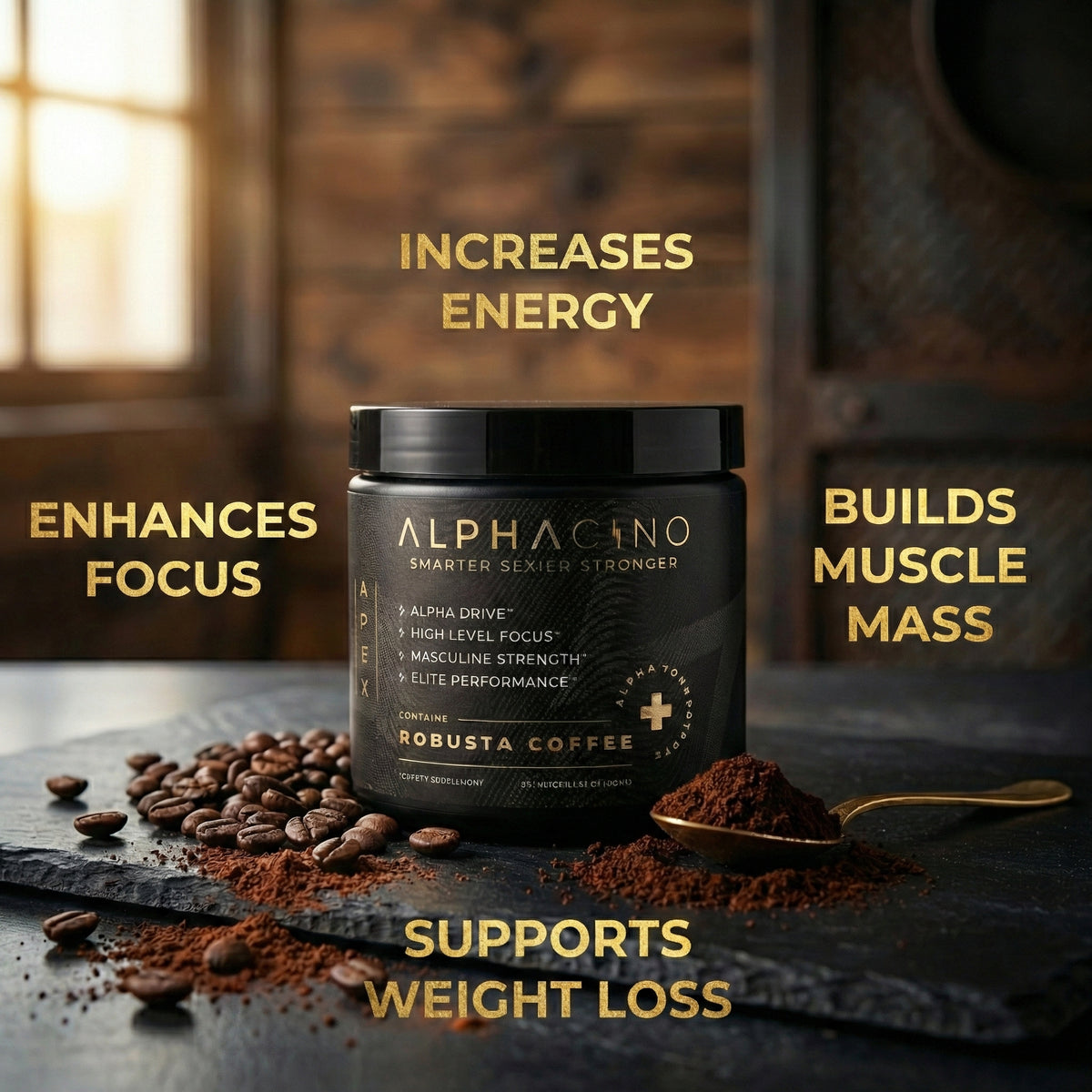
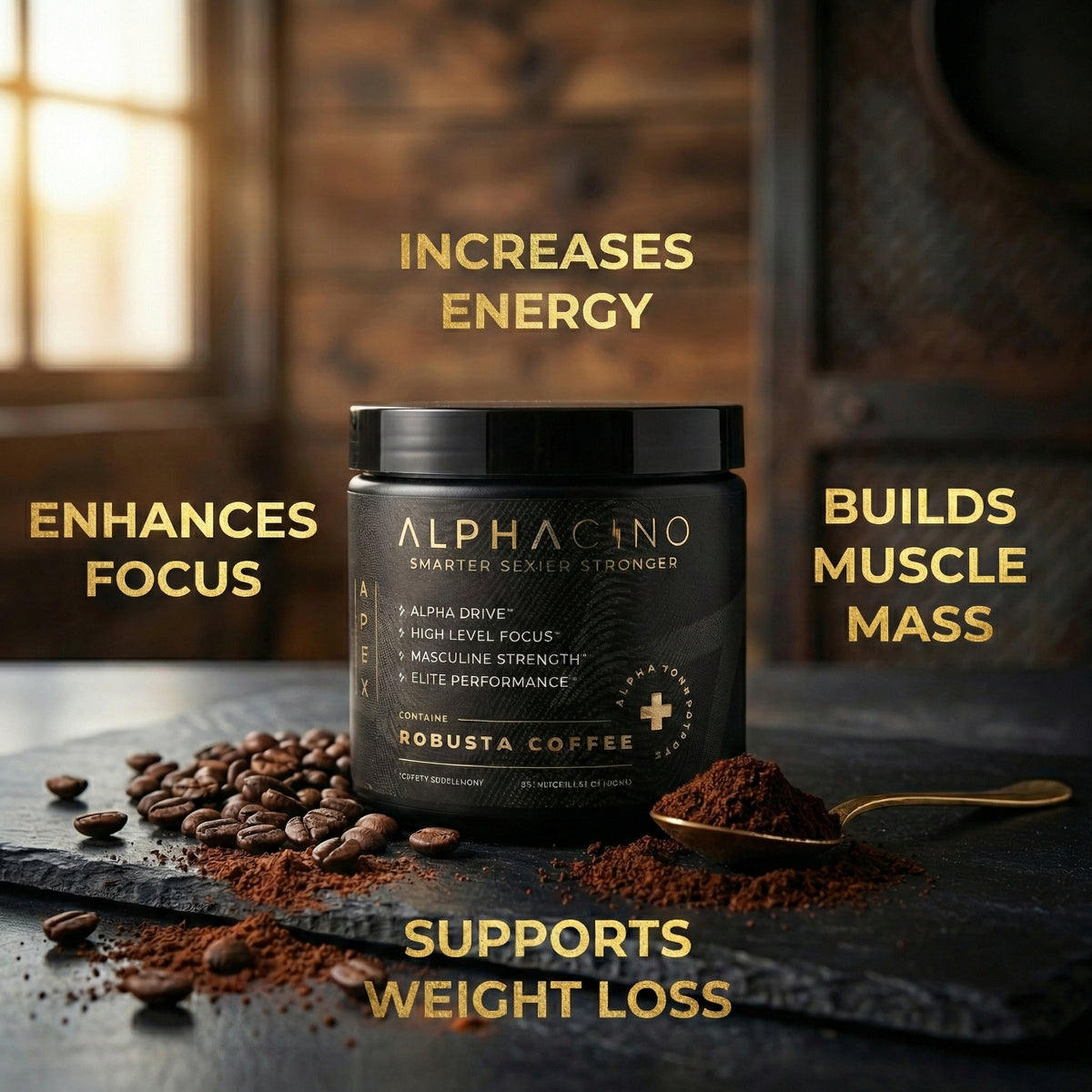
Short answer: most "coffee alternatives" lists rank drinks by how virtuous they sound. This one ranks them by the only thing the search actually asks: how much usable energy you get, and what it costs you in crash, jitters or sleep. The quick version: if you want energy, you want caffeine in a sensible dose with something to smooth it; if you want zero caffeine, be honest that you're choosing a ritual, not an energy source. Here are seven options, ranked.
How we ranked them
- Energy delivered: caffeine (or other stimulant) per serving, against the research on effective doses.1
- Crash profile: what the drink pairs with the stimulant: sugar, L-theanine, nothing.
- Evidence: human studies over marketing.
- Practicality: taste, price, and whether you'll still drink it in month two.

The ranking
1. Mushroom coffee (the full-caffeine kind)
Caffeine: 45–100+ mg. Technically still coffee, which is the point: most people searching for alternatives want to quit the crash and the jitters, not the caffeine. A coffee-based blend with around 100 mg of caffeine, L-theanine to smooth it (the one pairing with direct trial evidence for attention2), and adaptogens for the slow build keeps everything that works about coffee and fixes the part that doesn't. That's the formula behind Alphacino (about 100 mg caffeine, 100 mg L-theanine, 500 mg Lion's Mane, 600 mg KSM-66). Skip to the best-for-energy ranking if you want the brand comparison. Cuppa sits at about 70 mg with the same theanine idea and the lowest price in the category; see is Cuppa mushroom coffee good for you.
2. Matcha
Caffeine: 40–70 mg per serving. Whole-leaf green tea powder, so you drink the leaf's caffeine plus its natural L-theanine. Reviews of green-tea compounds find that combination supports calm alertness with less edge than coffee.3 Cons: quality varies wildly, good matcha is expensive, and 40 mg may undershoot a heavy coffee habit.
3. Yerba mate
Caffeine: 60–80 mg per cup. A South American holly, culturally a shared drink, pharmacologically caffeine with polyphenols.4 Real energy, grassy taste people either love or don't, and the same sleep rules as coffee apply.
4. Green or black tea
Caffeine: 30–50 mg. The gentle option: enough caffeine to notice, natural theanine, endless variety, cheap. The right answer for caffeine-sensitive people; an undershoot for anyone replacing three coffees.
5. Cacao / drinking chocolate
Caffeine: ~10–25 mg plus theobromine. Theobromine is caffeine's mild cousin: a gentle lift with a long tail and no real crash. Pleasant afternoon drink; not a morning engine. Watch the sugar in commercial mixes, because a sugar spike is its own crash.5
6. Chicory, dandelion and grain "coffees"
Caffeine: 0 mg. They roast dark and taste coffee-adjacent, and they deliver exactly no energy, because there is nothing stimulant in the cup. Fine as an evening ritual or for a caffeine break; dishonest as an "energy" recommendation, which is why they're ranked here.
7. Energy drinks
Caffeine: 80–300 mg. They rank last not because they don't work but because of how they work: big caffeine plus sugar, the spike-and-crash combination, with trial evidence that large servings affect blood pressure and ECG readings beyond caffeine alone.6 If this is your current habit, our energy drinks vs mushroom coffee guide includes a one-week switch plan.
The ranking at a glance
| # | Drink | Caffeine | Crash risk | Best for |
|---|---|---|---|---|
| 1 | Mushroom coffee (coffee-based) | 45–100+ mg | Low, with L-theanine | Keeping coffee's effect, losing the crash |
| 2 | Matcha | 40–70 mg | Low | Calm, steady mornings |
| 3 | Yerba mate | 60–80 mg | Moderate | Coffee-level energy, different flavour |
| 4 | Green / black tea | 30–50 mg | Low | Caffeine-sensitive drinkers |
| 5 | Cacao | 10–25 mg + theobromine | Low (unless sugared) | Afternoons and evenings |
| 6 | Chicory / grain coffee | 0 mg | None, and no energy | Ritual without caffeine |
| 7 | Energy drinks | 80–300 mg | High | Emergencies, honestly |

The part no drink fixes
If you need replacing-coffee levels of stimulation just to function, the drink is rarely the problem. Short sleep, no morning light, and caffeine after 2 p.m. are the usual engine of the 3 p.m. slump, and no alternative in this list out-drinks a sleep debt. Fix the timing first (our when-to-drink guide covers it), then pick the cup you actually enjoy. And if the reason you're switching is that regular coffee feels harsh, it may be the bean, not the caffeine: see robusta vs arabica.
Frequently asked questions
What is the best coffee alternative for energy?
If you want coffee-level energy, a coffee-based mushroom blend or yerba mate. If you want gentler energy, matcha. Zero-caffeine "coffees" are rituals, not energy sources.
What gives energy like coffee but without the crash?
Caffeine paired with L-theanine, either naturally (matcha) or by formulation (mushroom coffee blends around 100 mg caffeine with added theanine), keeps the alertness and cuts the edge.
Is matcha better than coffee for energy?
It's smoother but weaker: 40–70 mg of caffeine with natural theanine. Better for calm focus, weaker as a replacement for a strong coffee habit.
Do caffeine-free coffee alternatives give you energy?
No. Chicory, dandelion and grain blends contain no stimulant. They replace the ritual, which has value, but not the energy.
This article is general information, not medical advice.
Sources
- McLellan, T. M., Caldwell, J. A., & Lieberman, H. R. (2016). A review of caffeine's effects on cognitive, physical and occupational performance. Neuroscience & Biobehavioral Reviews, 71, 294–312. doi:10.1016/j.neubiorev.2016.09.001
- Haskell, C. F., et al. (2008). The effects of L-theanine, caffeine and their combination on cognition and mood. Biological Psychology, 77(2), 113–122. doi:10.1016/j.biopsycho.2007.09.008
- Dietz, C., & Dekker, M. (2017). Effect of green tea phytochemicals on mood and cognition. Current Pharmaceutical Design, 23(19), 2876–2905. doi:10.2174/1381612823666170105151800
- Heck, C. I., & de Mejia, E. G. (2007). Yerba mate tea (Ilex paraguariensis): a comprehensive review on chemistry, health implications, and technological considerations. Journal of Food Science, 72(9), R138–R151. doi:10.1111/j.1750-3841.2007.00535.x
- Mantantzis, K., et al. (2019). Sugar rush or sugar crash? A meta-analysis of carbohydrate effects on mood. Neuroscience & Biobehavioral Reviews, 101, 45–67. doi:10.1016/j.neubiorev.2019.03.016
- Shah, S. A., et al. (2019). Impact of high volume energy drink consumption on electrocardiographic and blood pressure parameters: a randomized trial. Journal of the American Heart Association, 8(11), e011318. doi:10.1161/JAHA.118.011318